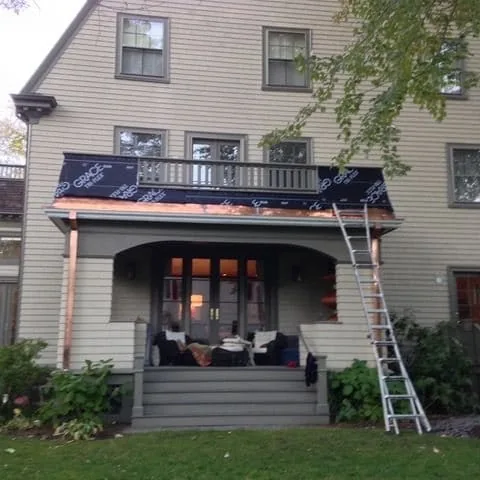
Gutter Leaking Into House: Why It Happens and How to Fix Gutter Leaks
Gutter leaking into house walls or ceilings? How to find where the water gets out, from drip edge and loose hangers to clogs, pitch and seams, and how to fix it.
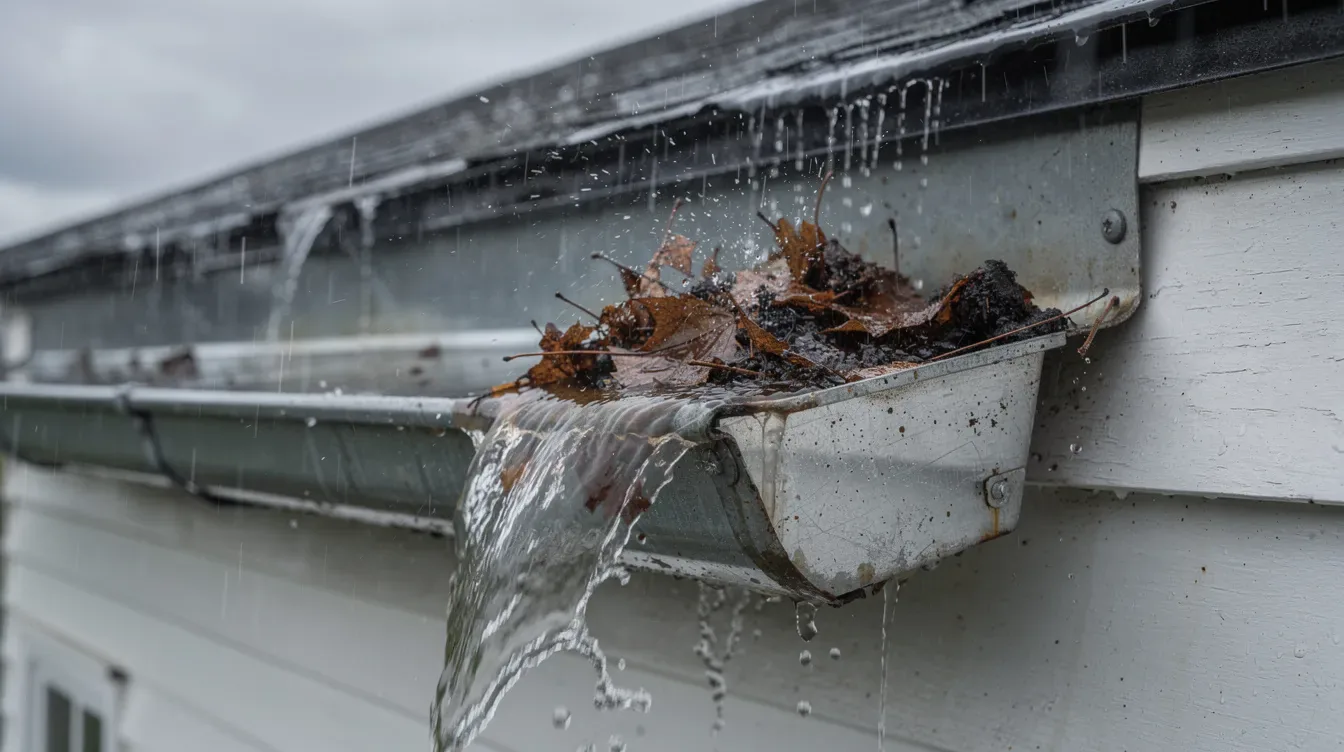
TL;DR: When a gutter leaks into the house, the water is getting out in one of a few places. It slips behind the gutter at the roof edge, or it spills over a run that is clogged or too small, or it drips through a bad seam or end cap. Clean the gutter and the downspout first. Then watch it in the rain. Missing drip edge and loose hangers send water behind the gutter and into the fascia. Runs that hold water need re-pitching to 1/4 inch per 10 feet. Small leaks at seams take gutter sealant. If water still comes in after all that, look at the roof.
Gutters · 12 min read
A gutter has one job. It takes water off the roof edge and hands it to a downspout, and the downspout puts it on the ground away from the foundation. When somebody calls me about a gutter leaking into house walls or a ceiling, that chain broke somewhere. Usually in one spot.
Sometimes in three.
Water can only get out of a gutter a few ways. It goes behind the gutter or over the front. Or it leaks through the metal. Each one has its own fix, so the first job is working out which one you have. I’ll go through how I check, what you can fix from a ladder, and when to call somebody. Pitch and cleaning figures come from This Old House. The drip edge rules come from the International Residential Code and InterNACHI’s roof inspection manual. Sealant advice is from This Old House and Amerimax, a gutter maker. Hanger spacing matches our own gutter hangers guide.
Signs of a Gutter Leaking Into House Walls and Ceilings
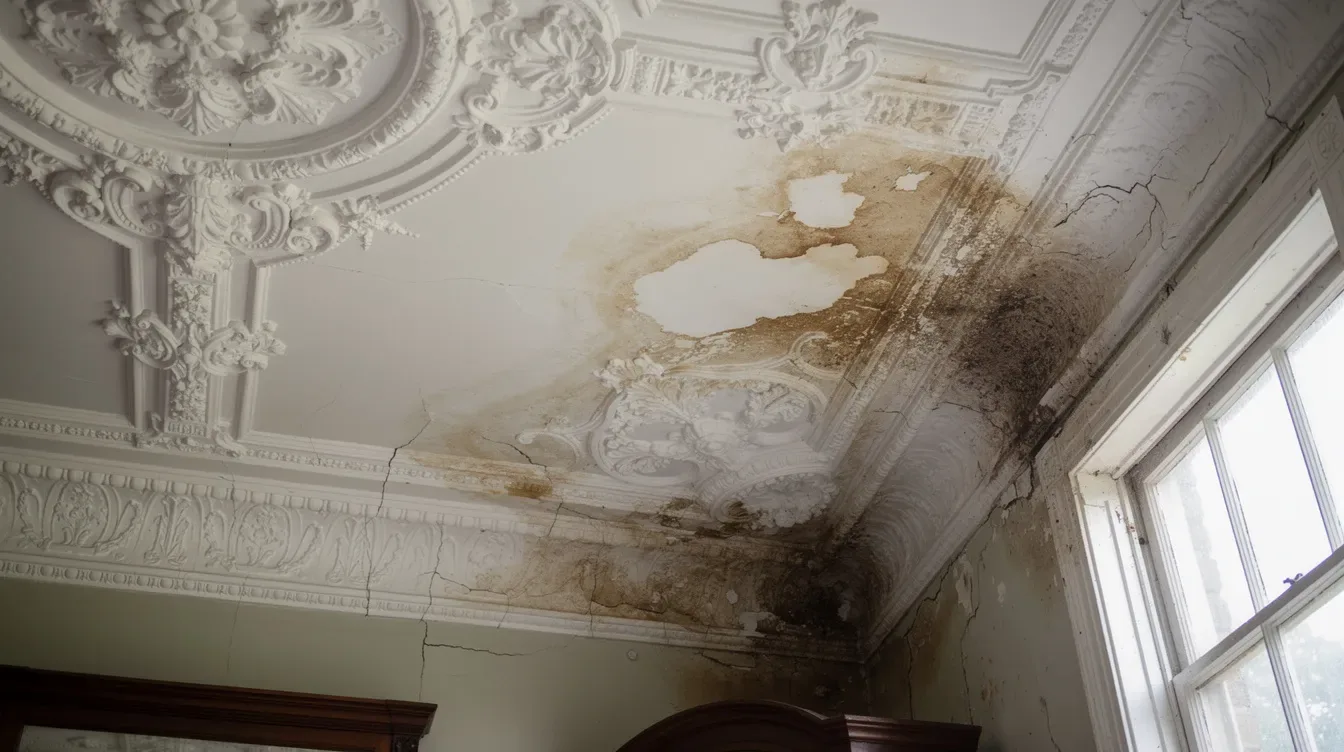
Inside, the clues show up near the outside walls. You’ll notice a brown ring on the ceiling a foot or two in from the exterior wall. Paint peels at the top of a window casing. Old plaster bubbles. A closet on an outside corner starts to smell musty, and the trim around it swells.
Outside, look up at the eave. Dirty streaks down the fascia or the siding mean water has been running where it shouldn’t. Blistered paint under the soffit tells you the same thing, and so does a green stripe of algae right under a gutter run. Push on the soffit with a broom handle. If it’s soft, water has been getting in there for a long time.
Better yet, go out while it’s pouring. Grab a raincoat and do a slow lap of the house, looking up. I watch for:
- A curtain of drips falling behind the gutter, coming off the roof edge where it ought to land in the trough
- One spot where the gutter shoots water over the front instead of sending it straight to the downspout
- End caps and corners dribbling
- A downspout barely running while the gutter above it is brim full
- A wet streak down the wall under a joint. That joint leaks.
If water pools in a gutter a day after the rain stops, the pitch is off. Look for water stains every time you’re up on the ladder too. Where water drips onto wood, or the paint is stained, the gutter above has been leaking for months, even if it’s dry today.
Where Water Escapes From Leaking Gutters
Before I fix anything, I sort the leak into one of three places.
Behind the gutter. Water gets between the gutter and the house. That points at the drip edge or the flashing. Loose hangers do it too. It does the most damage, because it soaks the fascia board and runs into the wall where nobody sees it.
Over the front. The gutter fills and spills. Clogged gutters do this. A clogged downspout does it too, and so does a gutter hung so flat that water sits in it. Sometimes the gutter is just too small for the roof above it.
Through the gutter. A seam has opened up, or rust has eaten a hole, or an end cap has let go. These are usually the easiest to fix.
What a Leak Does to the House Over Time
A leak where the gutter meets the house is the expensive kind. The water goes into wood and plaster that nobody looks at.
The fascia board goes first. Behind it are the rafter ends and the roof sheathing at the eave, and those rot next. On an older house the gutter hangers are screwed into exactly that wood, so the gutter loosens as the wood gets soft.
Water damage shows up late inside. By the time you see a stain on a plaster ceiling, the lath above it has been wet for a while. Horsehair plaster in a Victorian is slow to repair. Window casings and crown molding swell. Mold grows inside the wall.
At the bottom, water spilling off the gutter lands right against the foundation. On fieldstone and old brick that means a damp basement.
Drip Edge and Flashing Problems at the Roof Edge
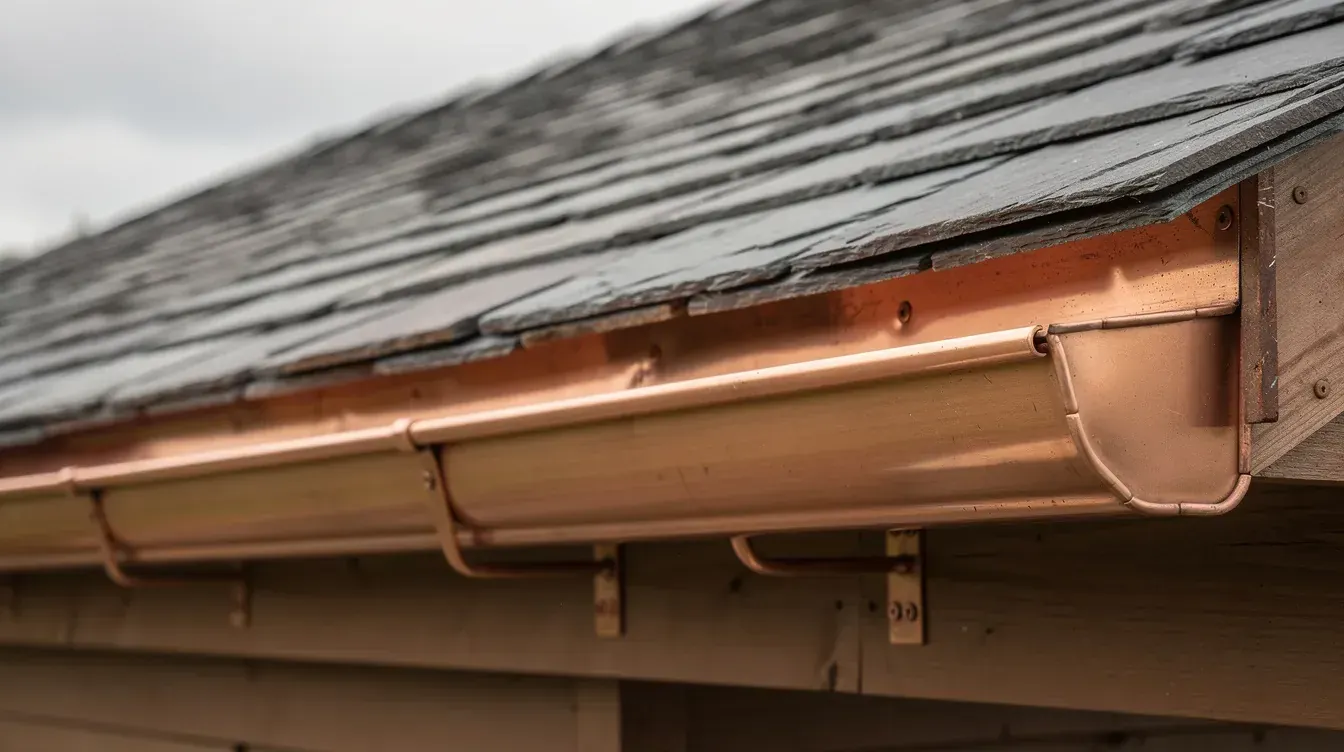
Drip edge is the bent strip of metal along the roof edge. Its lower flange hangs out past the fascia, so water coming off the roof drops clear of the wood and into the gutter. The International Residential Code requires it at the eaves of asphalt shingle roofs. It has to reach at least 1/4 inch below the roof sheathing, and the underlayment laps over it at the eave. InterNACHI’s roof inspection manual describes its job plainly. It directs water into the gutter, or at least far enough off the trim that the wood can’t wick it up.
How the gutter meets it is what decides whether you get a leak. The back of the gutter belongs under the drip edge. The drip edge should lap into the gutter or over its back edge, so water running down the metal has nowhere to go but in. With the drip edge installed that way, rain water can’t get behind the gutter. Hang the gutter too low, or leave the drip edge too short to reach it, and water runs off the metal onto the fascia and down behind the gutter. When that gutter comes off, you’ll find a line of rot along the top of the board. Where the drip edge falls short, a strip of gutter apron flashing bridges the gap.
Missing or damaged drip edge does the same thing. Plenty of older houses around Boston have none at all. Others have a short piece of copper left from a roof job sixty years ago. Ice has bent most of those.
Flashing higher up matters too. Step flashing at a dormer or a wall can slip or corrode, and then water runs down under the roofing and comes out at the eave behind the gutter. Missing or damaged flashing lets water bypass the gutter completely and run down the wall. Our roof flashing repair post covers those details.
Clogged Gutters and a Clogged Downspout
This Old House calls clogging the most common gutter problem, and it lists debris buildup as one of the most common causes of gutter leaks. That matches what I see. Around here it peaks once the maples and oaks drop everything, usually over about two weeks in late fall.
Leaves go in first. Then come the maple seeds and pine needles, plus roof grit and other debris, and pretty soon the water flow is down to a trickle. A gutter that can’t move water forward just fills up. It spills wherever the lip is lowest, and on a lot of the houses I look at that’s the back, because whoever hung it set it a hair low. So the overflow runs into the soffit. Eventually it turns up as a ceiling stain, under a roof that’s fine.
A blocked downspout is worse, since now the whole run has nowhere to empty. It fills end to end. Then it lets go at a seam or over the back, or through some piece of fascia that went soft years ago. The weight climbs too. Wet leaves and water in a full gutter pull hard on every hanger.
Size is the thing people miss. Undersized gutters can’t handle heavy downpours, so they overflow even when they’re clean. If yours are empty of leaves and still spill in every July thunderstorm, the gutter may be too small for the roof area feeding it. Or there aren’t enough downspouts. This Old House makes the point that a bigger downspout lets the same gutter carry more water before it overflows.
Try the hose test. Clean the run, stick a garden hose in the high end and turn it on. Water should pour out the bottom of the downspout pipe within a few seconds. If it backs up instead, you’ve got a blockage, most often in an elbow.
Downspout Clogs Below a Gutter Guard
Guards keep leaves out of the trough. Fine grit and needles still get through, though, and downspout clogs still form at the outlet or the elbow under the guard. In a This Old House survey of 1,000 homeowners in November 2025, 68% said they were very satisfied with how well their guards block debris and another 26% were somewhat satisfied. Guarded gutters still need checking. Our gutter page says we don’t install guards by default and usually recommend cleaning twice a year instead. Our post on whether gutter guards are worth it goes through the tradeoffs.
Loose Gutters and Rotting Fascia Board
Loose gutters leak behind themselves. When a run pulls half an inch off the fascia, the gap opens exactly where water comes off the drip edge. That water drops straight down the back of the gutter and into the wall. You may never see water leaking from the front.
A loose gutter also sags or tilts away from the house. Either way it has to be reattached.
Old gutter spikes are the usual reason. A spike is a smooth nail driven through the gutter and into the fascia, and spikes loosen over time. Wood shrinks and swells with the seasons. Ice adds weight every winter. The spike backs out a little more each year until the gutter hangs on nothing.
Gutter hangers that screw into solid wood hold much better. Our gutter hangers guide puts them no more than 36 inches apart, and 18 inches where snow and ice sit for weeks. Our gutter page also says the hidden hangers go into rafter ends, not just the sheathing.
Leave a loose gutter alone long enough and the fascia board rots. The wood goes soft and the screws lose their grip. Then the gutter pulls farther away and lets in more water. When I take a gutter down on an older Boston house I expect to replace some fascia, and it has to be fixed before a new hanger goes in.
Gutter Pitch, Standing Water and Heavy Rain
A gutter needs a slight slope toward the downspout. This Old House gives 1/4 inch of drop for every 10 feet of run. That’s not much. Over a 40 foot run it comes to an inch.
Get the slope wrong and water pools in the low spots and sits there. Then in heavy rain the full gutter overflows at that low point, and if the low point is near the back, the overflow goes behind the gutter. A pool of standing water also holds leaves and grit, so a flat gutter clogs faster than a pitched one. On steel it speeds up rust.
Water still standing in a run a day after the rain means it needs re-pitching. That’s loosening the hangers, snapping a new chalk line and resetting the gutter to it. I’d leave it to a pro in most cases. It takes two people and a long level, and on a three story house it means staging. On some long runs, a second downspout in the middle is the better solution.
Leaky Seams and End Caps
Sectional gutter comes in 10 or 20 foot lengths. Every joint between them is a lap, and the only thing keeping it dry is a bead of sealant. Corners and end caps are the same. That sealant cracks or pulls loose as it ages. Aluminum makes it worse, because the metal moves so much between a January night and a July afternoon. Once a joint opens, even a small leak drips on the same spot of fascia every rain, for years.
Repairing or replacing leaking joints and seams stops the leak. On aluminum and steel, buy a sealant made for gutters and work it into both sides of the joint. This Old House recommends a butyl gutter caulk, put on from the inside after the gutter dries out. Amerimax says every seam on its aluminum gutters takes its SeamerMate sealant. Some makers want silicone. Check the label on the tube.
Copper is its own thing. The joints are soldered. When one fails it gets resoldered, and caulk smeared over a copper seam won’t seal it for long.
Seamless gutters cut down on all of this. They’re formed on site from a coil and cut to the length of the wall, so the only joints left are at the corners and outlets. Our aluminum gutters post explains how that works.
Patching Small Holes
Small holes and rusted pinholes can be patched. Wire brush the spot down to bare metal and let it dry. Then bed a patch of the same metal in gutter sealant over the hole. Gutter repair tape works as a stopgap until spring. Keep the metals matched, because aluminum touching copper corrodes.
When Gutters Leaking Turn Out to Be Roof Leaks
Plenty of gutters leaking near the eave turn out to be roof leaks that just show up at the gutter line. If you’ve cleaned the gutters and resealed every joint and the drip keeps coming, look above the gutter. These are the usual suspects:
- Slipped or broken slate tiles near the eave
- Cracked asphalt shingles
- Step flashing that has slipped at a wall or a dormer
- Copper seams that have cracked open
- Ice dams in winter
Ice dams are the big one in Massachusetts. Heat from the house melts snow on the upper roof. The water runs down to the cold eave and refreezes into a ridge. The next melt backs up behind that ridge, under the slate or shingles, and comes through the ceiling just inside the outside wall. It looks a lot like gutter overflow. Clean gutters help, but the cause sits in the attic. Our ice dam prevention guide and our ice melt systems page cover what to do about it.
A rough rule. If a leak shows up in slow, steady rain, or the stain sits several feet in from the outside wall, suspect the roof. Gutter leaks mostly show up in hard rain and stay close to the wall. Our roof leak repair guide goes further into tracing them.
On an old slate or copper roof, water can run along a rafter or a sheathing board for several feet before it drips. Tracing that takes someone on the roof.
How to Fix Gutter Leaks Yourself
Many gutter repairs take nothing more than basic tools and a tube of sealant. For most jobs you’ll want:
- An extension ladder with a standoff
- Gloves and a gutter scoop
- A wire brush and a putty knife
- Gutter sealant and a caulk gun
- A garden hose
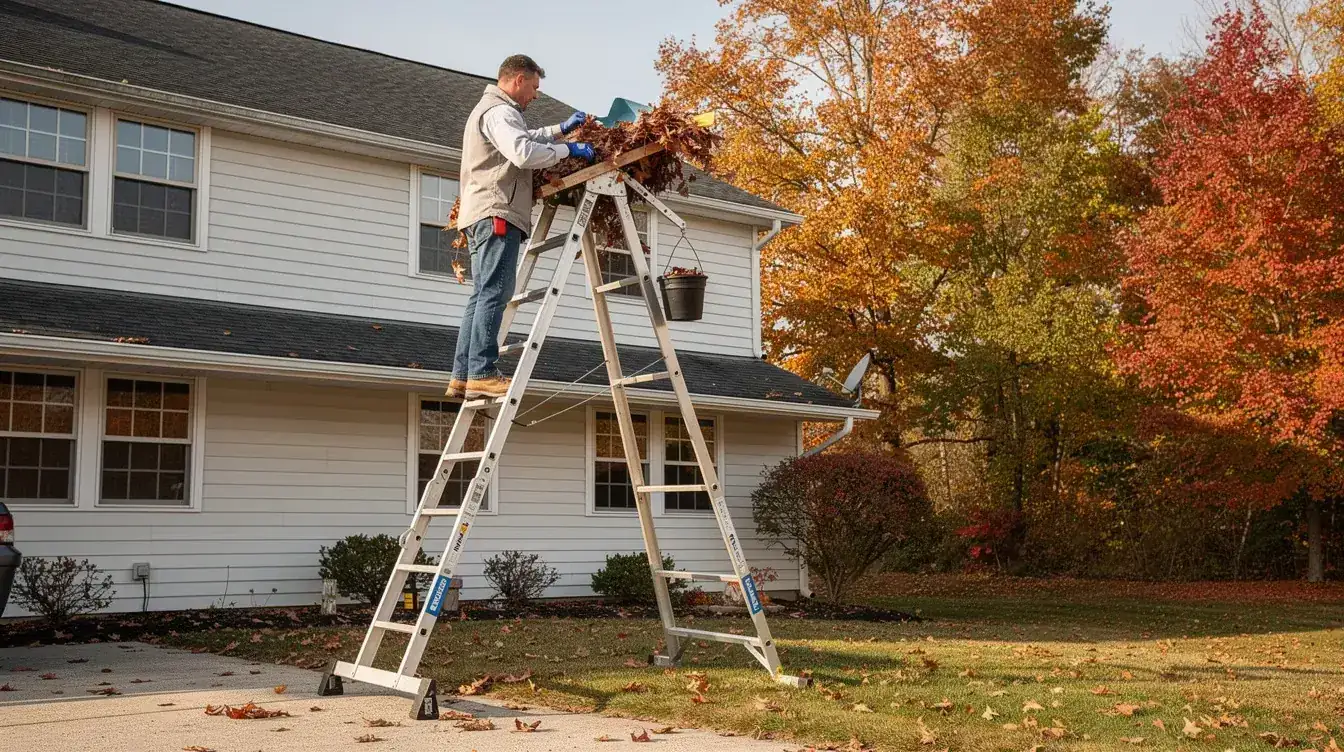
Safety comes before any of it. Set the ladder on firm, level ground with somebody footing it. This Old House suggests a standoff so the ladder rests on the roof instead of the gutter, and I agree. Never lean a ladder on a copper gutter or on slate tiles. Stop when it’s windy or wet. If the gutter is high or hard to reach, call a professional. A fall from a second floor eave puts people in the hospital every year.
Then, in order:
- Clean gutters by hand, starting at the downspout so standing water has somewhere to go.
- Flush each downspout with the hose. A blocked elbow usually clears with the hose or a plumber’s snake.
- Run water down the gutter and watch where it gets out. Each escape point tells you which repair you need.
- Reseal leaking seams and corners. Scrape out the old sealant first and let the metal dry.
- Patch small holes with matching metal and sealant.
- Bend back any section where the back edge has been pushed out, so water stays in the channel instead of rolling toward the house.
- Replace loose spikes with screw in hangers driven into solid wood. If the fascia behind them is soft, stop there. That needs carpentry first.
Caulk has limits. It won’t save metal that has rusted through. It won’t hold a gutter that has pulled off the fascia either. And it does nothing for a roof edge with no drip edge.
What a Roofer Does About Leaking Gutters
When I come out for leaking gutters, the gutter is only part of what I look at. I check the drip edge and the fascia behind it. If there’s a stain inside, I go up into the attic as well. A leak at the eave is rarely just one thing.
The usual repairs look like this:
- Adding or extending drip edge so it laps into the gutter. On copper and slate roofs that edge is copper. On asphalt it’s usually aluminum or coated steel.
- Pulling old spikes and rehanging the run on hidden hangers in the rafter ends, after the rotten fascia is replaced.
- Re-pitching runs that have settled flat, or adding a downspout to a long one.
- Resoldering failed copper seams and fitting new end caps.
- Fixing the slate or the step flashing above, when the leak is really the roof.
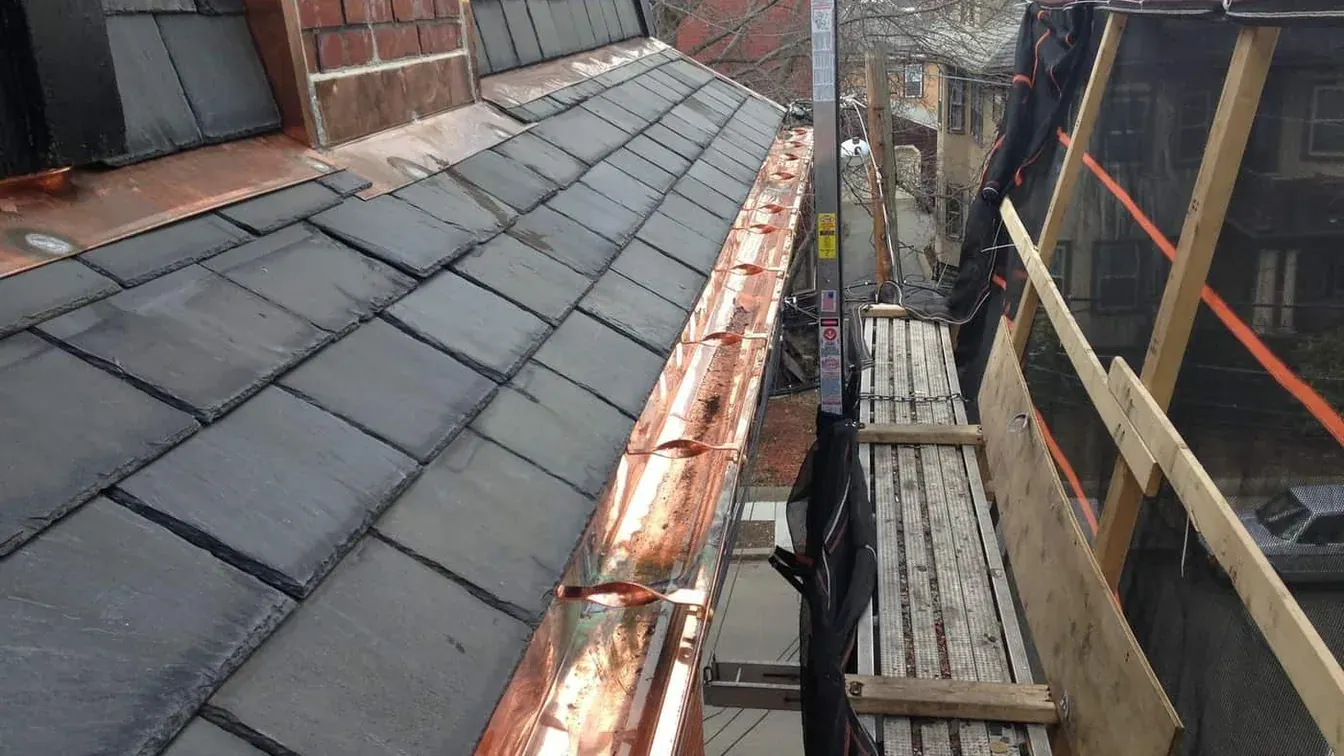
Sometimes replacement makes more sense. A steel gutter rusted through in a few places isn’t worth patching every spring. Neither is an aluminum run that leaks at every seam after you’ve resealed it. A new gutter in copper or aluminum is the fix there. Angi puts copper gutters at 50 to 100 years, which suits a slate roof that lasts 75 to 150. An asphalt roof around here lasts about 18 to 25. Our gutter replacement cost guide has the numbers, and our half round gutters guide covers copper.
Keeping Gutters From Leaking Again
Our gutter page says to clean twice a year, once in fall after the leaves are down and once in spring after the thaw. This Old House says at least twice a year as well. Its cleaning guide goes further and suggests every four months, or every three months when deciduous or pine trees shed on the roof. On a house under big oaks I’d look every four months.
After a big storm, walk around the house. Check the hangers and the pitch whenever you clean. Make sure every downspout lets out onto a splash block or an extension that carries the rainwater several feet from the foundation. A gutter system that prevents water from sitting against the house protects the wall and the basement both. Water that can’t drain away eventually finds its way in.

Frequently Asked Questions
Why Is My Gutter Leaking Into My House?
Water is either getting behind the gutter or spilling over a full one. Behind usually means the drip edge is missing or too short to reach the gutter, or the gutter has pulled away from a fascia board that has started to rot, and both of those put water straight into the wall. Overflow is a clog or a flat spot. Clean it first. Then run a hose through it and watch where the water goes.
Can a Clogged Gutter Cause a Ceiling Leak?
Yes. A full gutter spills over the back and into the wall.
Should Gutters Go Under or Over the Drip Edge?
Under. The drip edge laps into the gutter or over its back, so roof water lands in the trough. If the drip edge is too short to reach, a strip of gutter apron flashing closes the gap.
What Sealant Should I Use on Gutter Seams?
One sold for gutters. This Old House recommends butyl gutter caulk on a clean, dry seam. Copper gets soldered.
How Often Should I Clean Gutters Near Trees?
Our gutter page says twice a year, after the leaves drop in fall and again after the spring thaw. Under big oaks and maples I’d look every four months, which is the schedule This Old House suggests for most houses, and it goes to every three months where deciduous or pine trees shed heavily on the roof. Needles are the worst. They slip past screens and pack into a mat.
When Should I Call a Roofer Instead of Doing It Myself?
Call when the gutter is up high or hard to get to. A second story eave off a ladder is no place to learn. I’d also bring someone in when a run needs re-pitching or the fascia behind it is soft, since both mean taking the gutter down. And if you’ve cleaned and sealed everything and it still leaks, the problem is probably the roof.
Talk to the Owner
A leak at the eave can come from the gutter itself. It can also come from the edge metal behind it, or from the roof above. Sorting that out from the ground is mostly guesswork.
I walk every roof myself before a quote goes out. Our standard on older Boston homes is half round copper with hidden hangers, and K style aluminum is the practical choice when copper isn’t in the budget. If yours only need a repair, I’ll say so. The estimate is free. See our gutter repair page, request a free estimate, or call 617-913-1130.