Roof Flashing Repair: Stopping Leaks on Boston's Older Roofs
Roof flashing repair on Boston's slate and copper homes: the signs of damaged flashing, DIY limits, the pro repair process, real costs, and when replacement flashing beats a full roof.
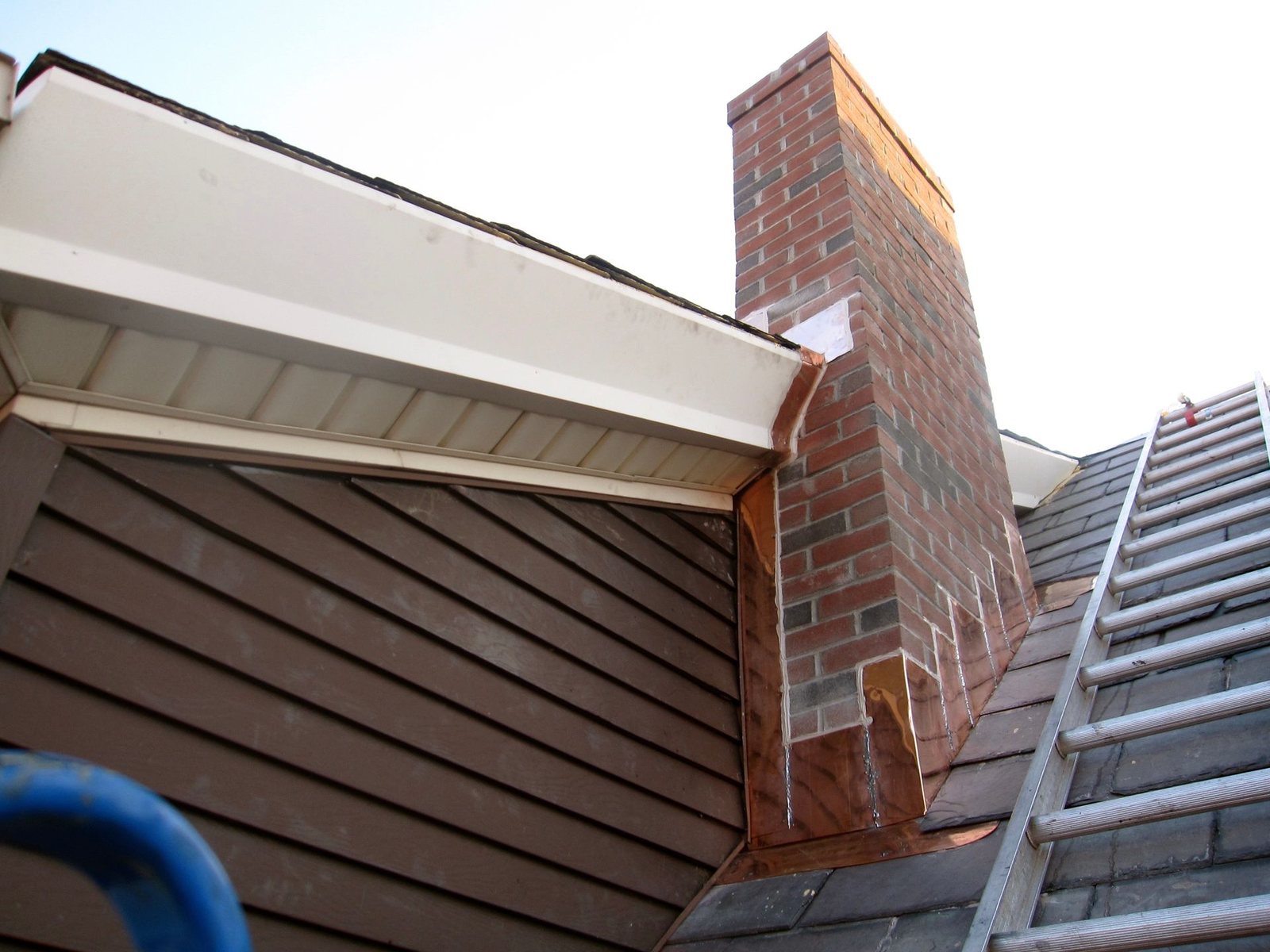
TL;DR: Most roof leaks on older homes start at failed flashing, not a bad shingle, and the water travels sideways before it ever drips. Roof flashing typically lasts 20 to 25 years with proper care, less than the slate or copper around it, so it is the part that fails first. A small flashing repair now beats a five-figure interior job later. We trace the real entry point, cut new metal to fit, and build a watertight seal. Copper flashing or it does not get fastened.
Repair · 17 min read
A brown ring shows up on a bedroom ceiling after a hard rain. The homeowner blames a cracked slate. On the old houses we work on around Boston, that is almost never where the water started. It started at the roof flashing, the thin metal strip that guards every joint and penetration up top. Over 90% of roof leaks come in at those flashing spots, not out in the open field of shingles or slate.
Roof flashing repair is easy to describe and easy to get wrong. At its core, repairing roof flashing means sealing or replacing the metal strips that protect the roof joints where two surfaces meet. Get it right and the joint outlasts the roof. Smear roofing cement over it and call it done, and the wall rots quietly from the inside while the roof still looks fine from the street.
We are Art Slate Roofing, a family-run slate and copper shop out of Cambridge, working Greater Boston since 2005. Arturo Nieto started it and still walks every roof himself. This guide covers general roof flashing repair, the kind that shows up at valleys, walls, vents, and skylights. For the chimney-specific method, see our chimney flashing repair guide, and for the roof-to-wall detail our step flashing walkthrough goes deep.
The short version. Most leaks trace back to failed flashing, and the water travels before it drips. Flashing typically lasts 20 to 25 years with proper care, less than the slate or copper around it. A small flashing repair now beats a five-figure interior job later. We find the real entry point, cut new metal to fit, and build a watertight seal. Copper flashing or it does not get fastened.
Why roof flashing repair can’t wait on a Boston home
Damaged roof flashing does not stay a small problem. Damaged or failing roof flashing lets water penetration reach the framing and plaster, and that turns into structural rot in 19th-century woodwork you cannot buy back. A leaking roof that sits through one Boston winter can turn a $1,500 flashing repair into tens of thousands in interior work. Ignoring flashing issues can lead to thousands in water damage, and the costly repairs land on the inside of the house, not the roof.
The homes here make it worse. Slate and copper roofs across Beacon Hill, Back Bay, Newton, and Cambridge were built to last a century, but the flashing rarely was. When the metal at the joints gives out first, the serious damage shows up as swollen plaster ceilings, ruined hardwood, and structural damage in the framing. None of it is cheap, and none of it is quick.
What roof flashing is: the thin metal strip that stops roof leaks
Roof flashing is thin metal, usually copper, aluminum, or galvanized steel, set wherever the roof meets a wall, a chimney, a skylight, a dormer, or a vent pipe. Its one job is directing water away from those seams and out toward the gutters instead of into the house. Flashing prevents water from leaking into the critical roof areas that the surrounding roofing materials cannot protect on their own. It is thin material by design, so the metal you choose matters more than its size.
Flashing is installed around chimneys, vents, and skylights, and along valleys, sidewalls, and drip edges. Even a premium slate field cannot make up for missing flashing or a thin metal strip that was fastened wrong. Flashing typically lasts 20 to 25 years with proper maintenance, which on most historic roofs is well short of the slate or copper it sits beside. That gap is why flashing is the part that gives up first.
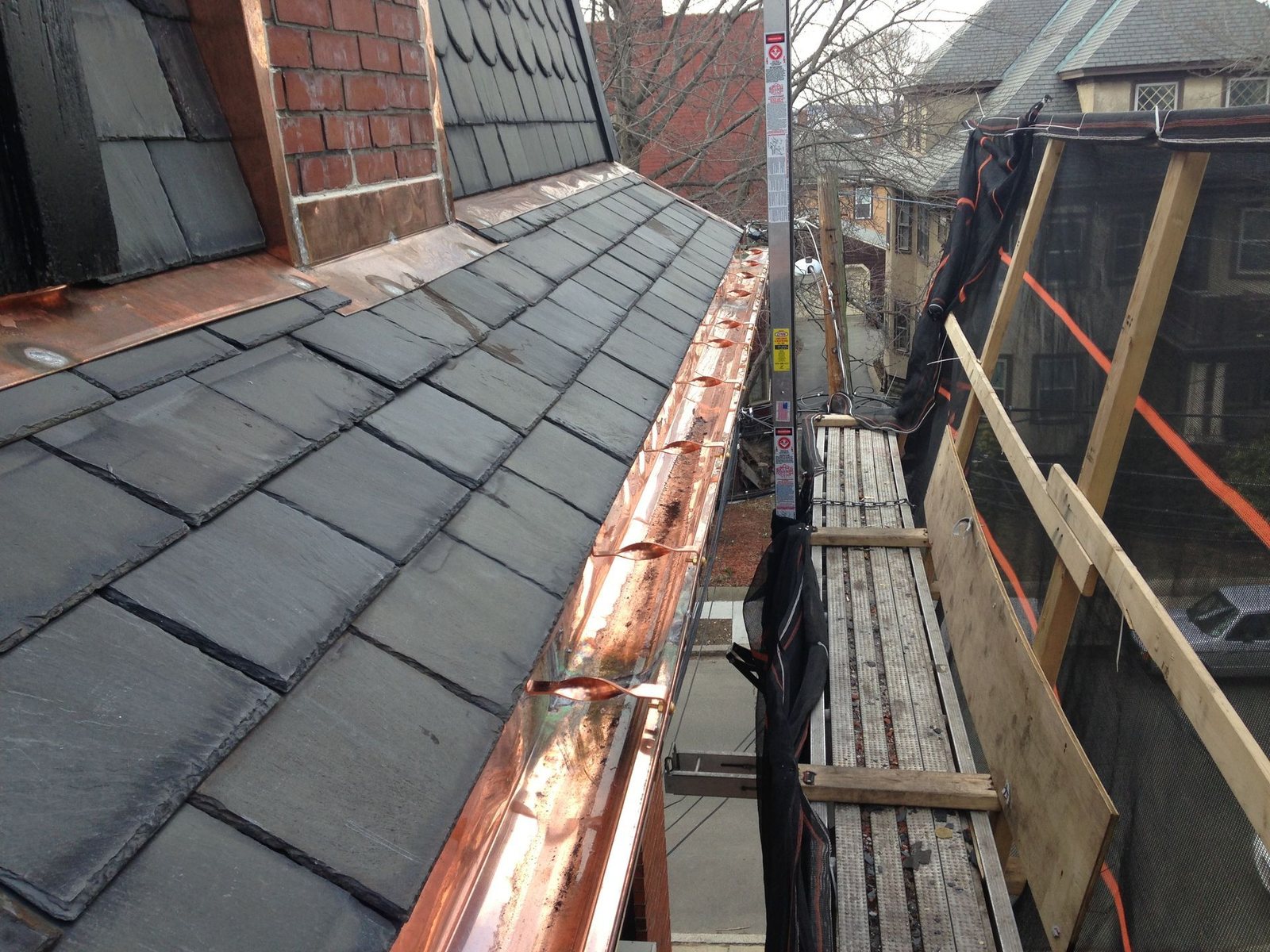
Flashing material: why we run copper over galvanized steel
Common flashing materials include aluminum, copper, and galvanized steel, and the flashing material you pick decides how long the joint holds. Copper runs 50 years and up, often outlasting the slate it protects. Galvanized steel gives you 15 to 30 years and rusts first at the folds and nail holes. Aluminum lands around 20 to 40 years in a dry spot but corrodes fast in salt air or against masonry.
Here is our house rule, and it is not flexible. Copper flashing or it does not get fastened. Steel flashing on a slate roof is a future leak, so we do not install it. Copper is one of the high quality materials that matches a roof built to last, and 16-ounce copper is the weight we form for step and counter-flashing on historic work. Match the metal to the roof and the joint stops being the weak link.
Common signs of damaged roof flashing
Catching flashing problems early is the cheapest roof work you will ever pay for. Common signs of damaged roof flashing include water stains, rust, and missing sections near the penetrations. Water stains, visible rust, and deteriorated sealant all point to roof flashing repair before the next hard storm. Watching for issues early is the difference between a patch and a rebuild.
Water stains and the early signs inside the house
Start indoors. Water stains on ceilings indicate possible flashing leaks, most often near a chimney or along an exterior wall. Peeling paint or bubbling plaster on an upper floor is the next tell. Mould growth on walls may signal damaged flashing letting moisture sit in the cavity. A musty smell in the attic after frequent rain belongs on the same list. These early signs read faint at first, like a ghost ring after a Nor’easter, so do not wait for them to spread.
Rust or corrosion and loose flashing outside
From the ground or a ladder, the exterior signs are plainer. Any rust or corrosion on the metal is the material telling you its time is up. Rust on metal flashing shows it is deteriorating and close to failing. Visible cracks or gaps in flashing suggest it needs repair before the next heavy rain drives water in. Loose flashing lifting away from a chimney or dormer is a red flag. Pooling water around chimneys indicates flashing failure at the base. Add missing mortar where counter-flashing should be set, and cracked sealant pulling off the flashing edges, and you are looking at leaking flashing.
Why flashing fails on Boston’s older roofs
Flashing failure is rarely bad luck. It is age, weather, and old workmanship stacking up. On a 20 to 30 year old roof the metal develops pinholes, solder joints open, and the sealant beds harden and crack. Since flashing typically lasts 20 to 25 years with proper care, plenty of Boston roofs are simply past due. The metal at the joints is where flashing fails first, not the field.
Improper installation and poor installation on past reroofs
The most common cause we find is not weather at all. It is improper installation from an earlier reroof. Step flashing left out and replaced with a caulk bead. Overlaps cut too short. Copper flashing run into aluminum gutters, which sets up a galvanic reaction that eats the softer metal. That kind of poor installation fails early no matter how good the roof above it looks.
Extreme weather, clogged gutters, and structural movement
Then the weather does its part. Boston runs 90-plus freeze days a year, and water freezing in a seam overnight splits the joint a little more each cycle. Extreme weather, salt air off the Charles and the Harbor, and the steady freeze-thaw all speed corrosion, worst on galvanized steel and aluminum. Clogged gutters back water up against eave and wall flashing until it finds a way in. And old brick townhouses settle over decades, slowly pulling flashing off chimneys and parapet walls.
DIY roof flashing repair: when it is safe, and when it is not
Some homeowners try a DIY roof flashing repair, and on a basic roof with intact metal a minor fix can hold for a while. On slate, copper, or anything three stories up, it is a job for a professional roofing contractor. The honest line is this: a DIY roof effort at the joints is a stopgap, never a permanent solution.
Minor fixes with a caulking gun, flashing tape, and roofing cement
For minor repairs, the tools are simple. Applying a flashing sealant with a caulking gun can fix minor cracks or gaps on accessible, intact metal flashing. Sealing small gaps this way buys time. Flashing tape can temporarily seal small cracks in flashing as an emergency measure before a Nor’easter. You can scrape old sealant off with a putty knife and apply roofing cement to a stable edge, but treat it as a hold, not a fix. Any minor fixes here are the temporary kind. With the proper tools and a fresh bead of roofing sealant, sealing gaps on a low, walkable section is within reach for a careful homeowner.
When DIY repairs are not safe or a permanent solution
DIY repairs are the wrong call on slate roofs, copper roofing, steep or multi-story roofs, and complex chimneys. They are also wrong wherever there is rot in the surrounding wood or extensive damage to the deck, because coating over that hides the real problem. Safety measures include using a secure ladder setup and wearing slip-resistant shoes, but a three-story drop in Beacon Hill and slick slate make even careful DIY roof work dangerous.
The mistakes we get called to undo are predictable. Coating everything in roofing cement instead of finding the root cause. Layering new metal over old flashing that hides rust. Cracking slate while prying it up. Or running a wire brush over copper and tearing the patina off. If you have tried any of that, scrape it back with a utility knife and get a professional roofing contractor up there before winter.
How we repair roof flashing: the full repair process
Professional flashing repair is a methodical repair process, not a smear of goop. Fixing roof flashing well is less about sealant and more about metal. Here is how our crew repairs damaged roof flashing on Greater Boston’s older homes, step by step.
Inspecting the leak and reading the common signs
We inspect roof flashing during dry weather to find the source of the leak, because wet metal hides where the water actually enters. Inside, we follow the water stains back along the rafters, since water intrusion often travels several feet before it drips. Outside, we check the chimney, wall, and valley flashing for loose sections, failed mortar, and corrosion, plus any shingle damage or shifted slate at the flashing edges. After major storms we go straight to every spot where the roof meets a vertical surface.
Removing the damaged flashing and old sealant
Next the old metal comes out. We gently lift the surrounding shingles or slate with slate rippers and flat bars so nothing sound breaks. Any flashing showing rust or corrosion, cracks, or improper installation gets fully removed, along with rotted decking under it. On brick, we grind a clean new reglet and scrape the old sealant away with a putty knife or utility knife, then a wire brush clears the mortar dust before new metal goes in. Existing flashing that is still sound stays put when only one run has failed.
Installing new flashing for a watertight seal
Then we build the new joint. Replacing damaged flashing means cutting new flashing to size with tin snips, matched to the roof geometry. Replacement flashing should match the existing material type, so copper rather than aluminum or galvanized steel on a historic roof. New flashing is tucked under the upper shingles and over the lower ones, so water always runs over the metal, never under it. Roof flashing should be properly integrated with the roofing layers for clean water shedding, with step pieces layered course by course and counter-flashing set into the masonry.
Blind-fastened cleats and copper roofing nails hold the flashing material without leaving exposed heads, and at the worst joints we tie the metal into self-adhering membrane for a redundant watertight seal.
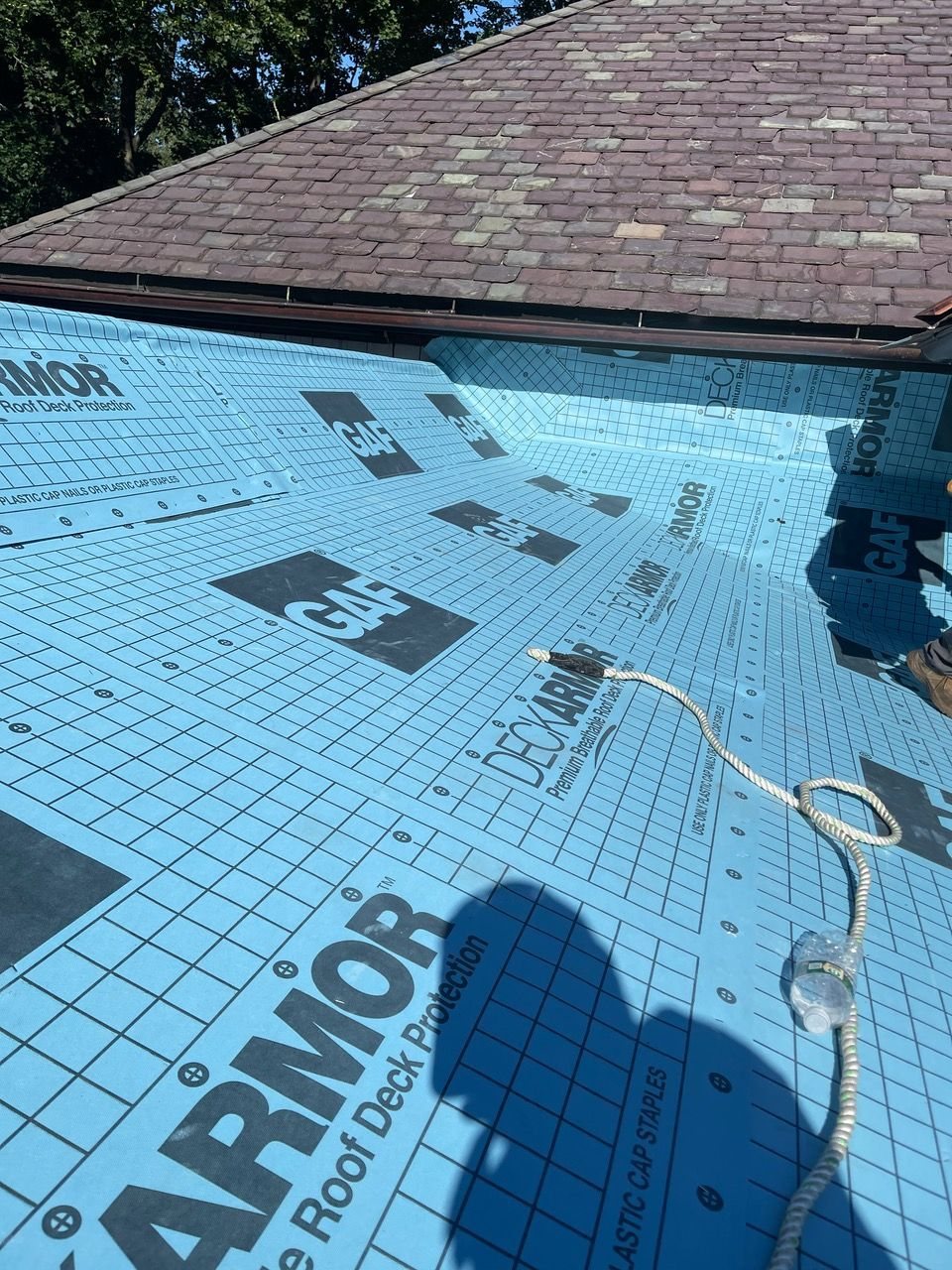
Sealing, roofing nails, and the final test
Last comes the finish and the check. Roofing sealants should be applied to all seams and nail heads for a watertight finish, but sealant is a supplement, never a substitute for correct metal overlaps. Sealant applied under any loose edges of flashing enhances the waterproofing at those transitions. We reinstall the surrounding roofing materials to match the pattern, then run a gentle water test to mimic rain and photograph the finished work. Done right, the repair is invisible from the street.
Special spots: roof valleys, vent pipes, and skylights
Some spots leak far more than others. Flashing repair costs vary based on damage extent, so the location drives the number as much as anything.
Chimneys. The chimney is the number one leak source on these roofs. It needs a real reglet cut into the brick, not mortar smeared over old metal, which fails in a season. Boston chimney jobs typically run $500 to $1,800 or more once copper and repointing are involved. We keep the chimney method in its own chimney flashing repair guide, and the roof-to-wall detail in our step flashing walkthrough.
Roof valleys. Metal valley flashing on slate or asphalt can split, rust, or clog with debris, and then water backs up into the roof structure. We seal the gaps or replace the valley metal before it reaches the deck.
Flat roofs and parapets. Base flashing at parapet walls and tie-ins to built-in copper gutters fail often on the flat and rubber roofs hung off historic rowhouses.
Vent pipes and skylights. Rubber boots around vent pipes dry out under UV and crack, and loose fasteners let water in around skylights. We swap the whole boot rather than caulk the gap, which is the only lasting fix.
Preventing the next flashing repair
Preventive care is cheaper than waiting for major repairs, especially on a slate roof, where a full replacement in Greater Boston commonly runs $35,000 to $80,000 or more. A little attention each season heads off the flashing repair that turns into an interior job.
Schedule a professional look each fall and spring, plus a check after major storms and Nor’easters. Keep gutters and downspouts clear so water does not back up into the eave and wall flashing. Clogged gutters are behind a lot of failures, and we can check gutter condition during a roof assessment. Keep the chimney masonry sound too, tuckpointing the mortar before counter-flashing loses its anchor, which ties into our chimney repair work.
Watch for issues early. A faint stain near a skylight, peeling paint, a rust streak on the brick. Call before a minor issue becomes a leaking roof, and document repairs with photos for historic-district and insurance records.
When repair beats roof replacement, and what it costs
Almost every time, targeted repair beats tearing the roof off. Professional repairs often save money in the long run by fixing the root cause instead of masking it. Most roofs with one or two failed joints need replacement flashing at those spots, not a full roof replacement, as long as the slate or copper underneath is sound.
What follows is general market framing, not a quote for your roof. A single flashing repair on an accessible section is modest. A chimney job with copper and masonry commonly lands in that $500 to $1,800 range. The illustration worth remembering runs the other direction: a $1,500 flashing repair skipped for a winter can become tens of thousands in plaster, floors, and framing. That math is why we push repair first.
Why homeowners hire a professional roofing contractor
There is a reason slate and copper owners hire a professional roofing contractor for flashing instead of a handyman. The metal has to be formed and lapped right, and the joints hide under siding and slate where a guess costs you a ceiling.
We are Art Slate Roofing, LLC, family-run since 2005, right around twenty years now, out of 55 Raymond Street in Cambridge. Arturo Nieto, the owner, walks every roof himself before a number goes on paper, and a small senior in-house crew does the work with no subcontractors. We stick to slate roofs, copper roofing, copper flashing, chimney work, and historic roof restoration across Greater Boston, from Cambridge and Somerville to Beacon Hill, Newton, Brookline, Belmont, Arlington, Watertown, Lexington, and Wellesley.
We are licensed and insured, MHIC #176393, rated 4.9 across 23 Google reviews. Assessments are free, and emergency help runs 24/7 when a leak cannot wait. Related work often rides along with a flashing repair, from copper roofing repair to gutter and chimney work. If a leak is active right now, our emergency line comes first.
Frequently asked questions
How much does roof flashing repair cost?
It depends on the spot and the metal. A small flashing repair on an accessible section is modest, while a chimney job with copper and repointing commonly runs $500 to $1,800 or more in the Boston area. Those are general market ranges, not a quote for your roof. We give a firm number only after someone has actually been on the roof.
Can I do a DIY roof flashing repair myself?
On a basic roof with sound metal, sealing small gaps with a caulking gun or flashing tape can hold for a while. On slate, copper, or anything three stories up, no. A DIY roof flashing repair at the joints is a temporary hold, never a permanent solution, and the fall risk on slick slate is real.
What are the common signs of flashing damage?
Common signs of damaged roof flashing include water stains on ceilings, rust or corrosion on the metal, cracked sealant, loose flashing, and pooling water around a chimney. Inside, watch for peeling paint and mould growth on walls. Any of those means the flashing needs a look before the next storm.
How long does metal flashing last?
Copper metal flashing runs 50 years and up. Galvanized steel lasts about 15 to 30 years, and aluminum around 20 to 40 in a dry spot. Flashing typically lasts 20 to 25 years with proper care, which is usually less than the slate or copper around it, so it is the part that fails first.
Should I repair roof flashing or go for a full roof replacement?
Almost always repair. Most roofs with one or two failed joints need replacement flashing at those spots, not a full roof replacement, as long as the slate or copper underneath is sound. We only raise roof replacement when a whole section is gone or the deck is soaked through.
Does flashing tape or roofing cement fix a leaking roof?
For a day or two, maybe. Flashing tape can temporarily seal small cracks, and you can apply roofing cement to a stable edge as an emergency measure on a leaking roof. Neither is a fix. The water finds the next gap, so book a real repair before the metal fails for good.
What causes water intrusion around vent pipes and skylights?
The rubber boots around vent pipes dry out and crack under UV, and the seals at skylights loosen over the years. That is where water intrusion starts on a lot of roofs. We replace the whole boot assembly instead of caulking the gap, because a caulk patch there fails fast.
How do you get a watertight seal on new flashing?
By building the metal, not the sealant. We cut new flashing to size, tuck it under the upper shingles and over the lower ones, lap each piece, and fasten with copper roofing nails. Roofing sealants go on the seams and nail heads last, as a supplement. That layered overlap is what makes a watertight seal that holds.
Is loose flashing a serious problem?
Yes. Loose flashing lifting off a chimney or wall means water is getting behind it, and that leads to serious damage in the framing and plaster if it sits. It rarely fixes itself. Catch it early and it is a minor repair. Wait and it becomes an interior job.
Can you save existing flashing, or does it need replacing?
Sometimes. Existing flashing that is still sound stays put when only one run has failed. When the metal shows rust or corrosion or improper installation, replacing flashing at that spot is the honest call. We do not layer new metal over old, because that hides the rot underneath.
How long does the flashing repair process take?
A single joint is often a few hours to a day. A chimney rebuild with repointing takes longer. The flashing repair process is the same either way: inspect, remove the damaged flashing, cut and set new metal, seal, and water-test. We photograph the finished work so you can see what changed.
Do clogged gutters cause flashing problems?
They do. Clogged gutters back water up against the eave and wall flashing until it works behind the metal, and that is one of the common flashing problems we trace on older roofs. Keeping gutters and downspouts clear is the cheapest way to protect the flashing at the edges.
What roofing materials do you use for replacement flashing?
Copper for slate and copper roofs, every time. Replacement flashing should match the existing material type, so we do not mix metals that corrode against each other. Copper is one of the high quality materials that outlasts the roof, which is why steel flashing on a slate roof is a future leak we do not install.
Talk to the owner
We start with a real look on the roof, not a number typed in from a photo. Flashing hides its trouble under siding and slate, and you cannot call the repair-or-replace question from the ground. So we get up there and read what the water is doing to your metal, your slate, and your deck.
Every job gets walked by Arturo before a number goes on paper. If you have a stain near a wall or a chimney and cannot tell whether you need one run of new flashing or something larger, that walk is free. Call 617-913-1130, schedule a free assessment, or reach our emergency line if the leak is active, and we can tell you straight where the water is getting in.