Historic homes deserve roofs built the way they were.
Historic roof restoration in Boston, Beacon Hill, Back Bay, and Cambridge. Period-correct slate, copper, chimney, and gutter work by a licensed crew.
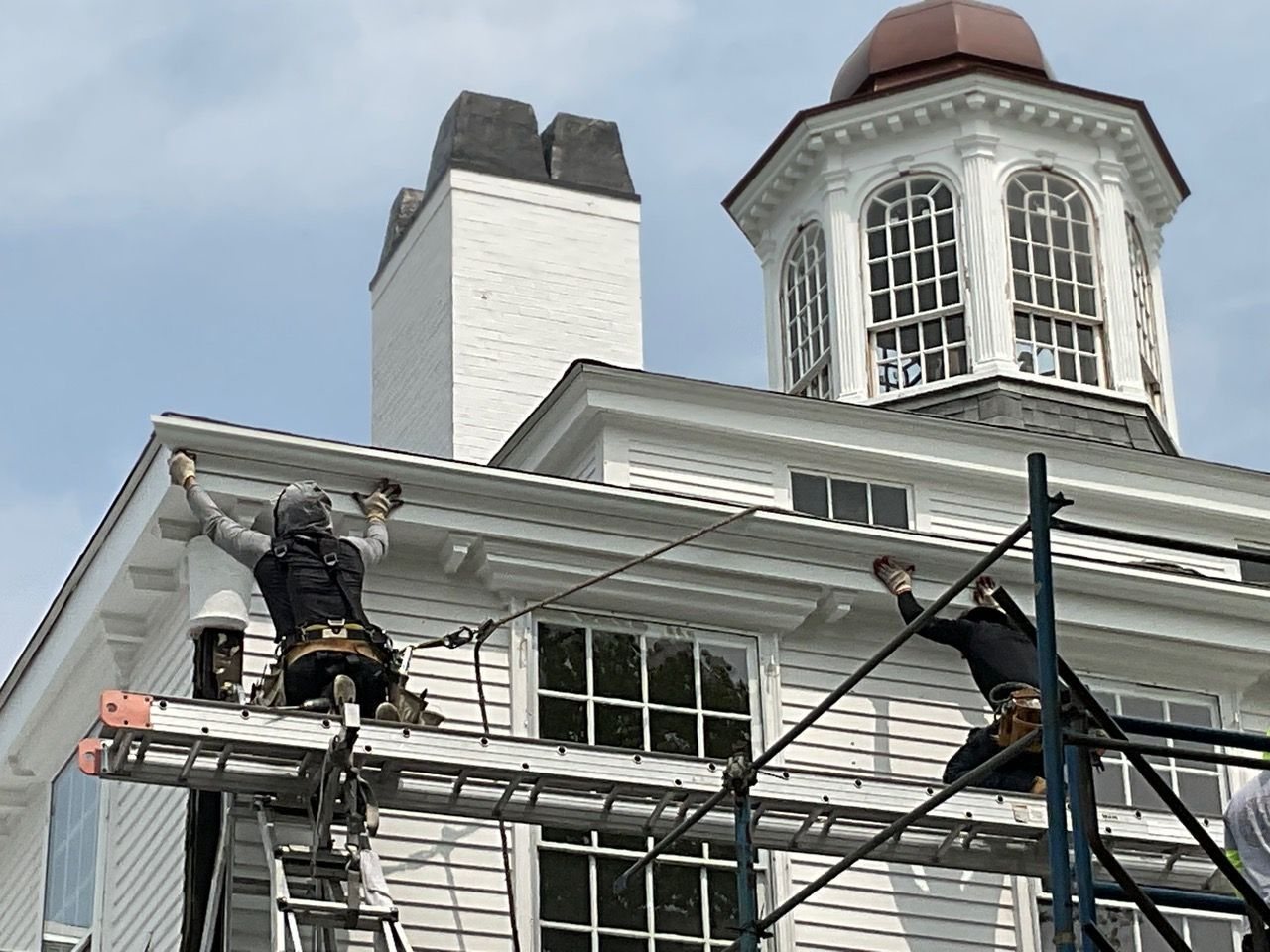
I am Arturo Nieto, and I have restored slate and copper roofs on Boston’s oldest streets since 2005. My shop is in Cambridge, the crew is my own, and I still walk every roof before a price goes on paper. If you own a period home in Beacon Hill, Back Bay, or Cambridge, this page is the honest version of what a historic roof restoration involves, and why it is a different craft from a plain re-roof.
Historic roof restoration for older Boston homes
A historic roof restoration is not a re-roof with fancier tiles. It is the work of returning an old roof to its original condition in the materials the architect specified, held to real historical accuracy. That takes qualified people who have done period work before, because historic restoration techniques do not carry over from an asphalt crew. Careful craftsmanship is what preserves the integrity of an old roof and keeps historically accurate materials on the building.
Slate is the reason many of these roofs have lasted. Quarried stone cut thin, it does not burn, and it carries a Class A fire rating, so its durability is why a slate roof can outlive the people who paid for it. Where the slate is only locally damaged, a targeted slate roof repair preserves the original roof instead of replacing it. That repair-first rule holds on every historic home we walk.
The work historic buildings were built to need
Walk the attic of an 1898 brownstone and the house tells you what it wants. The rafters were sized to carry slate, the chimneys were detailed for copper-clad flashing, and the gutters were half-round copper with conductor heads to match. That is how most of these historic buildings were put together, as one slate-and-copper system. Drop modern asphalt shingles onto that and you have done more than change the look; you have broken up a roof that was meant to work as a whole.
So we start where the architect did. Slate and clay tile are heavy, a good deal heavier than shingle, so before anything goes back up I have the framing checked for the load it can still carry. If the old lead-coated copper is spent, we set bare copper in its place. It darkens into the same patina over a few winters, and looked after, a copper roof will outlast most of us, a hundred years and then some. Failed mortar joints get re-pointed, the masonry matched to a lime-cement mix from the right era. And if the house is on the National Register or sits inside a local historic district, we already know what you are allowed to touch and what will trip a commission review.
Why asphalt shingles rarely belong on a historic roof
Asphalt has its place, but it is an 18 to 25 year roof by design. You strip it off and start over every couple of decades. On an old house that means chipping away a little more of the original detail every time you re-roof, and swapping a material that lasts a century for one that will not see thirty. When a home was framed for slate, that math almost never falls in the owner’s favor, so it is not a trade I will talk anyone into.
When restoration becomes a historic roof replacement
Not every roof can be saved one slate at a time. Sometimes the deck underneath has gone soft from years of trapped water. Sometimes a third of the field slate is already flaking apart, or a careless re-roof somewhere in the past tore off the detailing that made the roof original. When that is what we find on the walk-through, a full historic roof replacement is the honest answer, and I would rather say so than sell you another season of patching. The leaks you can actually see are usually the smallest part of the story.
When we rebuild, we do it in the materials the roof was born with, because every roofing material on a period home is one piece of a single roofing system. That means natural slate matched to the original pattern, copper flashing we hand-form on site, and half-round copper gutters where the house was built to have them. Rebuilt that way, the roof keeps the building registry-eligible and still looks the way it was meant to, so you end up sound overhead without trading away the historic character that made the place worth restoring.
More than slate: copper roofing and clay tile roofing
Slate gets the attention, but it is rarely working alone up there. Copper roofing does the quiet jobs, the valleys, the flashings, the gutters, and because metal roofing like copper and tin shrugs off weather for generations, it is usually the copper that holds the whole thing together. Some houses were built under clay tile roofing instead, and clay tile is about as old as roofing gets, still earning its keep on homes a century and a half on. Others started life under wood shingles, standard stuff in 19th century roofing. So depending on when a Boston house went up, and who built it, its historic roof might be slate, clay tile, or metal, and often some of each.
How a restoration runs
The process is the same on every restoration project, and it starts with paper, not tools. Documentation of the existing conditions comes first, then an honest read of whether the structure of the historical building is still sound. Historical research settles the original design intent before we order a single slate, and we secure approvals from the preservation authorities where the work needs them. Throughout, we use fasteners that are chemically compatible with the metal around them, so nothing sets off corrosion down the line.
Historic documentation
Period-material research
Historic commission liaison
Period-correct installation
Restoration binder
Inspection and a preservation-friendly maintenance program
A historic roof rewards attention. Specialized inspection techniques catch the small failures that a walk-by misses, and regular inspections keep interior water damage from ever reaching the plaster. Catching issues before they worsen is what protects the roof and the historical integrity underneath it. Once the restoration is done, we set up a preservation-friendly maintenance program so the roof stays sound for decades, and we answer emergency calls when a storm finds a weak point, because fast response is part of keeping an old building dry. Any weatherproofing we add is chosen to blend with the historic character of the roof, never to override it.
Historic preservation and the commission review
Historic preservation in Boston runs through the local historical commissions, the preservation boards, and the Massachusetts Historical Commission where a property warrants it. Federal guidelines exist for the certified rehabilitation of historic structures, and meeting that regulatory compliance is simply part of doing the job right, not a box we bolt on at the end. We handle the applications and the documentation, and we obtain the approvals before a single slate is lifted. That is how a restoration protects the architectural integrity of a building and keeps it registry-eligible.
Historic properties and historic places we treat as landmarks
Some of the buildings we restore are private homes; others are historic places the whole neighborhood knows. Churches carry their own weight, where preserving history calls for care that a plain re-roof never demands, and a presbyterian church or a downtown meeting hall gets the same respect for its original materials as a Beacon Hill townhouse. Heritage homes and larger historic properties come down to the same promise. Keep the original character, and give the building back real weather protection. You can see our most notable projects on the portfolio page. As a roofing contractor that has worked these streets since 2005, our team of craftsmen brings the expertise these buildings need, and the honest high quality service that keeps owners calling back.
Historical roofing materials, matched to the original
Historical roofing materials are a matching problem before they are a labor problem. Replacement pieces have to match the originals in color, size, and texture, or the repair announces itself from the street. We retain the original materials wherever they can still do their job, and we avoid indiscriminate replacement of sound slate, because every original piece kept is architectural integrity preserved. The oldest roofing materials, slate, clay tile, and wood shingles among them, each carry their own quirks, and matching modern materials to them takes a craftsman who knows the difference. Character-defining features, the decorative ridge, the patterned field, the copper finial, stay on the building. Any modern performance we add sits underneath, never over, the historic aesthetics.
A glimpse of the portfolio
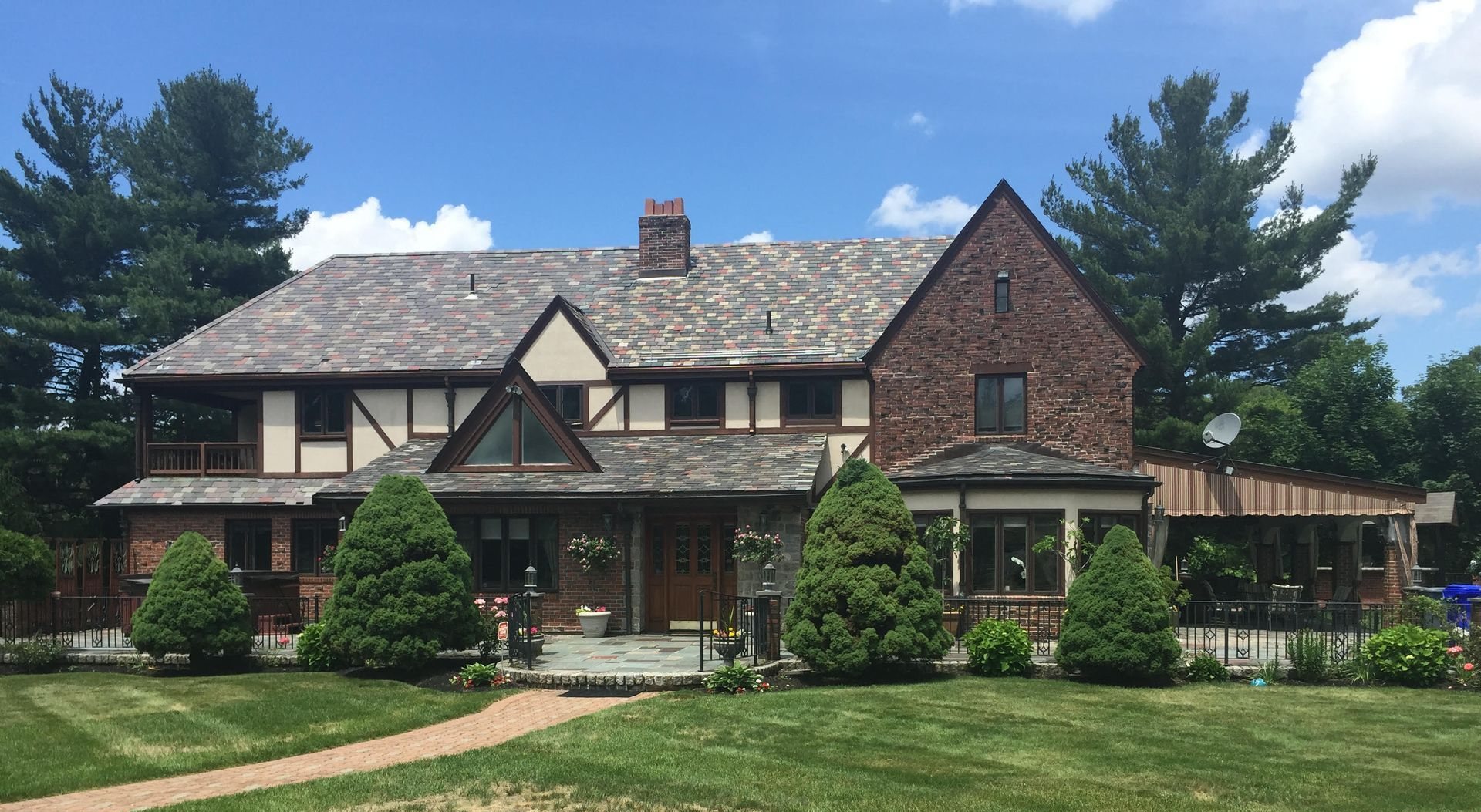
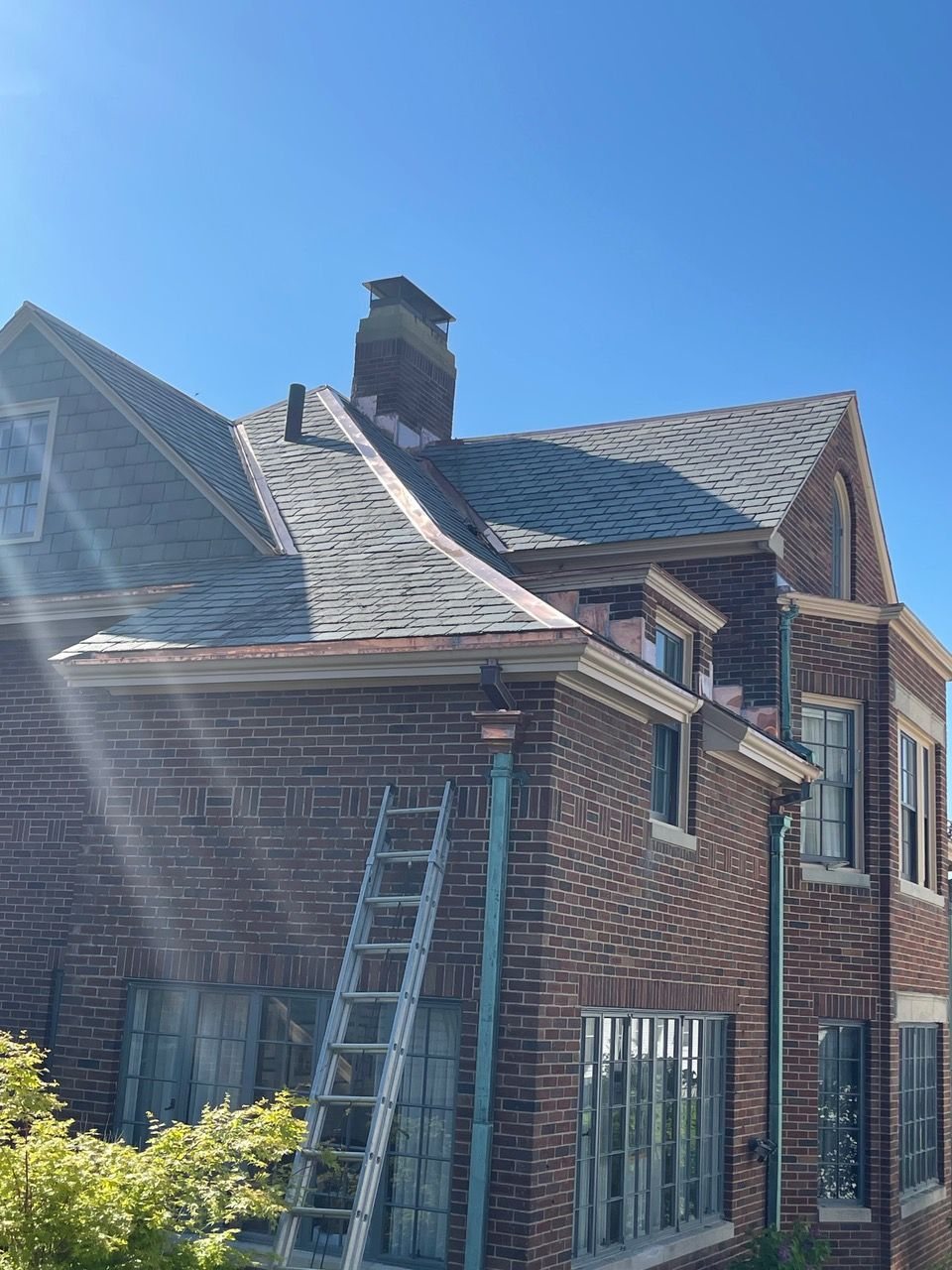
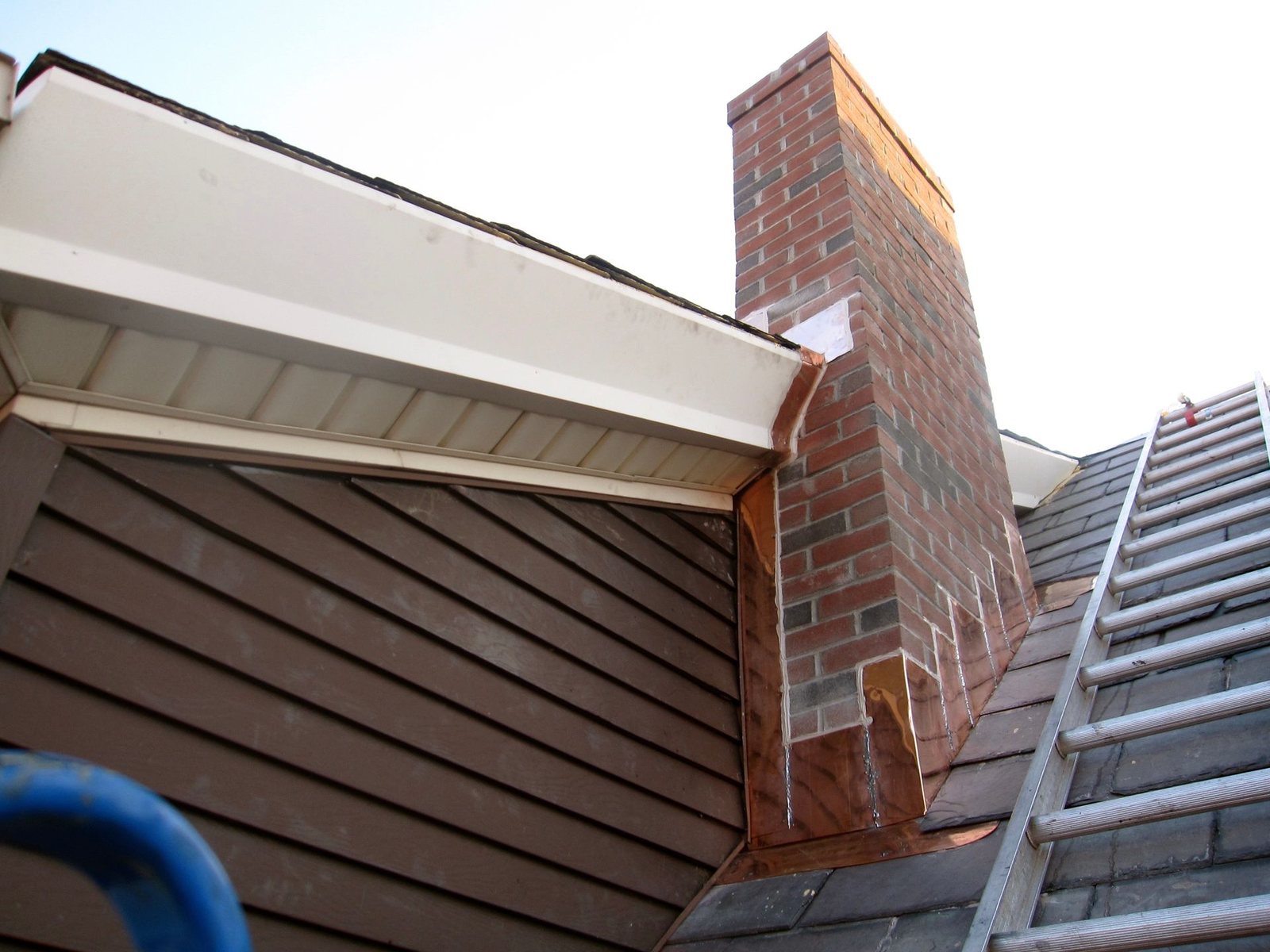
What does slate actually cost you over a lifetime?
A slate roof costs more on day one and less by year sixty. The tool below runs that math on Greater Boston replacement cycles instead of national averages, so you can see where the crossover falls on your own house. The useful figure is the gap between the two columns and the year slate pulls ahead, not the headline total.
What does slate actually cost you over a lifetime?
A slate roof costs more on day one and less by year sixty. This works out where the crossover falls on your house, using Greater Boston replacement cycles rather than national averages.
- Re-roofs avoided
- —
- Slate pulls ahead
- —
Totals are in future dollars, with replacement costs escalated 3.5% a year, so long horizons produce large-looking numbers. The useful figure is the gap between the two columns and the year slate pulls ahead, not the absolute total. Planning figures, not a quote: real numbers depend on pitch, access, the state of the deck, and how much copper the roof needs. Arturo walks the roof before anyone puts a price on it.
Want these numbers checked against your actual roof? Send it over and Arturo will take a look. The assessment is free, and if the answer is that you do not need us yet, that is what you get told.
These are planning numbers, not a quote. The real figure depends on pitch, access, the state of the deck, and how much copper the roof needs. Arturo walks the roof before anyone prices it, and if the honest answer is that a repair will hold, that is the answer you get. The assessment is free, and it is the part of the job he still likes most.
- 2005 Family-run since
- 4.9★ 23 Google reviews
- Commission MA Historical experience
- In-house Crew, never subcontracted
Licensed & Insured · MA Construction Supervisor · MHIC Registered