Gutter Replacement Cost in Greater Boston: What Drives the Price
Gutter replacement cost in Boston: per linear foot prices for aluminum, copper, and seamless gutters, plus removal, fascia, downspouts, and labor.
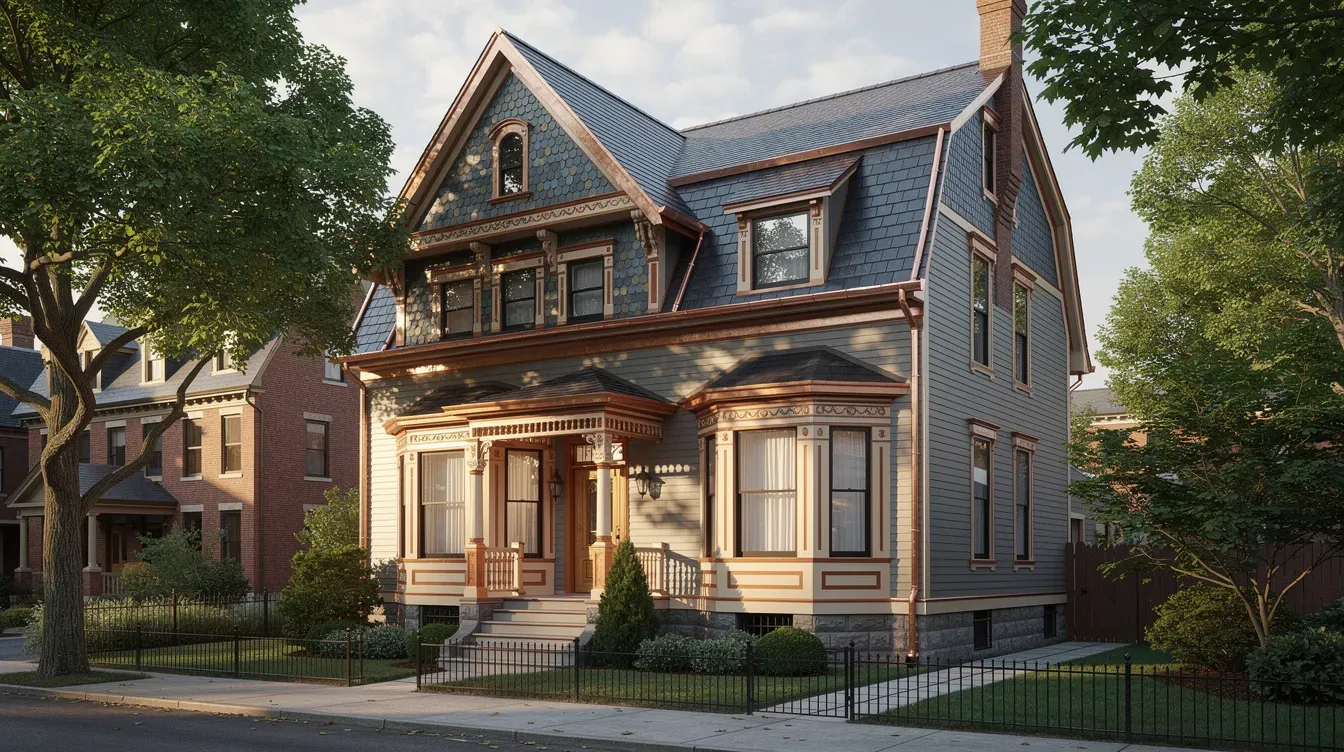
TL;DR: Nationally, a gutter installation runs about $629 to $1,736, with an average near $1,182 (Angi, 2026). Angi's Boston average is $1,451. Per linear foot, expect roughly $3 to $15 for aluminum, $15 to $40 for copper, and $3 to $7 for vinyl. Removal, fascia repair, downspouts, home height, and roofline complexity move the final bill as much as the gutter does. Replace instead of repairing when damage spreads across several runs or a single year of repairs reaches $500 to $700.
Gutters · 15 min read
Most homeowners put off gutter replacement until something forces it. A drip over the back door. A run that sags after a February ice load. A brown stain creeping down the foundation. At that point you want one thing: a fair number.
This guide breaks down gutter replacement cost by material, profile, labor, and the add ons that pad a final bill. Every dollar figure here comes from published national or Boston cost guides (Angi, HomeAdvisor, This Old House, Bob Vila, HomeGuide). Treat them as industry ballparks, not an Art Slate Roofing price.
Gutter replacement cost at a glance: national average vs Boston
Start with the national numbers. Angi’s 2026 cost guide, built from surveys of its own customers, puts a typical gutter installation at $629 to $1,736. The national average is about $1,182. Angi’s Boston page runs higher, $768 to $2,149 with an average of $1,451, and notes that Boston’s cost of living sits about 46% above the national average.
Those averages describe a plain job. Add copper, a third story, or a roofline full of dormers, and whole house totals between $1,000 and $6,000 are normal. Angi’s own table shows a 150 foot system costing anywhere from $600 to $6,000 depending on material. HomeGuide puts continuous aluminum gutters at $900 to $2,400 installed for an average home.
The per foot spread is just as wide. Depending on the gutter materials, installed prices run about $3 to $40 per linear foot nationally. In Boston, Angi lists $5 to $38.
Four things set the total cost: gutter materials, linear footage, home height and roofline, and whatever is hiding behind the existing gutters. That last one catches people. On older Boston houses, a rotted fascia board behind old gutters is common, and it has to be fixed before anything new goes up.
Gutter installation cost per linear foot installed
Most gutter installers price the job by the linear foot. Some fold materials, labor, downspouts, and gutter removal into one rate. Others split them out. Before you compare two bids, check which kind you are holding. A materials only number sitting next to a per linear foot installed number makes the cheaper bid look far cheaper than it is.
A worked example. Say your house needs 150 linear feet of gutter. At Angi’s Boston range for aluminum ($8 to $13), that is $1,200 to $1,950. Copper at Angi’s Boston figure of $35 to $38 runs $5,250 to $5,700 for the same run. In our copper vs aluminum gutter breakdown, half round copper with hidden hangers, hand soldered seams, and about 80 feet of downspout comes to $6,500 to $11,000 on a typical Boston home. Profile and joinery add labor.
| Material | National cost per linear foot | Boston (Angi) | Typical lifespan |
|---|---|---|---|
| Vinyl | $3 to $7 | $5 to $9 | 10 to 15 years |
| Aluminum | $3 to $15 | $8 to $13 | about 25 years |
| Galvanized steel | $5 to $20 | $8.50 to $9.50 | 15 to 20 years |
| Copper | $15 to $40 | $35 to $38 | 50 to 100 years |
National ranges are from Angi and HomeAdvisor. Lifespans are Angi’s.
Where do the tighter numbers you see online fit? Aluminum at $5 to $9 per linear foot is a mid band national figure inside Angi’s $3 to $15 range. In Boston, plan on the upper part of it. Copper gutters at $15 to $40 per linear foot installed match Angi and HomeAdvisor exactly. Steel usually lands around $8 to $12, and vinyl at $3 to $5 is the bottom of the market.
Labor sometimes appears as its own line. Bob Vila’s cost guide lists $2 to $6 per foot for sectional work and $3 to $10 for one piece runs. So a labor line of $6 to $9 per foot is the upper end. That is the kind of number a three story house on a tight Cambridge lot produces.
Seamless gutters cost vs sectional gutters
Sectional gutters are pre cut pieces, usually 5, 10, or 15 feet long, joined on site with connectors and sealant. Seamless gutters come off a coil in a truck mounted machine and get cut to the length of each run. They are custom built gutters in the literal sense.
Two price ranges for these continuous gutters float around, and both hold up. The $5 to $20 per linear foot figure describes standard aluminum or steel: HomeGuide puts it at $6 to $20 installed. The $10 to $25 figure is closer to an all in job with 6 inch gutters, downspouts, and harder access. HomeGuide’s overall installed average across gutter types is $12 to $25. Either way, expect a continuous run to cost about $3 to $5 more per foot than sectional.
What the extra money buys:
- Fewer leaks. There are no joints along the straight runs, and those joints are where sectional systems start to drip once the sealant dries out.
- No mid run joint failures. Corners, end caps, and outlets still have seams, so even a one piece system has a few joints to watch.
- A longer service life. Bob Vila and HomeAdvisor both credit one piece systems with outlasting sectional ones made of the same material.
- Fewer repair visits on tall houses, where every call needs taller ladders or staging.
Copper is the exception. Copper usually goes up in lengths joined with soldered seams, and a well soldered joint holds for decades.
Gutter materials, local climate, and how long each one lasts
Material choice drives both what the gutters cost and how long the gutter system lasts. Per Angi, gutters last anywhere from 10 to 100 years depending on the metal. Our local climate is hard on all of them. Logan averages about 49 inches of snow a season under NOAA’s 1991 to 2020 normals, and that comes with nor’easters, ice dams, and salt air near the coast. Our ice dam prevention guide covers how a clogged gutter feeds the problem.
Vinyl gutters: low price, poor long term value in extreme weather
Vinyl gutters cost $3 to $7 per linear foot in Angi’s data, with the cheapest jobs at $3 to $5. They last roughly 10 to 15 years. This Old House notes that plastic turns brittle in extreme cold and sags when it isn’t supported well. Low maintenance in a mild climate. Poor long term value through a Boston winter.
Aluminum gutters: rust resistant and the regional default
Angi calls aluminum the most popular gutter type in Boston. It is rust resistant, light, and sold in dozens of colors. Aluminum gutters cost $3 to $15 per linear foot nationally and $8 to $13 in Boston, and they last about 25 years. The weak spot is dents from ladders, branches, and ice. This Old House recommends the thicker .032 inch gauge where snow loads run heavy, which describes Greater Boston.
Steel gutters: strong under ice, heavy to hang
Galvanized steel gutters run $5 to $20 per linear foot in Angi’s numbers, and most standard jobs land around $8 to $12. They take ice load better than aluminum. They are also heavy to hang, and once the zinc coating wears through, rust follows, usually within 15 to 20 years. Stainless steel can last the life of the house, per Bob Vila, at a price closer to the premium metals.
Copper gutters and half round profiles on historic homes
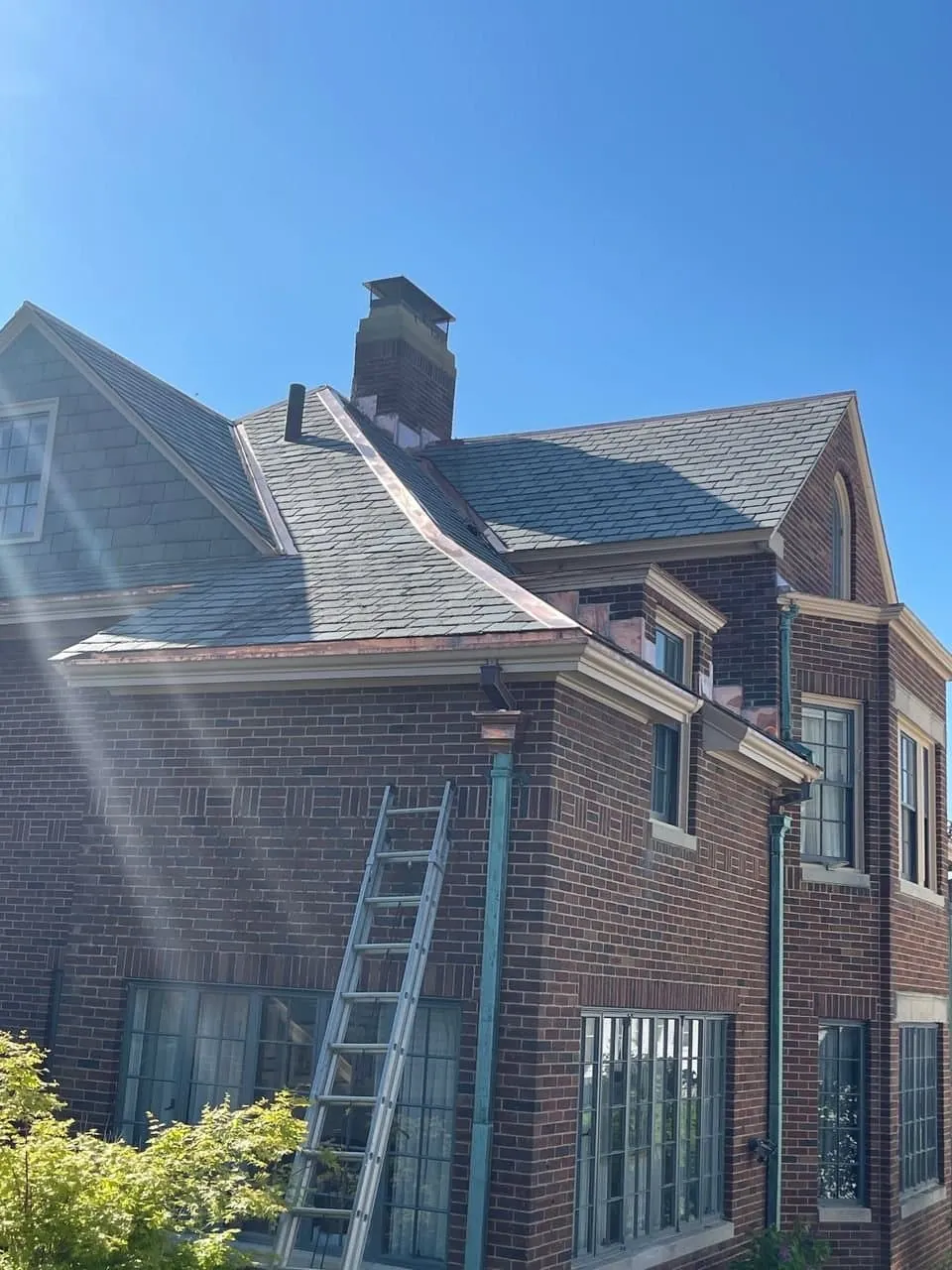
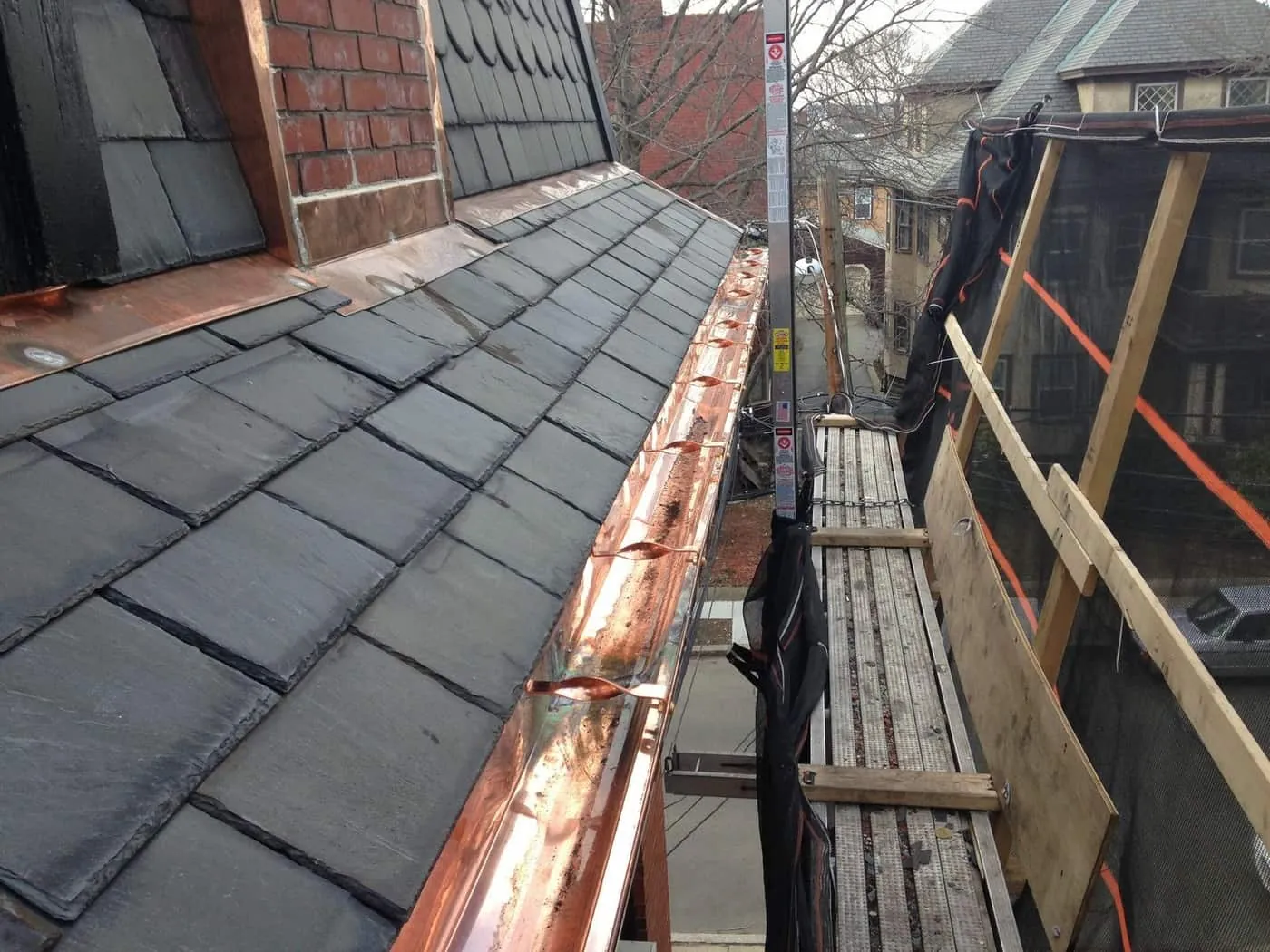
Copper gutters cost $15 to $40 per linear foot installed nationally. HomeAdvisor gives them 50 to 100 years with proper care. Copper weathers to a patina that sits well beside slate and copper roofing. It has the highest upfront cost of the common metals, and every joint needs someone who can solder.
On our gutter repair and installation page we are blunt about where we land. Half round copper on hidden hangers is the standard for older Boston homes. K style aluminum is the practical choice when copper isn’t in the budget.
K style gutters vs half round gutters: cost and curb appeal
The profile changes both the look and the cost per linear foot.
K style gutters have a flat back and bottom, and a front edge shaped like crown molding. They fasten flat to the fascia, so they go up faster. Angi says they are the most common type on homes built in the last 50 years. Most are 5 inch aluminum, with 6 inch versions for bigger roofs.
Half round gutters are a semicircular trough on brackets or hidden hangers. HomeGuide adds $1 to $2 per linear foot for half round because the installation is more specialized. The curb appeal on a Victorian or a brick rowhouse is hard to argue with.
Angi’s Boston page notes that some historic districts, Beacon Hill among them, may require half round profiles. Check with the local commission before ordering anything. Our historic roof permits guide explains how that process works in Boston, and half round gutters gets a full post of its own. Which profile moves more water depends on size and outlet layout, so size the system from roof area and pitch, not from the shape alone.
Labor costs, labor rates, and home height
Labor costs vary by region, and Greater Boston sits near the top. Angi puts Boston gutter labor at $50 to $100 an hour or more, with about three to five hours per 150 feet on a simple job. Urban jobs cost more than rural ones. Tight lots, parking, permits, and overhead all push labor rates up. HomeGuide says poor access alone can add 15% to 25%.
How big a slice is labor? Angi and HomeAdvisor put it at 10% to 50% of the bill. You will also see 40% to 60% quoted. That share fits the hard jobs: three stories, a cut up roof, tear off and fascia work bundled in.
Single story homes vs houses that need taller ladders and staging
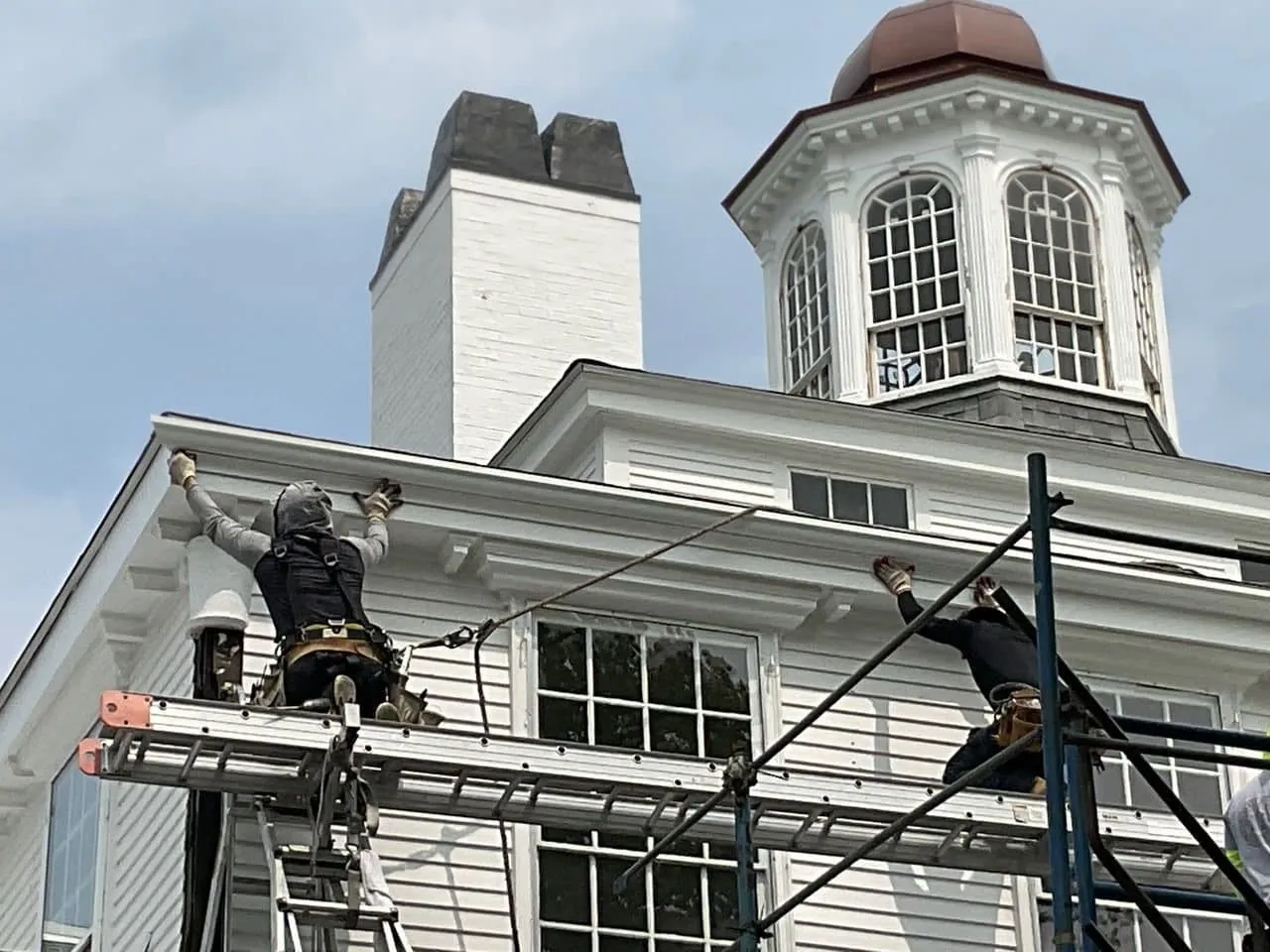
A ranch in Newton with eaves at 10 feet is a ladder job. A triple decker in Somerville is not. Multi story homes need extra safety equipment to install gutters: taller ladders, staging, harnesses, sometimes another person on the crew. HomeGuide adds $1 to $3 or more per linear foot for a second story compared with single story homes. Home height also stretches the downspouts, which are priced by the foot.
Complex roof designs and custom built gutters
Complex roof designs raise both material and labor costs. Each dormer, valley, and inside corner means another custom cut, another miter, and another joint to seal. Angi prices custom gutter work at $6 to $40 per linear foot, and HomeGuide says difficult access on steep or complicated roofs can add 10% to 30%. Ornate cornices and slate at the eave add time for careful gutter removal as well. Pairing gutter work with a roof project or chimney flashing repair lets both jobs share one round of staging.
Additional costs that change the final bill
The gutter itself is only part of the quote. These are the line items where a final bill drifts.
Gutter removal and disposal of old gutters
Taking down old gutters adds removal and disposal costs. HomeAdvisor lists $1 to $2 per linear foot to remove them, plus $150 to $350 for hauling when disposal isn’t included. HomeGuide’s numbers are close. Old copper has scrap value, so ask how salvage is handled before the tear off starts.
Fascia board repair behind existing gutters
Fascia condition can swing the price more than the gutter itself. As we put it on our gutter repair page, the gutter is usually the easy part and the fascia is where the surprise lives. Rotted wood behind existing gutters has to be replaced first, or the new hangers pull loose within a few seasons. HomeGuide puts fascia replacement at $5 to $12 per linear foot, or $9 to $34 for fascia and soffit together.
If the wood is sound and a run just sags, new hangers may be all it needs. The hardware is cheap. HomeGuide lists basic hangers at $2 to $3 each plus labor, heavier hidden hangers cost a bit more, and This Old House’s retail survey spans $2 to $17. Budgeting $3 to $5 per hanger is reasonable.
How many downspouts? One downspout per 30 to 40 feet, plus downspout extensions
Downspout count, length, and placement all move the price. This Old House recommends one downspout for every 30 to 40 feet of gutter, with tighter spacing where rain runs heavy. HomeGuide says most homes have 4 to 5 downspouts, each 10 to 15 feet long, at $30 to $75 apiece installed. A taller house means longer downspouts.
Downspout extensions or splash blocks add $10 to $50 per downspout. They earn their keep. This Old House says to discharge water at least 4 feet out so it moves away from your home’s foundation. After all, a gutter system has one job: carry water off the roof and away from the house.
Gutter guard systems and other add ons
A gutter guard cuts cleaning. It does not end it. Angi’s Boston page lists guards at $4 to $11 per linear foot, and HomeGuide’s installed range for full gutter guard systems is $15 to $45. In a This Old House survey of 1,000 guard owners, 64% said they saved 4 to 8 hours or more a year on gutter maintenance.
Where we stand: we don’t install gutter guards as a default. We quote them when asked, but on most houses we recommend cleaning twice a year instead, once in fall after the leaves drop and once in spring after the thaw. Pine needles slip past many guards and pack into a mat, and that debris still has to come out by hand.
Repair or replace gutters? When leaks and costly repairs stop making sense
Not every leak means you need to replace gutters. Often a patch is the right call.
Repair usually makes sense when:
- A few joints leak and can be resealed. Angi puts a leak fix at $80 to $140.
- A run sags, the fascia is sound, and new hangers fix it.
- One short section took a hit from a falling branch.
- The rest of the system is younger than about 20 years.
Angi puts most gutter repairs between $120 and $900, with an average cost of about $390. HomeGuide’s typical range is $100 to $450.
Replacement makes more sense when:
- Rust, pitting, or cracks show up along several runs.
- Old sectional seams keep reopening after each repair.
- The gutters pull away from the fascia in more than one place.
- The system is past 20 years and the metal is thinning.
- Costly repairs keep stacking up year after year.
A practical trigger: if one year of repair bills reaches $500 to $700, price a full gutter replacement before paying for the next patch. That number isn’t arbitrary. Angi’s rule of thumb is to replace once a repair tops 50% of replacement cost. Half of Angi’s average Boston installation ($1,451) is about $725.
Professional installation vs DIY: why most homeowners hire local pros
Some homeowners try DIY to save on labor costs. On a one story house with sectional vinyl, it can work. Past that, the risk climbs quickly.
What professional installation gets you:
- Correct pitch. This Old House’s standard is a 1/4 inch drop per 10 feet of run. Too little and water sits. Too much and it can overflow.
- Hangers fastened into sound wood, not rotted fascia.
- Continuous runs, which need a roll forming machine most homeowners will never own.
- Warranties on materials and workmanship. Ask every installer what theirs covers, and for how long.
Where DIY goes wrong:
- Ladders. A study in the American Journal of Preventive Medicine counted an average of 136,118 ladder injuries a year treated in U.S. emergency rooms. Where the location was recorded, 97% happened away from work, at homes and farms.
- Long runs. A 30 or 40 foot gutter takes two people to lift without kinking it.
- Collateral damage. A dropped pry bar cracks slate, dents copper, and splits old trim.
On historic homes with slate or copper roofs, we treat professional installation as the only option. Mistakes in pitch, fastening, or the flashing detail can cause leaks and water damage that cost more than the labor you saved.
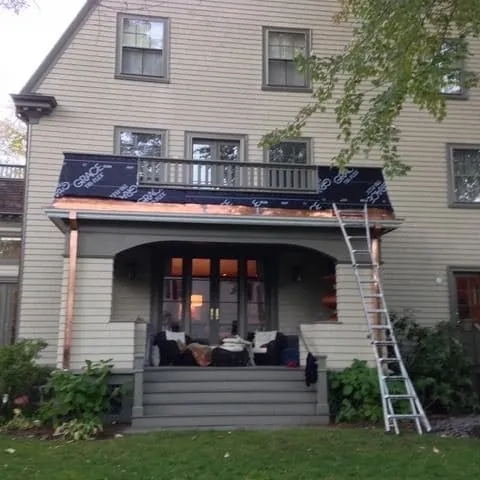
Planning your gutter installation project: questions for gutter installers
Treat new gutters like any other home improvement. Define the scope, get more than one quote, and make sure every quote describes the same job.
Before anyone measures:
- Walk the house. Note the rough linear footage, where water overflows, and where downspouts dump against the foundation.
- Pick a material and a profile. On an older house, the architecture usually makes that call.
- Decide whether gutter guard systems, downspout extensions, or roof flashing repair belong in the same visit.
Questions to ask gutter installers:
- Is removal and disposal of the old gutters in the price, or an additional cost?
- What gauge of aluminum, or what weight of copper?
- How many downspouts, where, and what size?
- Is fascia repair priced per foot up front, or as a change order after tear off?
- What do the materials and workmanship warranties cover?
- In a historic district, has the commission approved the profile?
A general contractor or a siding crew can install gutters. On a slate or copper roof, you also want someone who understands how the gutter meets the roof edge and the flashing, because that joint is where water sneaks behind the fascia.
Getting a free estimate that compares like with like
Most projects start with a free estimate, and ours works the same way. Whoever you call, ask for the scope in writing: linear feet, hanger type and spacing, downspout count and placement, a fascia allowance, removal, and any add ons. Then compare line by line. A lower total that leaves out removal or fascia work is not a lower price.
Frequently asked questions
What is the average cost of gutter replacement in Boston?
Angi’s 2026 Boston data puts a typical gutter installation at $768 to $2,149, with an average of $1,451. The national average is about $1,182. Per foot, Boston runs $5 to $38 depending on material. Copper, a third story, fascia repair, or a cut up roofline will push a job well past those averages.
What is the cost per linear foot for new gutters?
Nationally it runs $3 to $40 per linear foot depending on material. Vinyl sits at the bottom. Aluminum falls between $3 and $15, galvanized steel between $5 and $20, and copper between $15 and $40 (Angi and HomeAdvisor). One piece aluminum or steel runs about $6 to $20 per linear foot installed, per HomeGuide. Always ask whether a quote is materials only or installed.
Are one piece gutters worth the extra cost?
On most houses, yes. They cost roughly $3 to $5 more per foot than sectional gutters and they remove the straight run joints, which is where sectional systems usually start leaking. Corners, end caps, and outlets still have seams. Those still need a look every spring and fall.
How long does a gutter system last?
It depends on the metal. Angi gives vinyl 10 to 15 years, aluminum about 25, galvanized steel 15 to 20, and copper 50 to 100. Pitch, hangers, and cleaning matter as much as the material. All gutters require regular maintenance to reach those numbers.
Should I repair or replace my gutters?
Repair when the damage is local and the system is younger than about 20 years. Replace when rust, sagging, or seam leaks show up along several runs, or when one year of repairs reaches $500 to $700. Angi’s rule of thumb is to replace once a repair costs more than half the price of a new system.
Do gutter guards replace regular maintenance?
No. Guards cut how much debris gets in, and in a This Old House survey 64% of owners said they saved 4 to 8 hours or more a year. Pine needles and roof grit still get through. Plan on inspecting and cleaning at least twice a year either way.
Talk to the owner
A gutter quote should start on a ladder, not from a satellite photo. The pitch, the fascia, the downspout route, and the roof edge all change the number.
Every gutter project Art Slate quotes gets walked by Arturo before a number goes on paper, and that walk is free. See what we install and repair on our gutter repair page, schedule a free assessment, or call 617-913-1130. You get an honest answer on whether the work is needed now, in a few years, or not at all.