Roof Leak Repair Near Me: Fast Help for Greater Boston's Historic Homes
Roof leak repair near me in Greater Boston: what causes leaks in older slate, copper, and flat roofs, how we trace and fix them, and what the repair and cost really look like.
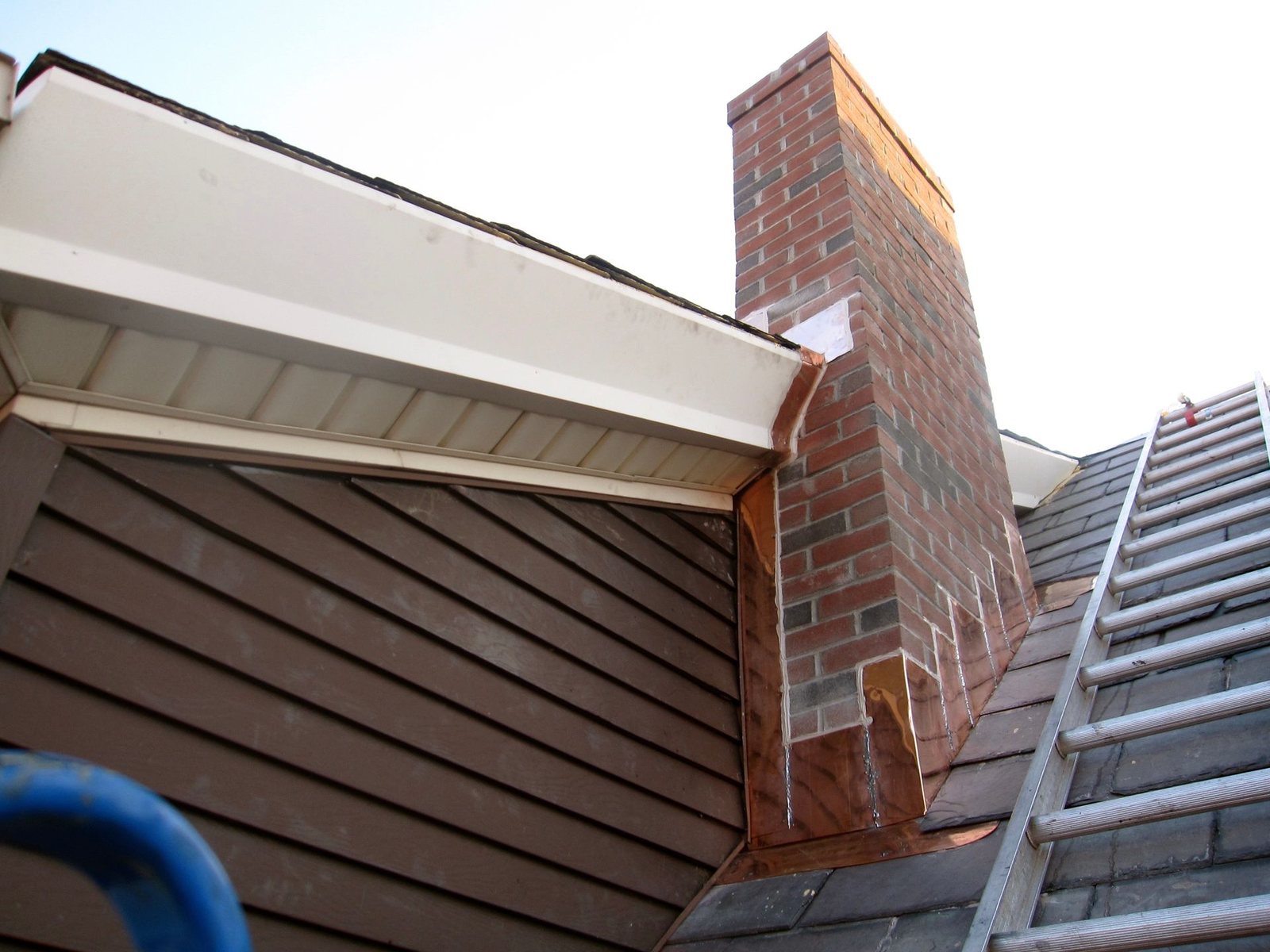
TL;DR: Searching roof leak repair near me in Greater Boston? Here is the honest version. Most leaks in older homes do not start at one clean hole. They start at flashing, valleys, and worn slate, and the water travels before it drips. We find the real entry point, fix slate, copper, and flat roof leaks where they actually come in, and put active leaks first with 24/7 emergency response. If the roofing system underneath is still sound, one or two leaks almost always get repaired, not replaced.
Repair · 15 min read
Water is coming through your ceiling. The house is a 19th-century one, plaster and lath, and you do not want a general contractor up there guessing. You want a roofing expert who reads old construction. If you have been searching roof leak repair near me in Greater Boston, this is written for you. I will tell you what actually causes roof leaks in older Boston homes, how we track them down, and what the repair and the cost really run.
Roof leak repair near me: get help now
Art Slate Roofing does roof leak repair all over Greater Boston, from Beacon Hill and Back Bay out to Newton and Cambridge. Active leaks come first, and we often make it out the same day, because water does not keep business hours. Our emergency response runs 24/7.
We work on slate, copper, and flat roof repair, mostly on homes built between 1850 and 1940. Those roofing materials and the details around them need great care and a set of techniques most roofers never pick up.
So here is what to do right now. Call (617) 913-1130 for emergency roof leak repair, or send a note through the contact form for a free roof assessment.
A leaking roof is not something to sit on. Left alone, roof leaks do water damage fast. Original plaster ceilings swell and let go, mold growth starts inside 48 to 72 hours, and hidden rot quietly multiplies the bill. Move early and you head off further damage and the expensive repairs that come with it.
Common roof leaks in Boston’s older homes
Here is the thing most people get backward. A leak in this city’s older housing stock rarely comes from one clean hole in the field. It comes from the joints. Flashing around chimneys and dormers, valleys where two roof planes meet, wall intersections, and roofing materials that are simply worn out. Nine times out of ten the culprit is tired flashing, or damaged shingles and missing shingles letting water slip past.
Signs homeowners should watch for:
- Brown or yellow water stains on ceilings
- Peeling paint on interior walls near masonry
- Damp attic insulation after heavy rain
- A musty smell on upper floors after storms
- Ice building up along second- and third-floor rooflines
- Cracked or missing shingles you can spot from the ground
On slate, leaks tend to start at a slipped or broken slate, a corroded copper nail, or a worn ridge cap. Slate cracks and slides after decades of freeze-thaw and sun exposure, which breaks roofing materials down through UV a little more each year. Asphalt shingles on a later addition are different. They give you 18 to 25 years, then the curling shingles and damaged shingles start letting water through.
Flat roofs have their own list. Over a bay, a porch, or a rear addition, the water shows up at ponding, a failed membrane seam, or a clogged drain.
Now the part that separates a real fix from a smear of caulk. Water is sneaky. It can run sideways under slate or ride a rafter for several feet before it ever drips onto a ceiling. So we do not just look where the stain is. We inspect the roof surface and the attic framing together, find the hidden path, and seal the vents, penetrations, and failed junctions at the actual point of entry.
Flat roof repair on Boston brownstones and additions
Plenty of homes in Beacon Hill, Back Bay, and Cambridge mix pitched slate up top with a flat roof over the rear ell, a dormer, or a bay window. Those low-slope patches are the leakiest part of the whole house, and flat roof repair in Boston wants materials and methods built for our winters, not a warm-climate spec.
What actually fails is short and predictable. Drains freeze or clog below 32 degrees and back water against the parapet wall. Modified bitumen blisters when moisture gets trapped under the membrane. Seams let go around skylights, vent pipes, and the roof-to-wall transition. And where the pitch has settled, or was never right to begin with, water just stands.
The fix follows an order, and skipping steps is how you get a callback. Clear the drains and scuppers first. Re-seal or heat-weld the seams. Replace membrane that is too far gone. Then correct the pitch with tapered insulation where it makes sense.
For our climate you are picking a membrane that survives 60-plus freeze-thaw cycles a year. EPDM rubber runs 20 to 25 years, modified bitumen 15 to 20, and a TPO or PVC system 20 to 30 or more. Each roofing system trades something. EPDM costs less and shrugs off a cold snap. TPO and PVC reflect heat and cut your summer bills.
Done right, flat roof repair also fights storm damage and wind damage, because a fully adhered membrane with the edge flashing locked down is what keeps a nor’easter from peeling it back.
Slate and copper roof repair and historic roof restoration
Since 2005 we have stuck to the work most contractors would rather not touch: slate roof repair, copper roof repair, and historic roof restoration on period homes across Greater Boston. Slate is everywhere on this region’s older houses, and it asks for techniques a general roofer never learns. Our guide to slate roof repair near me gets into the weeds on it.
On the slate side, we swap out a cracked or missing tile, re-hang the slipped courses on copper hooks or bibs, and match the new slate to the old in size, thickness, and color so the patch disappears into the roof. Good slate runs 75 to 150 years, depending on the quarry and how much weather that slope takes.
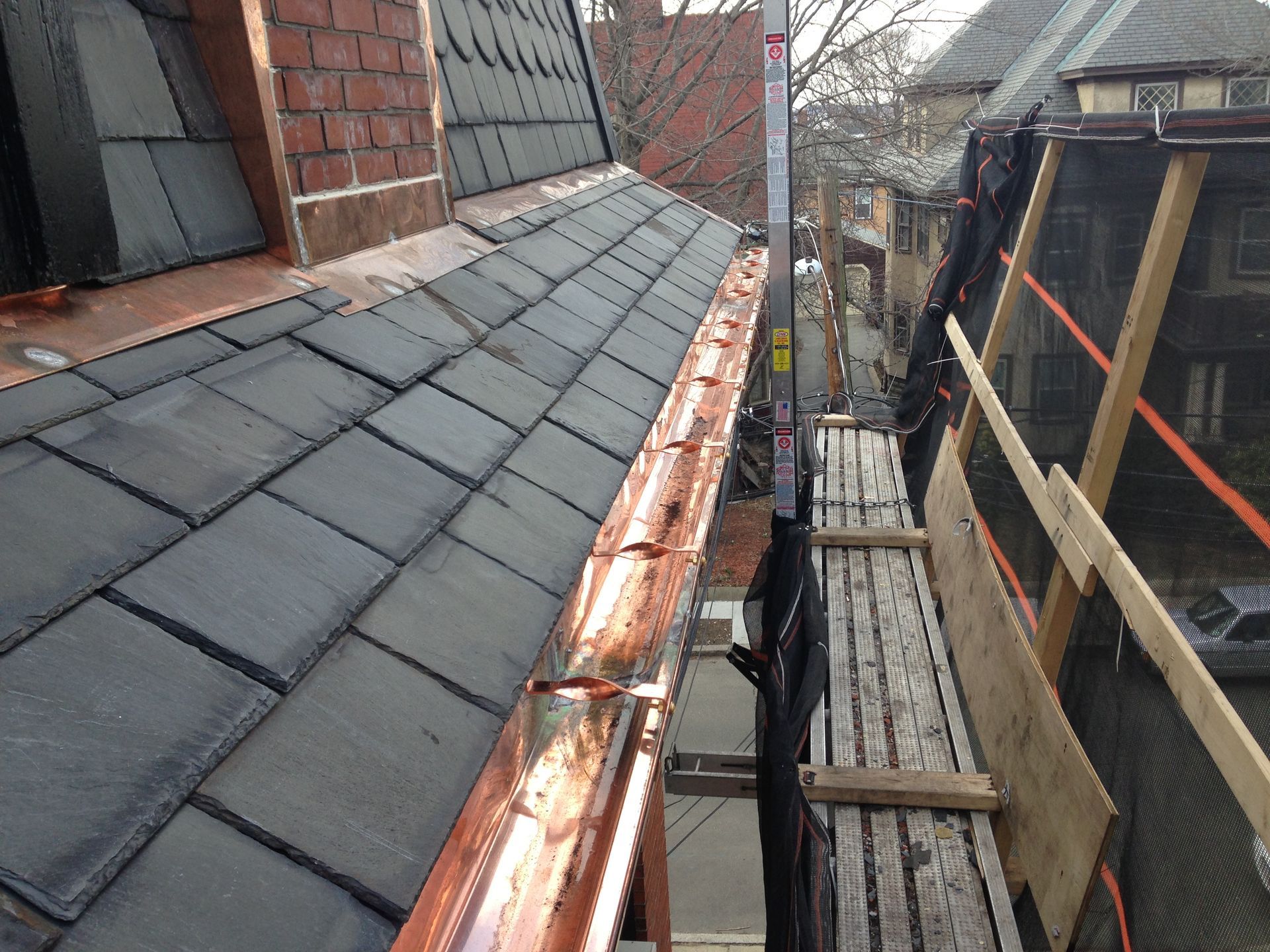
Copper is its own craft. We repair or replace copper valleys, standing seam panels, snow guards, and the decorative ridge and hip caps that split and corrode with age. Copper gets used for flashing for one reason: it lasts. A copper roof will go past 50 years on basic maintenance.
And a lot of historic roof restoration is just undoing someone else’s shortcut. Pulling asphalt shingles out of an original slate field. Stripping aluminum flashing that got laid over old copper. Those moves trap moisture and break preservation standards, and they always come back to bite. These are specialty roof systems. The quality workmanship that keeps them watertight is worth preserving, not patching over.
Flashing, chimney, and roof penetration repairs
If you make me name the single biggest source of roof leaks around Boston, it is flashing, and it is not close. Chimneys, dormers, wall intersections. That is where we find the water most. The repair is either resealing the flashing or, more often, replacing it where the metal has corroded or pulled away.
Chimney flashing is the classic. The step and counter-flashing around a brick or stone chimney fails when the mortar cracks, when a caulk-only fix dries out, or when the original lead or galvanized metal finally corrodes through. We set heavy-gauge copper flashing built to last decades, following the approach in the National Park Service Preservation Brief 29. Our chimney flashing repair is meant to be permanent, not a visit you repeat in three years.
Valleys and the spot where a roof meets a sidewall collect debris, hold ice, and take a beating. Across multiple areas of the roof, those usually want copper or a high-grade metal, not another patch.
Penetrations are the sneaky ones. Vents, plumbing stacks, skylights, and vent hoods ride on boots and gaskets that dry out and crack after 10 to 15 years of sun exposure and heat. Ridge and box vents both need a look. These are slow leaks, and they hide until the water damage finally shows on a ceiling or a wall.
However we do it, we pull the surrounding slate or shingles, set the new flashing to spec, and lay the roofing back over it so the fix actually holds. We do not smear caulk over the problem and call it a job. Flashing is the most common repair we do, and getting it right the first time is what prevents callbacks and further damage.
Repairing damage from wind, storms, and ice
Boston’s nor’easters, the coastal wind, the freeze-thaw, all of it tests every roof in the city. Storm damage can force an emergency repair any month of the year, and a single heavy rain can do real harm to an older structure. Our storm damage roof repair guide walks through the insurance side in depth.
Wind is the loud one. A strong gust lifts shingles on the auxiliary roofs, knocks a ridge cap loose, and now and then pries a slate right off an exposed ridgeline. On additions built from the 1950s to the 1970s, the curling shingles and missing shingles are the first to go. After any big blow we go up and check for damage from hail, wind, and rain.
Storm damage is uglier and faster. A branch through a flat roof. Debris gouging a copper valley. Hail chipping a slate edge. That kind of thing needs prompt attention, so emergency work includes temporary tarping and active leak control to protect your property until the permanent repair is scheduled.
Ice dams are the slow trap. Heat leaking out of a poorly insulated attic melts the snow up high, and it refreezes at the cold eave. Then water backs up under the slate or shingles and stains a ceiling weeks later, long after the storm. Our guide to ice dam prevention in New England lays out how to break that cycle.
For a roof that dams every winter, we install roof heating cables on smart controls that trigger on temperature and moisture. In the Boston area those systems commonly start around $5,000 for a residential roof, and they save you from paying for the same damage year after year.
Rotted wood, gutters, and fascia tied to roof leaks
A leak that runs for a season or two does not stay on the surface. It rots the decking, the soffits, the rafters, and the fascia, and it is worse in 19th- and early 20th-century homes where the original board sheathing and thin underlayment hold back almost nothing.
So when the deck is wet, we open the roof where we have to, cut out the wet or moldy boards, and put proper sheathing back before we close it up with underlayment, ice-and-water shield, and roofing. Any rot we find adds to the job, no way around it, but it heads off the structural failure that costs far more later.
Fascia is the usual surprise. There is often a warped, rotten board hiding behind the gutter that nobody sees until we pull it. We swap the damaged fascia and tie in the metal drip edge and ice-and-water shield so it does not rot right back.
And the gutters themselves matter more than people think. Clogged gutters back water up and damage the roof, the fascia, and the trim. On a steep slate roof, an undersized or badly hung gutter spills water behind the trim and into the wall. Proper copper or aluminum gutters with a correct drip edge installation protect the windows, the paint, the siding, and the foundation below.
Handling all of that during the roof repair is what keeps the leak from coming back and protects the home’s historic exterior.
Our roof leak repair process, from free assessment to final inspection
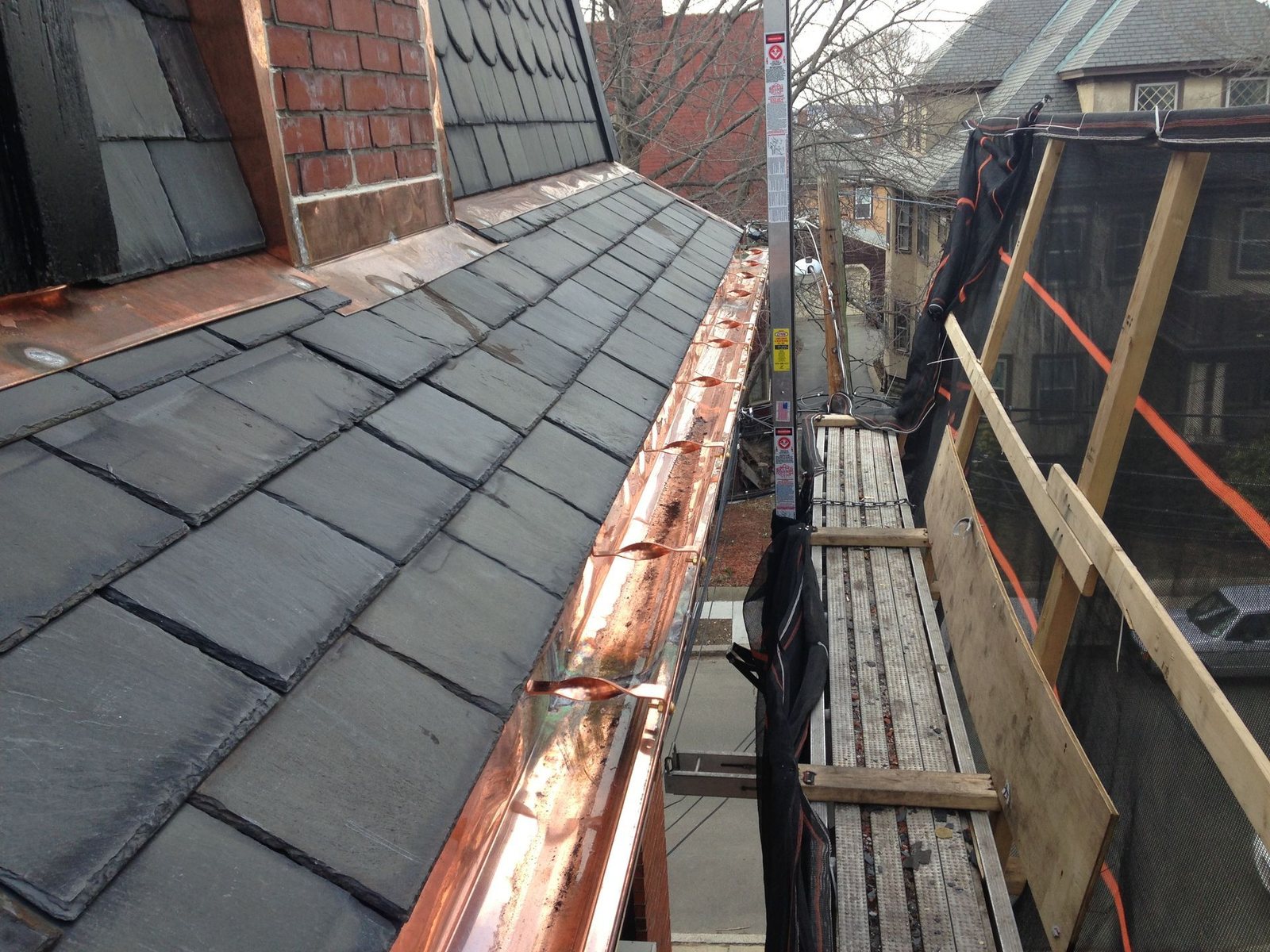
We run the same process on every roof repair so you always know what is happening, from the first call to the final photos. Safety sets the pace. A roof is a fall risk on a slick surface, so every job starts with proper staging, not a ladder leaned against a gutter.
The first call is a few quick questions. How old is the roof, and is it slate, copper, shingle, or a flat roof, and has there been recent storm or wind? We want to know what we are walking into before a crew rolls out, and for an emergency we often make it the same day.
Then the free roof assessment. That is an on-site roof and attic inspection with photos of every trouble spot. We read the attic for signs of active leaks, because a good roof inspection catches problems before they turn into expensive repairs. For any house over 50 years old, once a year is the right rhythm.
Next comes a written estimate, with the scope and the labor spelled out plainly. We separate the urgent leak repair from the optional maintenance and the longer-term restoration, give you honest roof repair cost ranges, and keep everything to code.
Then the repair itself. Staging and protection, out with the failed material, in with new underlayment, flashing, and matching roofing, then cleanup and a final walkthrough with before-and-after photos. We stand behind our workmanship. And a plain reminder: hiring a licensed and insured contractor for roof leak repair protects your property, your investment, and your insurance coverage.
Roof repair cost in Greater Boston, what to expect
Roof repair cost in this area swings hard with access, roof height, the roofing materials, and how far the water damage has already spread. What follows is a rough frame using general market ranges, not a quote for your roof.
Scale drives the number more than anything. A simple patch or shingle swap on an accessible, low-slope section commonly starts around $300. A slate leak around a chimney on a three-story Beacon Hill rowhouse costs a good deal more, once you add up the staging, the matching, and the labor. Flashing and valley work typically lands between $2,000 and $8,000, and more when several flashings and valleys are renewed together.
Prices updated Oct 2026; cross-checked against RoofVista’s Massachusetts slate cost guide and Angi. Not a quote.
Specialty materials are an investment, not a markup. Slate and copper need skilled hands and period-correct stock, and in a historic district a Certificate of Appropriateness can add both review time and cost.
Here is the part I want homeowners to hear, though. Repair usually beats replacement. Most roofs with one or two leaks get repaired, not replaced, when the slate or copper roofing system is still sound and the trouble is limited to a few roof sections.
A full slate roof replacement on a historic home commonly runs $35,000 to $80,000 or more in Greater Boston, which makes targeted repair services by far the cheaper path when the damage is contained. Our slate roof cost guide breaks the real numbers down.
So get a real number. Reach out for a no-obligation estimate and we price your specific leak and roof type, because every house is different and I would rather give you an honest figure than a guess. One last note on money: sudden storm damage from wind or hail is usually covered by homeowners insurance, while slow wear and an old leak are not.
Why Art Slate Roofing for roof leak repair near you
We are a family-run, Cambridge-based contractor, and we have stuck to historic slate and copper repair since 2005, right around twenty years now. When you search roof leak repair near you, here is the honest case for calling us first.
The experience is the real thing. Twenty years of slate roofs, copper roofing, period detail, and historic roof restoration across Beacon Hill, Back Bay, Newton, Brookline, Cambridge, and the towns in between. Arturo, the owner, walks every roof himself before a quote goes out. No drone, no driveway estimate.
The service is a straight answer. Free roof assessments, an honest read on whether to repair now or plan for replacement later, and work that keeps your home’s character intact. We diagnose before we prescribe, every time. And the workmanship shows: we match slate by quarry and color, use heavy-gauge copper and high-performance underlayment, and build repairs to last decades, not a season.
Rated 4.9 stars across 23 Google reviews, we serve Greater Boston, the North Shore, and the South Shore. Call (617) 913-1130 or send the online form to set up roof leak repair, flat roof repair, or a maintenance and inspection plan for your historic home. Do not let a small leak grow into a full restoration.
Frequently asked questions
How do I find a roof leak?
Start inside, not on the roof. Look for a brown or yellow stain on the ceiling, paint peeling near the chimney, damp attic insulation, and that musty smell after heavy rain. The catch is that the leak on the roof is almost never straight above the stain. Water runs under the slate and along a rafter first, so we read the roof and the attic together and trace it back to the real point of entry.
Is a roof leak an emergency?
An active one is close. Water gets into plaster, framing, and insulation fast, and mold growth can start in 48 to 72 hours. So if it is coming in right now, get a bucket under it, get a safe cover over it if you can, and call. Our emergency response runs 24/7 and active leaks go to the front of the line.
How much does roof leak repair cost?
It depends on access, height, and how far the water has traveled. In the Boston area a simple patch commonly starts around $300. Flashing and valley work usually lands between $2,000 and $8,000. A slate repair on a tall rowhouse runs more, because staging and matching cost real money. We give a firm roof repair cost once someone has actually been on the roof, never over the phone.
Will homeowners insurance cover a roof leak?
Often, when it comes from a sudden event like wind or hail. That kind of storm damage is usually covered, minus your deductible. Slow wear, an old leak you sat on, deferred maintenance, those are usually not. So write down the storm date, take dated photos before anyone touches it, and keep the receipts.
Can a roof leak be repaired without a full replacement?
Usually, yes. Most roofs with one or two leaks can be repaired when the slate or copper roofing system underneath is still sound. Slate is built for single-piece repair, and a matched tile set into a solid roof is a clean, lasting fix. We only push replacement when a whole section is gone or the deck is soaked through.
What causes flat roof leaks?
On a flat roof it is almost always ponding water, a failed membrane seam, a clogged drain, or blistered bitumen. Seams open up around skylights and vent pipes over the years, and a poor pitch lets water just sit there. Good flat roof repair clears the drains, re-seals the seams, and corrects the pitch where the structure allows it.
How fast can you come out?
For an active leak, often the same day. Our emergency response is 24/7, and we put active leaks and storm damage ahead of everything else. For a non-urgent roof repair or a free assessment, we pick a time that works and give you a straight estimate.
Talk to the owner
The useful first move with a leak is not a phone quote or a guess off a satellite photo. It is one person on a ladder and in the attic, reading what the water is actually doing to your slate, your copper, and your deck, and telling you straight whether it is a small repair or something bigger.
Every roof leak repair Art Slate quotes gets walked by Arturo before a number goes on paper. Take a look at our slate and copper roofing service or schedule a free estimate, and he will tell you what your roof actually needs.