Roof Inspection Near Me in Greater Boston: What a Slate and Copper Specialist Actually Checks
Searching roof inspection near me in Greater Boston? Here is what a slate and copper specialist checks from the ladder and attic that a generic inspector misses, plus cost, how long it takes, how often, and how to vet a licensed inspector.
TL;DR: If you are searching roof inspection near me in Greater Boston, the inspector matters more than the search. A slate and copper roof is read from a ladder and the attic, never by walking the slope, because slate cracks underfoot and turns slick. A generic or asphalt inspector misses the copper seams, valley solder, ridge caps, and ice dam eave damage that actually decide these roofs. Expect a real visual assessment to run free to a few hundred dollars, take one to two hours, and produce photos and a written report. Vet for a Massachusetts Construction Supervisor License, Home Improvement Contractor registration, insurance, and real slate references before you let anyone up a ladder.
Inspection · 14 min read
If you have typed roof inspection near me into your phone after a leak, a home sale, or a bad storm, you already know the search returns a wall of national directories and cost calculators. What none of them tell you is that on a Greater Boston slate or copper roof, the person holding the ladder matters far more than the search itself.
Most roof inspection advice online was written for an asphalt shingle roof somewhere else in the country. Slate and copper do not fail the way three-tab shingles fail, and they are not read the same way. This post is the local version: what a slate and copper specialist actually checks, why we never walk your roof to inspect it, what it costs, how long it takes, and how to tell a real inspector from a storm chaser.
I install and repair slate and copper for a living, so I will be plain. A generic roof inspector near me search will turn up plenty of crews who know asphalt cold and have never soldered a copper valley. On these roofs, that gap is where the missed damage hides.
Why a “roof inspection near me” search needs a slate and copper answer
The results for roof inspection near me are dominated by directories and asphalt roofers because those are the roofs most of the country has. Greater Boston is different. Our older neighborhoods are full of slate fields, copper valleys and flashing, and brick chimneys, many of them on homes built between 1890 and 1920.
Those materials change the whole inspection. An asphalt inspector looks for missing shingles, curling, and lost granules. On slate, none of that applies. The slate itself often outlives the people who argued about its price. What fails is the copper, the flashing, the nails, and the mortar, and those are exactly the details a generic inspection skims past.
So the useful question is not who does roof inspection services near me. It is who reads a slate and copper roof for a living. A professional roof inspection on these roofs is a different skill, and hiring for it is the whole point of the search.
The ladder and attic method: why we never walk your slate
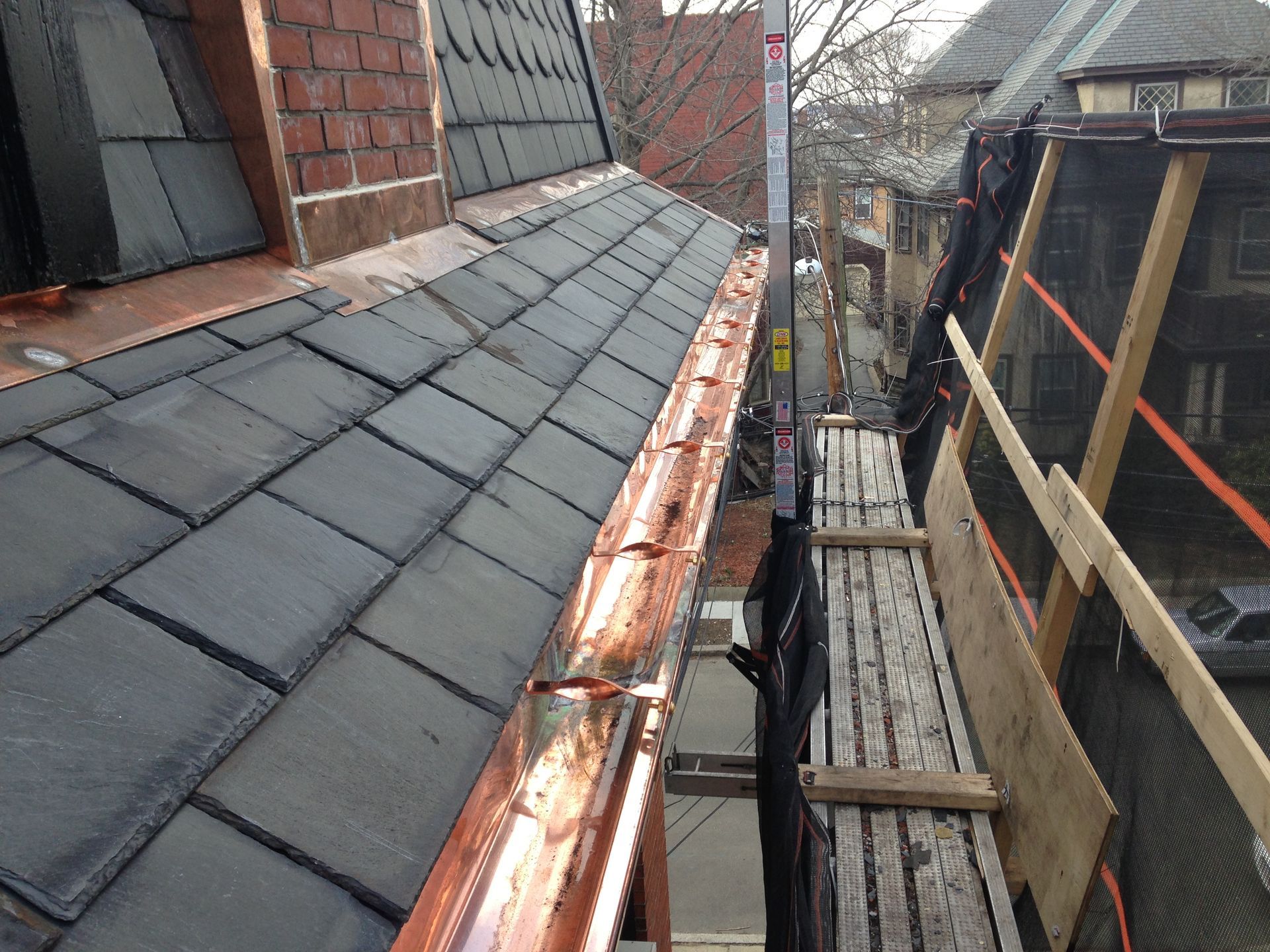
Here is the single biggest thing a slate specialist does differently. We do not walk your roof to inspect it. Slate cracks under a boot and turns slick when it is even slightly damp, so a roofer who walks your slate to look for damage is adding to the bill, not finding the problem.
This is not just our preference. The InterNACHI residential Standards of Practice say an inspector reads the roof from ground level or the eaves and is not required to walk the surface at all. On slate, that becomes a hard rule rather than a suggestion.
We read the roof from a ladder set at the edge, with binoculars for the high field, and from inside the attic. InterNACHI is blunt about this in its own slate roof inspection guidance: you inspect slate without walking it. A ladder, a balcony, or a drone does the reading instead.
The attic is the honest witness. From below you can see daylight through the deck, damp sheathing, and fresh water staining that tells you where the roof is actually leaking, not where it looks worn from the street. That inside read is what turns a guess about hidden damage into a fact, and it is the step a fast, drive-by inspection skips.
What a slate and copper specialist checks that others miss
A generic roof damage inspection tends to stop at the field: are slates missing, is anything obviously broken. That is the easy 20 percent. The damage that matters on these roofs concentrates at the details, and here is the assessment we actually run on a Boston slate roof.
- The field: cracked, slipped, or delaminating slates, read with binoculars from the ground and up close from the ladder.
- Ridge and hip: lifted or displaced caps, opened mortar bedding, and exposed nails, which are the classic wind casualties up on the highest lines.
- Valleys: dented or lifted copper, debris dams, and torn or open solder seams where two slopes dump their water into one channel.
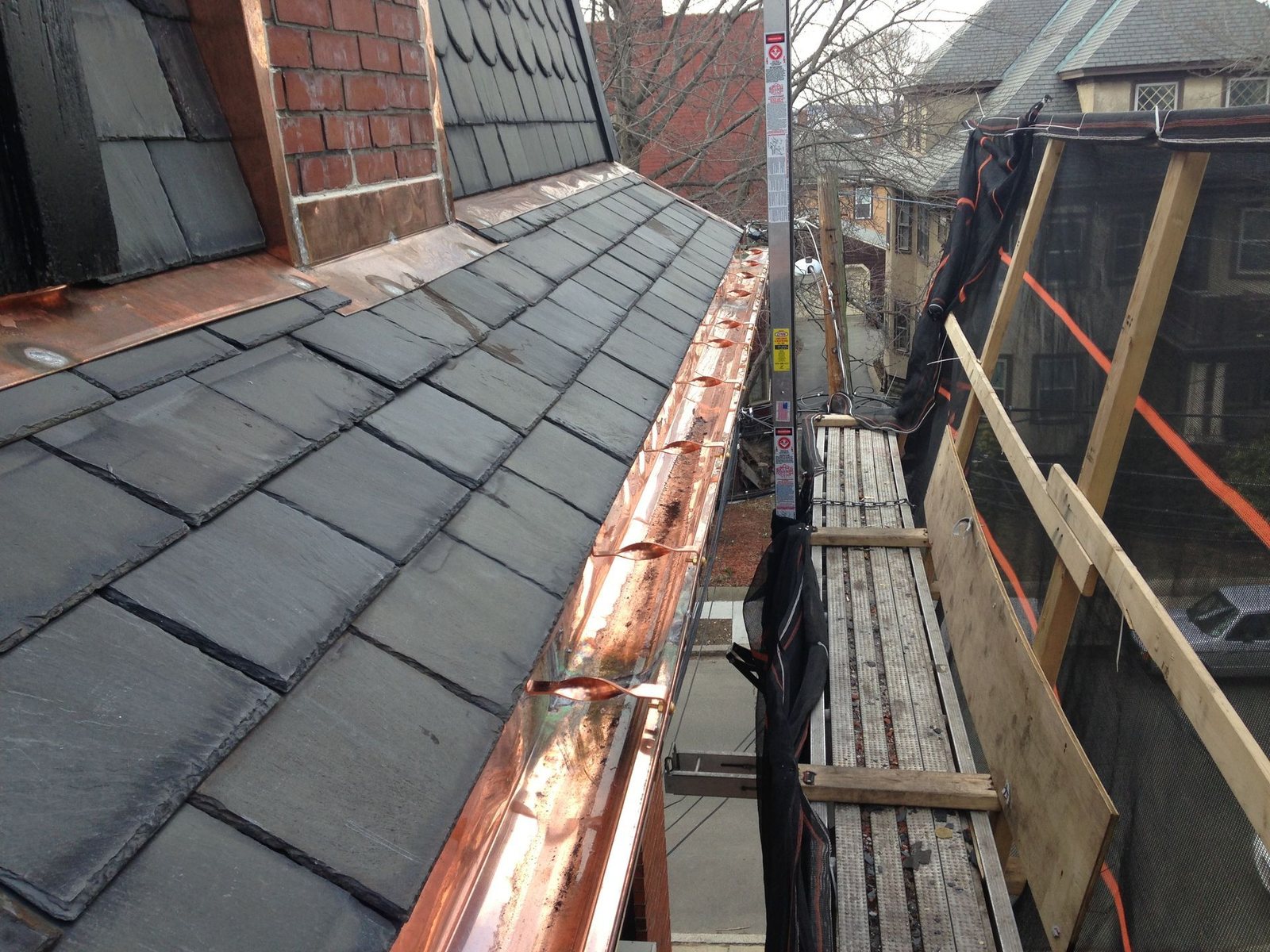
- Flashing: chimneys, sidewalls, and step flashing pulled back, caulked instead of cut into the brick, or corroded through.
- Fasteners: on an old roof, whether the slate is still on its original nails and how much life those nails have left.
- Gutters and eaves: copper or aluminum torn from the fascia, and the ice damage that collects along the bottom courses.
- The attic: daylight, damp sheathing, and fresh staining that names where water is getting in.
That fastener check is one a lot of inspectors never make. A slate can be sound while the nail holding it has rusted to nothing, and a roof that looks fine from the street can be quietly letting go one nail at a time. Our guide to the early warning signs a slate roof needs work covers that read in more depth.
Copper checks: seams, valleys, flashing legs, and patina
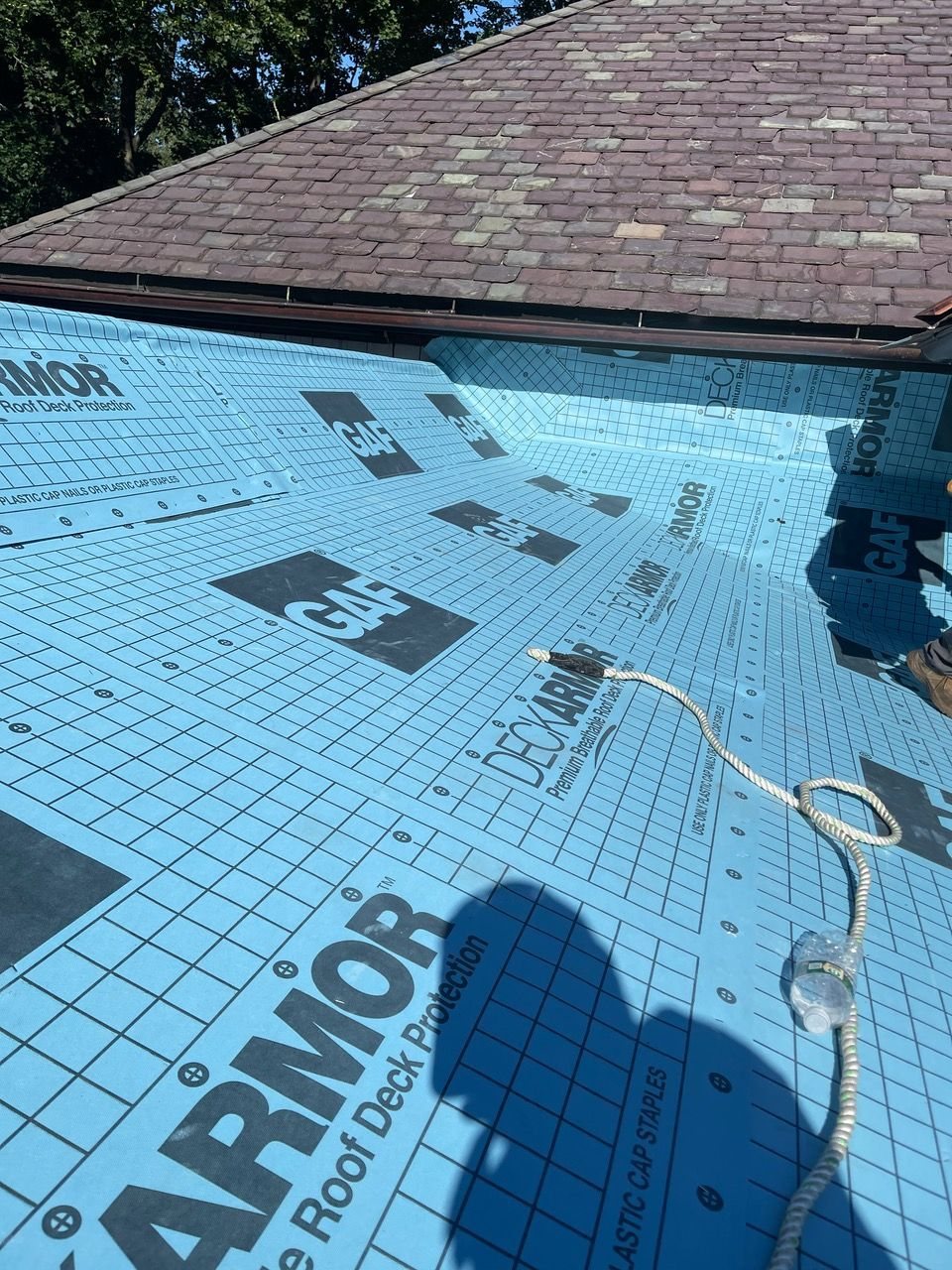
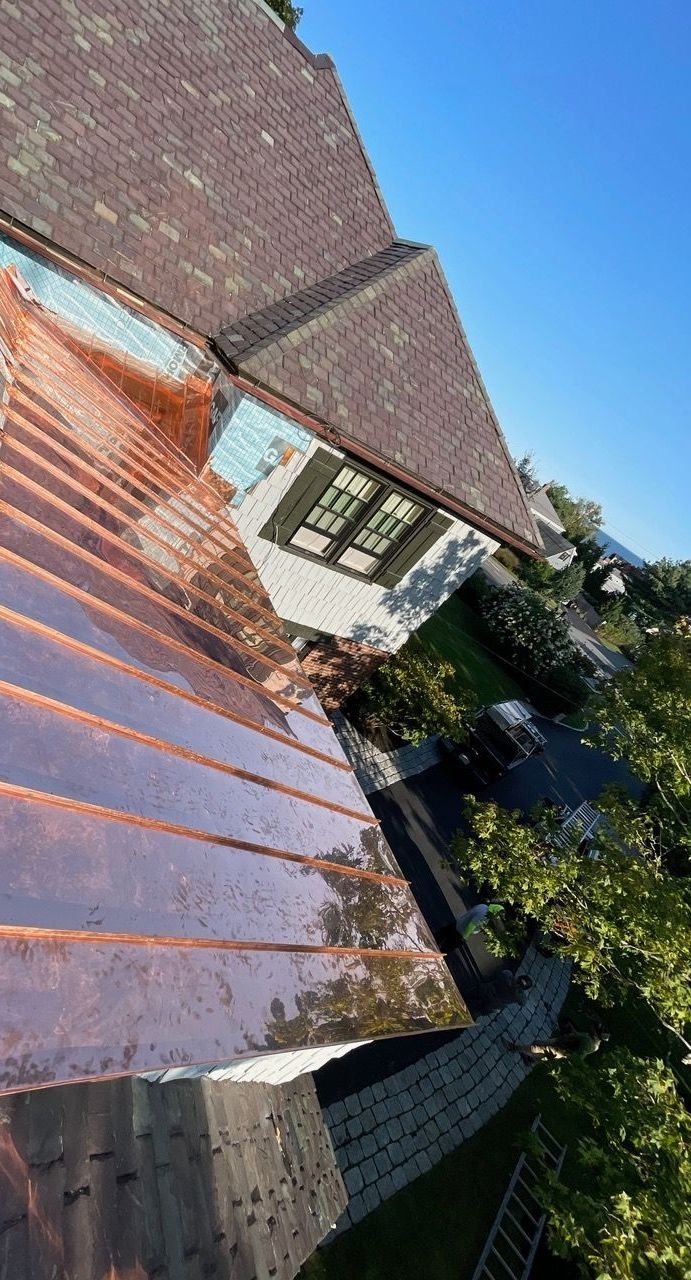
Copper is where a slate and copper inspection separates itself from a metal roof inspection done by someone used to steel panels. Copper is folded, locked, and soldered by hand, and every one of those joints is a place water can find if the metal has moved or the solder has fatigued.
On a copper valley, we read the solder seams first. A valley carries the water off two slopes at once, so a single open seam or a lifted edge there does more damage than a dozen problems out in the field. Dents from a fallen branch and debris dams that hold water against a seam both go on the list.
Flashing legs are next. We check where the copper turns up against a chimney or wall and where it laps onto the roof, looking for legs that have pulled back, split at a fold, or been sealed with a caulk gun instead of cut into the mortar. Our post on chimney flashing repair walks through why that joint leaks first on nearly every Boston roof.
Then there is the patina question, and it trips up inspectors who do not know copper. That brown and green film is patina, and it is the copper protecting itself. It is not corrosion and it is not a defect. Real trouble looks different: thinning at the low points where water sits, pinholes, and seams that have worked open. Reading patina as damage leads to a needless quote, and reading real thinning as patina lets a leak run.
Residential roof inspection in Boston’s historic homes
A residential roof inspection here often means an old house, and age changes what we look for. On a home from the early 1900s, the roof may be on its original nails, the chimney may be soft lime mortar, and the framing may not have been built for the loads a modern nor’easter throws at it.
New England weather writes its own damage into these roofs. The Insurance Institute for Business and Home Safety documents how ice dams and winter weather attack a roof, and the pattern is consistent: meltwater backs up under the slate at the eaves, freezes, and lifts the stone from below. That damage shows up along the bottom courses, and it is one of the first places we read on any Boston slate roof.
Nor’easter wind is the other signature. It works by uplift, prying under the exposed edge of a slate or a ridge cap until the nail loosens or the stone slides. A summer inspection can look clean while the roof carries loosened caps that the next big blow will finish. Our guide to ice dam prevention in New England covers the winter side of this in full.
The historic detail also raises the stakes on the flashing. Cutting copper counter flashing into 120-year-old lime mortar is real masonry work, not a groove and a squirt of sealant, and an inspection has to flag where a past repair got that wrong. If your roof is at the age where you are weighing repair against replacement, our post on how long a slate roof lasts helps you place it on the curve.
What is included in a roof inspection
People ask what is included in a roof inspection expecting a short answer, and the honest one has a few parts. A real assessment is exterior, interior, and paperwork, not just a look at the shingles.
The exterior read covers everything in the checklist above: field, ridge, valleys, flashing, fasteners, and gutters, all from the ladder and the ground. The interior read is the attic, where the deck and the staining tell you what the outside cannot. Skipping the attic is the most common shortcut in a cheap inspection, and it is the part that actually locates a leak.
The paperwork is the third piece. A professional roof inspection ends with dated photos of what the inspector found and a written summary you can hold onto, compare against another quote, or hand to an insurance adjuster. If someone reads your roof and gives you only a verbal number in the driveway, you did not get an inspection. You got a sales call.
For a slate and copper roof, a complete roof assessment also names materials: the copper gauge on the flashing, whether damaged slate can be matched and salvaged, and how many nails have life left. Those specifics are what let you compare two quotes honestly. Our overview of the slate and copper roofing service lays out the work those findings usually lead to.
How much does a roof inspection cost, how long, and how often
Cost first, because it is the question behind most searches. National guides put the average roof inspection near 250 dollars, with basic visual inspections running roughly 75 to 200 dollars and drone or infrared inspections higher. Around Greater Boston, many local roofers offer a free visual assessment when the inspection may lead to work, and charge for a formal documented report tied to a sale or a claim.
The number moves with access, not with square footage. Reading a two story eave and reading a fourth story chimney on a mansard are not the same job even on an identical roof, because the second one needs more ladder, more staging, and more time to do safely. That is why a per square foot rate does not describe a slate inspection well.
How long does a roof inspection take. Plan on one to two hours for a real one on an average home. A ground glance is quick and shallow. The time goes into the ladder work and the attic, and a large slate roof with several chimneys and valleys can run to half a day. Faster is not better here.
How often should you have your roof inspected. Twice a year is the trade standard, spring and fall, plus a look after any major storm. In New England the fall check earns its keep, because catching loose flashing and clogged gutters before winter is what keeps an ice dam from turning into a wet deck by February. On a sound slate roof the copper and the flashing are what you are really watching on that schedule.
How to choose a roof inspection near me you can trust
This is the part the directories bury, and it is the most important. A roof inspection near me search will surface honest local roofers and storm chasers side by side, and telling them apart is on you. The day after a big storm, out of state crews fan into damaged Boston neighborhoods handing out free inspections and asking for a signature.
Check the license first. In Massachusetts, roofing work requires a Construction Supervisor License, and a contractor doing home improvement work should also carry a Home Improvement Contractor registration you can verify online in about a minute. Both lookups are free and public. A roof inspector near me who cannot give you a license number to check is a fast no.
Then check the fit. Roof inspectors near me who only do asphalt are the wrong crew for slate and copper, no matter how good the price is. Ask directly whether they work in slate and copper, and ask to see references you can actually drive past. A roofer with a real slate track record will have them.
Watch the pressure, too. A trustworthy inspector reads your roof, shows you photos, and lets you sit with the findings. A storm chaser inspects for free, then needs a signature today and offers to handle your whole insurance claim. Free is fine. Urgent and pushy is the tell. Our post on what to ask before hiring a slate roofer turns this into a short list you can use on the phone.
One more thing on the free question. A free visual assessment is a normal and fair offer from a local roofer. A free full written report for a home sale or an insurance dispute is not, because that document takes real time and carries real weight. Pay for the paperwork when a decision rides on it, and take the free look for everything else.
Frequently asked questions
How much does a roof inspection cost near Boston?
A straightforward visual roof inspection often runs free to about 300 dollars around Greater Boston, and many local roofers waive the fee if the assessment leads to work. Drone or infrared inspections and a formal written report for a sale or an insurance claim cost more, usually a few hundred dollars, because of the equipment and the documentation time. On a steep slate or copper roof the price reflects the ladder and staging it takes to read the roof safely, not a per square foot rate. Ask up front whether the fee is credited toward repairs.
How long does a roof inspection take?
A residential roof inspection on an average Boston home takes about one to two hours when it is done right. A quick look from the ground with binoculars is 20 minutes and misses most of what matters. A proper assessment reads the field and flashing from a ladder, then goes into the attic to check the deck and look for water staining, and that attic step is what adds the time. A large or complex slate roof with several chimneys and valleys takes longer, sometimes half a day.
How often should you have your roof inspected?
Twice a year is the standard the roofing trade recommends, ideally spring and fall, plus a look after any major storm. In New England the fall inspection matters most, because it catches loose flashing and blocked gutters before the ice dam season sets in. A sound slate roof does not need heavy maintenance, but the copper details and the flashing do reward a set of eyes on a schedule. Older homes and roofs wearing their original nails deserve the closer watch.
What is included in a roof inspection?
A complete roof inspection covers the field, the ridge and hips, the valleys, all flashing at chimneys and walls, the gutters and eaves, and the attic underside of the deck. On slate and copper we read the stone for cracks and slips, check the copper seams and solder joints, and look for the ridge and hip caps that wind lifts. The attic tells the honest story, because damp sheathing and fresh staining show where water is actually getting in. A good inspection ends with dated photos and a written report.
Can I use a drone to inspect my roof?
A drone is a useful tool for a first look at a steep or high slate roof, and we use one to read areas that a ladder cannot reach safely. It is not a full inspection on its own. A camera in the air sees the surface but cannot check whether a copper seam has lifted, feel whether a slate is sound, or read the attic for the water staining that names the leak. Treat a drone roof inspection as one part of the assessment, not the whole thing.
Are roof inspections free?
Often yes for a basic visual assessment, especially from a local roofer who expects the inspection may lead to a repair. A free roof inspection is fine, but be careful who is offering it. Out of state door knockers who appear after a storm hand out free inspections to sell work you may not need. A paid, documented inspection for a home sale or an insurance claim is a different service, and paying for that report is money well spent when a real decision rides on it.
Talk to the owner
The useful first step is not a phone quote or a number read off a satellite photo. It is one person up on a ladder and in the attic, reading what your slate, your copper, and your deck are actually doing, and telling you whether you need a repair, more watching, or nothing at all.
Every roof inspection Art Slate quotes gets walked by Arturo before a number goes on paper. See our slate and copper roofing service or schedule a free assessment, and Arturo will tell you straight what your roof needs, with photos to back it up.