Slate Roof Repair Near Me: Repair, Installation, or a New Roof
Searching slate roof repair near me in Boston? When to repair, when a slate roofing installation or full replacement makes sense, and how slate compares to clay tile.
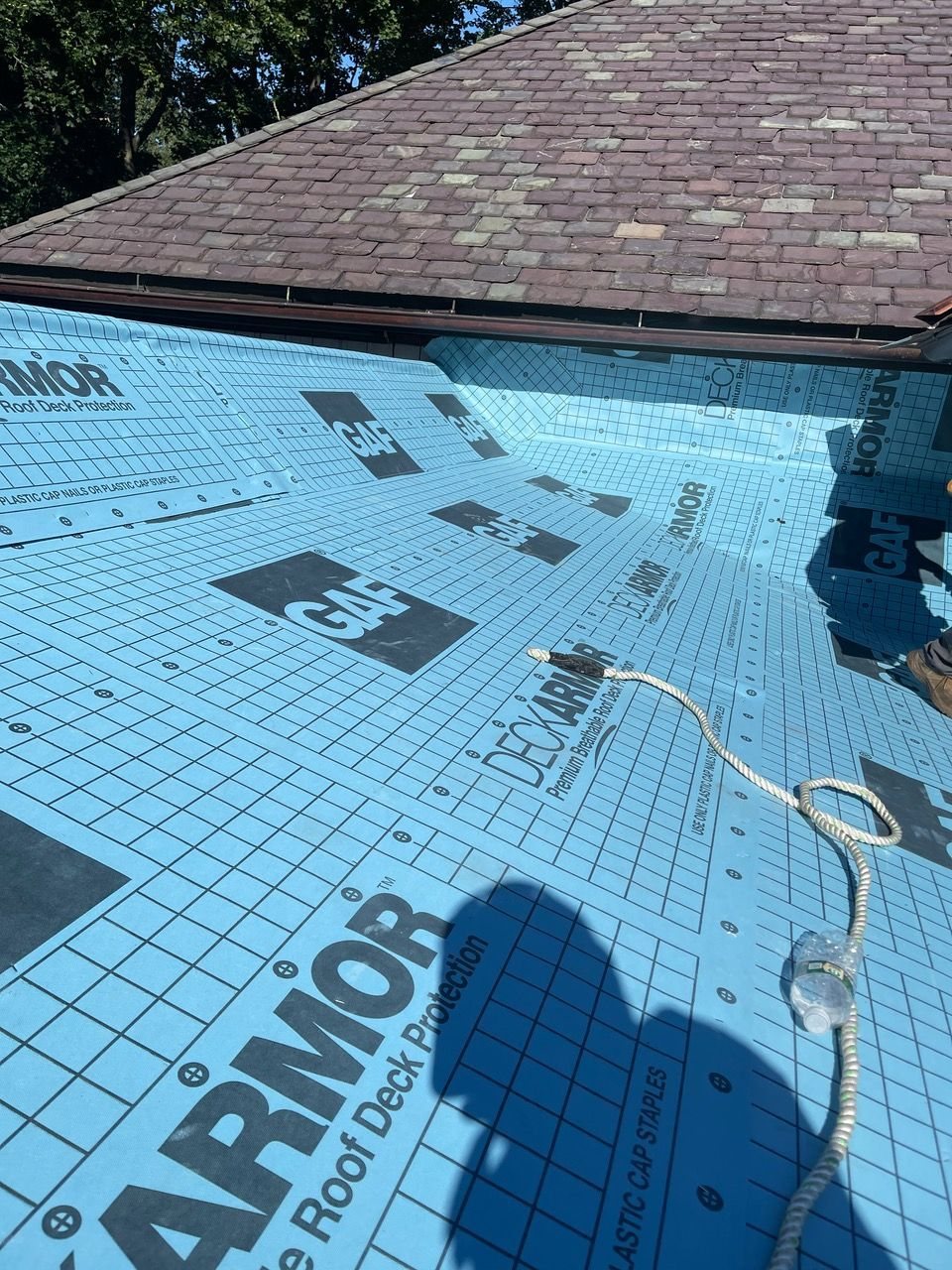
TL;DR: Searching slate roof repair near me in Greater Boston? Most slate problems, from broken slates to failing flashing, are fixable without a full replacement, but slate needs a specialist with the right tools, not a general roofer. Here is what actually fails on old Boston slate roofs, how slate compares to clay tile, what a repair or a slate roofing installation involves, and how to pick a contractor who repairs rather than pushes a new roof.
Slate · 15 min read
If you own a historic home in Greater Boston and your slate roof is showing its age, the contractor you pick makes all the difference. This is what to know before you search slate roof repair near me and start calling, so your slate roof gets the repair it needs instead of a patch that fails by spring.
Fast Slate Roof Repair Near Me in Greater Boston
If you are a homeowner in Beacon Hill, Back Bay, Newton, Cambridge, or the surrounding communities searching for slate roof repair near me, you have found a team that specializes in exactly this work.
Art Slate Roofing handles emergency slate roof repair for active leaks, storm damage, and falling slates on homes built roughly between 1860 and 1940 across Greater Boston. We schedule inspections the same week in most areas, and true emergency tarping and temporary roof repair are available within 24 hours when weather allows. Sudden storm damage roof repair is a common reason the phone rings.
Here is the good news. A slate roof is usually repairable without a full replacement. Many problems, from broken slates to failing flashing to minor leaks, get solved with targeted repair rather than a complete tear-off. Individual broken slates come off and get replaced without redoing the whole roof, and catching a small issue early keeps it from turning into a stained ceiling and thousands in damage.
Call Art Slate Roofing at (617) 913-1130 for a free estimate and slate roof assessment in Boston, Brookline, Newton, Cambridge, Somerville, and nearby towns. You reach a person, and we answer the phone six days a week, Monday to Saturday.
Why Slate Roofs Need a Specialist (Not Just Any Roof Repair Contractor)
Slate roofing behaves nothing like asphalt shingles, clay tile, or metal. Hiring a general roofer without the training and tools for slate is one of the costliest mistakes property owners make.
Natural slate is a durable stone, but it cracks if it is walked on carelessly or nailed wrong. A bad slate roof repair can cascade into the surrounding tiles and turn a minor fix into an expensive project. The damage inexperienced roofers cause tends to look the same: broken slates from foot traffic, over-caulking of flashing joints, and face-nailing. You should absolutely avoid face-nailing or heavy caulk on a slate roof. Both trap water behind the stone and fail.
Fasteners matter more than people expect. Copper or stainless-steel nails are what a slate roof repair calls for, because iron or galvanized nails corrode in Boston’s damp climate over decades and take the whole slope with them. The work also needs the right tools. A slate ripper slides up under a damaged slate and shears the old nail without disturbing its neighbors, something general roofers simply do not carry.
Most slate roofs on Boston’s historic homes are already 80 to 120 years old or more. Proper installation of each replacement slate, correct flashing around chimneys and copper valleys, and attention to the underlayment separate a lasting repair from a patch that fails within a couple of seasons. Art Slate Roofing has focused on slate and copper since 2005, and our family crews are trained for historic roofing, not storm-chasing or mass-production reroofing.
Common Slate Roof Problems We Repair in Boston’s Older Homes
Most calls from homeowners searching slate roof repair near me come down to a handful of recurring issues on Greater Boston’s older housing stock. The ones we see most:
- Broken, slipped, or missing slates that leak slowly and stain the ceiling and upper walls.
- Failing copper or galvanized flashing around chimneys, dormers, and valleys, especially on pre-1930 brick townhomes. Corroded fasteners and flashing are the usual cause of a slate roof leak, not the slate itself.
- Nail fatigue, or nail sickness, where the original iron nails corrode after 90 to 110 years and let slates slide out of place. Plenty of homes built around 1905 are entering that window now.
- Ice dams and freeze-thaw damage along the eaves and gutters after Boston’s January and February storms, including the wind-driven rain and hail that test every joint.
- Worn ridge and hip details on steep Victorian and Tudor slate roofs in neighborhoods like Newton Centre and Brookline’s Pill Hill.
Diagnosis is the tricky part. A leak rarely drips straight under the damaged slate. Water travels from faulty flashing or underlayment and surfaces somewhere else, so finding it takes a ground-level look and attic checks for damp insulation or daylight. Debris in the gutters is another sign, since it often means slates are going porous and breaking down, worth a look before it spreads.
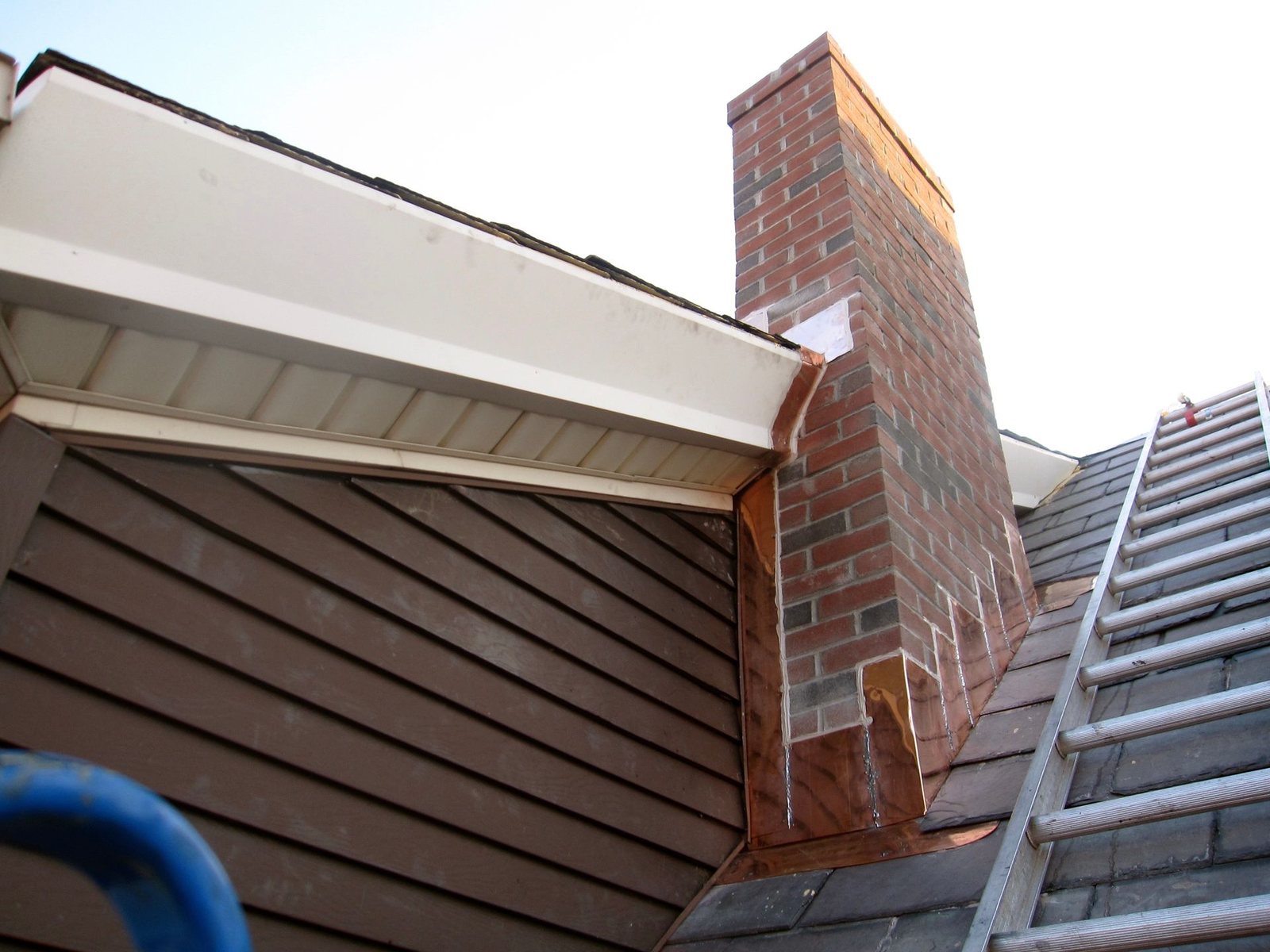
We also handle the related parts, from gutters and downspouts to copper snow guards and chimney caps, when they feed a leak. Where slate meets clay tile or a flat membrane section, the transition is usually what leaks first. If the leak is at a chimney, the chimney flashing is normally the real job, not the slate around it, which is why our copper roofing and flashing service stays in house. Our free roof assessment documents all of it with photos, so you can see what needs repair now and what can be watched on a schedule.
Slate Roof vs Clay Tile and Other Roofing Materials on Historic Boston Homes
On a 19th-century brownstone or colonial, natural slate stands apart from the other roofing materials for reasons past appearance.
Against asphalt shingles it is not close. Natural slate lasts 75 to 150 years, while asphalt needs full replacement every 18 to 25. On the fine streetscapes of Beacon Hill and Back Bay, asphalt looks out of place and can run afoul of historic district standards.
Against clay tile, both are durable natural materials with long life, but a clay tile roof is heavier per piece and reads Mediterranean or Southwestern. Slate stays the historically right material for Massachusetts buildings. Clay tile and concrete tile are the two tile families you will be quoted; concrete is cheaper, heavier, and fades faster. Both a tile roof and a slate roof are non-combustible and carry the top fire rating, and both handle heat far better than asphalt, so fire is not the deciding difference. Climate is. Clay tile was built for dry heat, and cheaper clay tile can crack in New England freeze-thaw, while hard Vermont slate does not care about it.
Against synthetic slate, the synthetic is lighter and cheaper, but it lacks the authenticity many historic districts require and does not age like stone over decades. Custom-cut slate is there for unusual architectural designs where synthetic cannot match.
Natural slate also comes in real colors, gray, green, and purple. It is stone, so it is non-combustible and fire-resistant, a sound fit even for fire-prone regions, and separately it is natural and recyclable, which makes it eco-friendly. It gives strong protection against severe weather and shrugs off insects and rot the way no asphalt or synthetic product does, which matters in a city that takes Nor’easters, heavy rain, and ice storms every winter. We focus on natural slate and copper because they match the era and quality of Boston’s homes. Sometimes we put new flat roofing on a rear ell while keeping the original slate on the street-facing slopes to protect curb appeal and property value. And we tell you honestly when a slate roof repair is the right option and when a planned slate roofing installation or partial replacement makes more sense for the life of your house.
Our Slate Roof Repair and Restoration Process
Art Slate Roofing follows a step-by-step process built around each roof. Whether we are restoring a mansard in Back Bay or replacing flashing on a colonial in Cambridge, the sequence holds.
- Initial site visit and free roof assessment. We run a ladder or drone inspection outside and check attics and upper floors for interior leak evidence.
- Documentation. Dated photos and notes on slate condition, flashing, gutters, and chimneys. We go over the findings with you on site or by email, so nothing is a surprise.
- Repair plan. We spell out individual slate replacement, copper or lead flashing upgrades, chimney crown repointing, and any deck or underlayment beneath the slate that needs attention. Replacement slate has to match the existing slates in type, size, color, texture, and weathering.
- Execution. Our small trained crews, not large rotating teams, do the work while protecting landscaping and neighboring properties on tight city lots. We use the slate hook method or the nail-and-bib method, and we lift each slate carefully so the ones around it do not crack.
- Final walk-through and cleanup. We clear the debris and old slate, walk you through maintenance, and flag any follow-up worth scheduling.
We use Vermont and Pennsylvania slate and copper to match or closely complement what is already up there. On larger restoration projects we coordinate with local historic commissions and follow period-appropriate details where they are required. On a mansard the leak often starts on a face you cannot see from the street, and that water path is worked through in mansard roof slate work in Boston. Historic districts add their own rules, and our historic roof permit primer covers what triggers review.
Choosing the Right Slate Roof Repair Contractor Near You
Not every contractor who shows up in search results can work safely on a slate roof. What Greater Boston homeowners should look for:
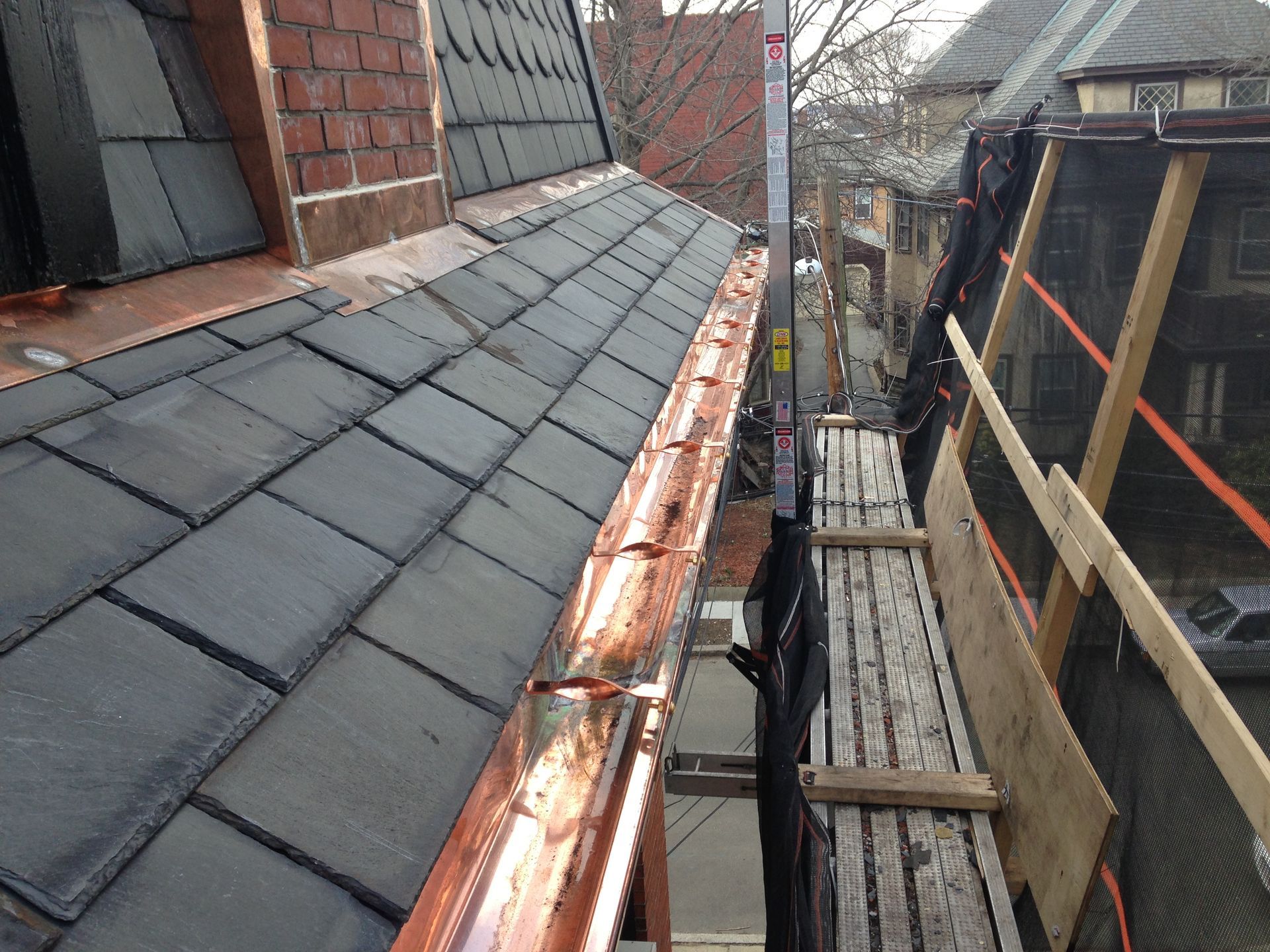
- A documented slate roofing portfolio, with photos of finished jobs on similar homes in Beacon Hill, Back Bay, Newton, Brookline, Cambridge, Somerville, and the towns between.
- Real experience with slate roof repair, copper valleys, and historic restoration, not just asphalt or flat roofing.
- A licensed and insured Massachusetts operation, with a Construction Supervisor license and references from local owners of older slate-roofed properties. Confirm the contractor is bonded, and ask for insurance certificates that come straight from the carrier.
- A commitment to repairing and maintaining a slate roof instead of pushing an unnecessary full replacement.
- A detailed written proposal that names materials, scope, start dates, and warranties. A vague quote like “patch flashing,” with no copper gauge or slate source, is a warning sign.
Slate roofs can be repaired in sections without a full replacement. Any contractor pressuring you into a complete tear-off, with no evidence of widespread failure, deserves scrutiny. The National Slate Association lists resources for finding qualified slate professionals, and the Slate Roofing Contractors Association keeps directories of vetted crews with slate expertise. Use them as a starting point, then check local experience.
If you are weighing repair against a new roof, our guide to slate roof repair versus replacement in Boston lays out the thresholds. Art Slate Roofing meets every one of these criteria. We have been a family-run, trusted partner to Greater Boston property owners since 2005, focused on slate, copper, chimneys, and gutters, with a standard of excellence that shows in every project we serve and complete.
Maintenance, Ice-Melt Systems, and When to Consider Slate Roofing Installation
Good maintenance cuts down on emergency roof repair and stretches the life of a slate roof for generations. A slate roof needs little upkeep once installed, but some upkeep is what earns you the full lifespan. With proper care, slate roofs run 75 to 150 years.
- Inspections. Book one once or twice a year, ideally each fall and after any major Nor’easter. A routine inspection catches small issues before they become emergencies.
- Gutter care. Gentle cleaning and downspout checks keep ice dams and water backup off the eaves, which matters given the range of winter storms Boston gets. If ice dams are your pattern, the fix order is in ice dam prevention in New England.
- Attic monitoring. Watch for stains, damp insulation, or daylight around chimneys and valleys from inside the house.
- Ice-melt systems. Discreet ice-melt cables or hydronic heat on vulnerable eaves and valleys control ice dams without harming slate. We also install copper snow guards so heavy snow and ice do not slide onto sidewalks and entries in dense neighborhoods.
Sometimes repair is not enough and a new roof is the honest answer. That is the case when a large share of slates, roughly 20 percent or more, are breaking from poor original stone or severe nail sickness; when repeated leaks around several penetrations point to deck and flashing failure rather than isolated patches; or when you are already gutting the exterior and want the whole roof restored for another 75 to 100 years through a full slate roofing installation.
What a repair or a new roof costs depends on roof size, slope, and access, which is why a real number comes from someone on the roof, not over the phone. When a full replacement is genuinely right, we design and install it to respect the home’s architecture while upgrading the underlayment, flashing, and ventilation. The durability and appearance of a slate roof done right is something no other material matches, and it is a decision you make once.
Frequently asked questions
How do I tell a slate specialist from a general roofer?
Ask three things. What tool will you use to pull the broken slate? The answer should be a slate ripper, not a pry bar. Where is the replacement slate coming from? A specialist has a slate pile or a salvage source and can name it. What will hold the new slate? A copper nail with a bib, or a slate hook. If the answer is roofing cement, you are talking to an asphalt roofer.
How do you repair a slate roof leak?
Find the real entry point first, which is rarely straight above the stain. Water runs down the underlayment and the framing before it drops. Usually the leak is a slipped or cracked slate, a failed nail, or tired flashing at a chimney or valley. The fix is a matched slate on a copper nail and bib, or new copper, never tar. The diagnosis on the roof is most of the job.
How much does slate roof repair cost?
It depends on what is wrong, roof size, slope, and access, so a real number needs someone on the roof. A small walkable repair of a few slipped slates is a few hundred dollars. A re-hung section with new copper flashing is a larger project. Access on a tall building, sometimes needing a lift, is often the biggest line. Be wary of any firm price quoted sight unseen over the phone.
Can you repair a slate roof, or do I need a full replacement?
Almost always, yes, you can repair it. Hard slate lasts a century or more, and most calls are four slates and a length of copper, not a new roof. Full replacement is only honest when the slate is delaminating across the whole field, the nails are gone on every slope, or the deck has rotted. If someone quotes a replacement without pricing a repair, get a second look.
What does a bad slate repair look like?
Black tar smeared over the problem. Nails driven through the face of a slate. Exposed metal straps, metal patches, or slates that are visibly the wrong color, size, or thickness. A correct slate repair is close to invisible from the sidewalk. If you can pick out the repair from the street, it was done wrong.
Should the person quoting the job get on the roof?
Yes, and how they get up there matters as much as whether. A quote from the ground or from a drone cannot tell fastener failure from slate failure, and that distinction decides whether you need four slates replaced or a slope re-hung. If nobody has been on the roof, the number is a guess.
Can you match the slate that is already on my roof?
Often, but the honest answer depends on which slate you have. Vermont and Pennsylvania slate are still quarried. Monson black from Maine and Peach Bottom are not, so those roofs get matched out of salvage or not at all. Matching also means thickness and weathering, not just color. A new sea green slate sits noticeably brighter than one that has been on a roof since 1930.
How does a slate roof compare to a clay tile roof?
Both are stone-class roofing materials that last generations and resist fire and heat far better than asphalt. The difference is climate. Clay tile was built for dry heat, and cheaper clay tile can crack in New England freeze-thaw. Hard Vermont slate ignores freeze-thaw, which is why the region chose it. On the right house a tile roof looks right; on most Boston buildings slate is the more durable match.
Do I need historic commission approval to repair a slate roof in Boston?
In the regulated districts, like-for-like repair in the same material and pattern usually does not trigger review. Changing the material, the color, the gutter profile, or doing visible chimney or skylight work usually does. The useful vetting question is whether your contractor has ever filed for a Certificate of Appropriateness. One who has not may get your job stopped.
Will homeowners insurance pay for slate roof repair?
A sudden event like wind, hail, or a fallen limb is usually covered. Age and deferred maintenance are not. The slate-specific trap is matching. Policies owe like kind and quality, and when your slate is out of production some carriers push a mismatched patch instead of an in-kind repair. A contractor who writes the estimate in slate terms is worth real money at claim time.
When is the right time of year to repair a slate roof in New England?
Most of the year works. The ordering is what matters. Close out loose slates and tired flashing in the fall, before freeze-thaw and ice dams start pushing water back up under the slates. Winter is for emergencies. Planned work should not wait for January.
Is one broken slate an emergency?
Usually not. On a roof of a few thousand slates, losing a handful over a century is normal wear. What turns it into a problem is leaving it open, or letting someone tar it. Get it looked at, get it done properly, and it stays a small job.
Talk to the owner
Arturo walks every roof himself, no salesperson, no drone, no estimate from the driveway. Every slate roof Art Slate quotes gets walked by Arturo before a number goes on paper. On slate the diagnosis is the job, and a wrong one costs us more than it costs you. Reaching a real roof sometimes needs a lift on a tall building, and that gets planned, not guessed. The team is in-house, our own crews, cleanup included, nothing subcontracted out, and we price restoring a roof in kind before anyone suggests replacing it.
Do we take small jobs? Yes, absolutely. Family-run and located in Cambridge since 2005, at 4.9 stars across 23 Google reviews. Longevity and proper care are the whole point of a slate roof, and our commitment is plain honesty, the kind that earns a trusted partner, not the excellence printed on a billboard. Whether it is a single cracked slate or a full restoration, do not wait for the next storm to decide for you. Call (617) 913-1130 and you reach a person, not a call center. We answer the phone six days a week, Monday to Saturday. See our slate and copper roofing service or schedule a free estimate. The walk is free.