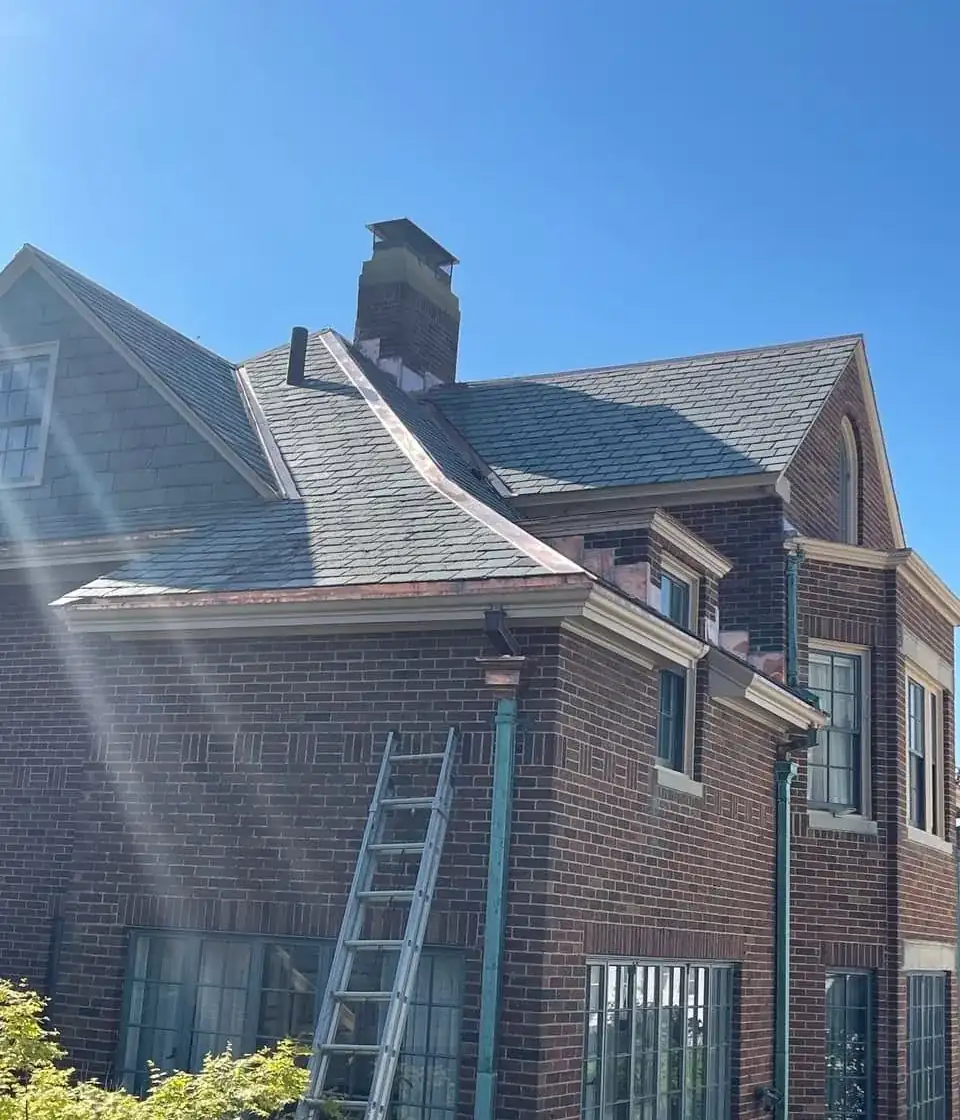
Gutter Apron: What It Does and How It Differs From Drip Edge
A gutter apron is the strip of metal flashing that carries roof runoff into the gutter instead of behind it. What it does, how it differs from drip edge, and how it goes in.
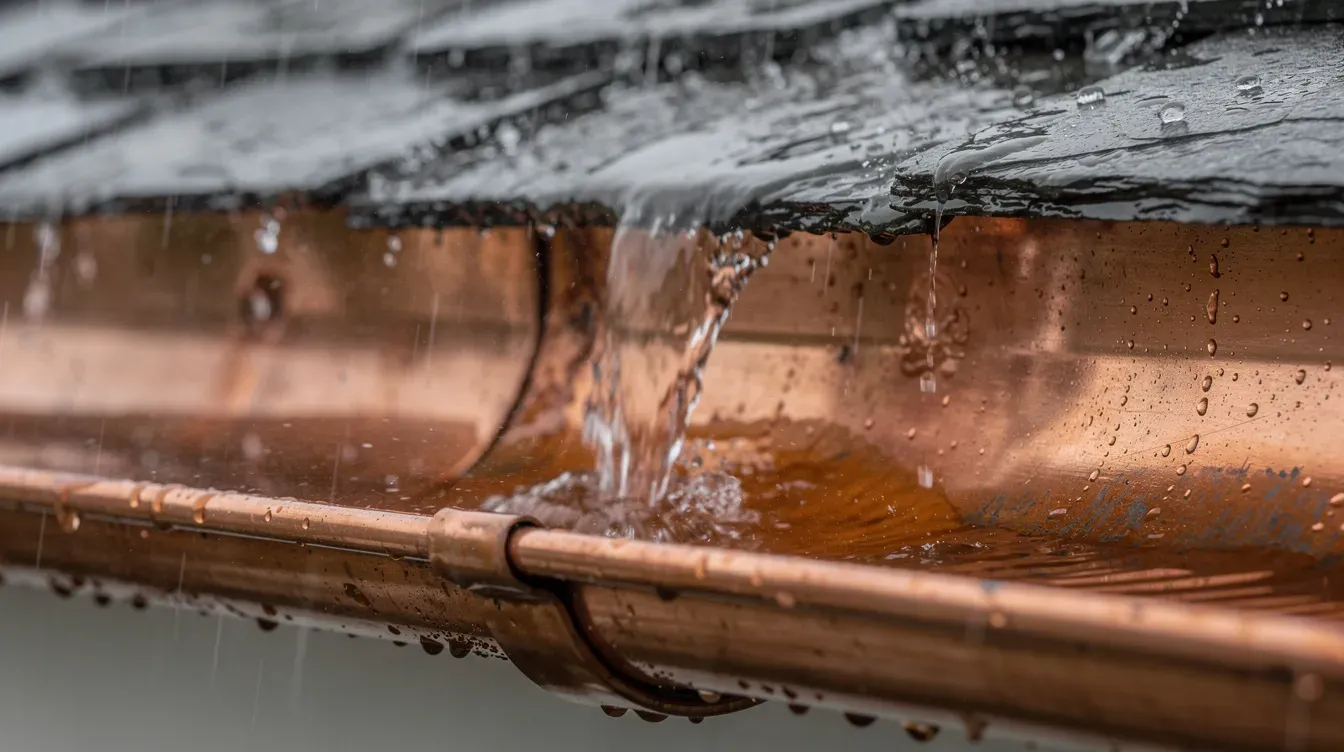
TL;DR: A gutter apron is an L-shaped strip of metal flashing at the bottom edge of the roof. The top tucks under the shingles or slate and the bottom laps into the back of the gutter, so water coming off the roof lands in the trough instead of running down the fascia behind it. Drip edge is a cousin. It kicks water out past the fascia, and it goes on the rakes as well as the eaves. On a house with gutters, an apron or a drip edge long enough to reach into the gutter is what keeps the fascia dry. Aprons are usually aluminum or galvanized steel, and copper on slate and copper work. If you see water dripping behind your gutters in the rain, check the apron first.
Gutters · 9 min read
Go stand under your gutters in a hard rain and look at the back of them. If water is running down the fascia behind the gutter instead of landing in it, something is missing at the roof edge. Most of the time that something is a gutter apron.
It’s a strip of bent metal.
Nobody notices it until it’s gone.
I’ll go through what a gutter apron does, how it differs from drip edge, how it goes in and what it’s made of. The drip edge numbers come from the Asphalt Roofing Manufacturers Association (ARMA) and the International Residential Code. The apron advice draws on Fine Homebuilding, and the note on flashing in historic roofs is from the National Park Service. Gutter lifespans match our own posts on aluminum and galvanized gutters.
What a Gutter Apron Is
A gutter apron is an L-shaped metal flashing installed at the roof edge, right above the gutter. The upper edge slides up under the first course of shingles or slate. The lower edge hangs down past the fascia and into the gutter channel. So it works as a bridge between the bottom of the roofing and the back of the gutter, and it closes the gap where water likes to get out.
The gap is there because of how a gutter hangs. It’s screwed to the fascia, which sits a little lower than the roof deck, and the shingles only stick out past the deck by an inch or so. Sometimes less. Water coming off that last course doesn’t always fall clean. A lot of it hugs the underside, wraps around onto the wood, and dribbles down behind the trough where you can’t see it. Fine Homebuilding makes another point I agree with. A gutter is a trough full of water, and rain hitting it splashes back at the house. Snow and ice collect in there all winter. Come March it melts right against the board.
With an apron in there, the water runs onto metal and drops into the gutter. Pull a gutter off a house that never had one and the top of the fascia is often soft the whole length of the run. Wind driven rain is the real test, because it shoves water up under the edge. In climates like ours, with snow on the eaves half the winter, that protection is worth having.
How a Gutter Apron Controls Water Flow
Picture the eave cut in half. Roofing on top. Under that, the underlayment, then the apron, then the roof deck. The apron is tucked up under the roofing, so roof runoff lands on metal and not wood, and its lower leg extends over the fascia boards into the gutter. Run it the full length of the eave and it eliminates gaps from one end to the other.
Water at a roof edge doesn’t just fall off. It hangs on. In a light rain you can watch drops sit on the bottom of a shingle. Then they crawl back underneath to the wood. Roofers call it capillary action. A sharp bend in metal gets the drop to let go, so I want the bottom leg down inside the gutter. An inch shy might as well be nothing.
Once that’s sorted the rainwater ends up in the gutter and goes out the downspout. Fascia and soffit stay dry. You don’t get a stain running down the siding. Protecting the wood is the point. A few dollars of metal there adds to the longevity of the roof and the gutter system, and it keeps the gutter hangers in solid wood too. Our gutter hangers guide gets into what happens to hangers in soft fascia.
Gutter Apron Versus Drip Edge
Folks use these two names for the same thing all the time, and roofers do it too. They both direct water off the roof edge. Where they part ways is at the gutter, and those differences are the reason the apron exists at all.
Drip edge goes all the way around the roof, rakes included. It keeps the roof edge and the fascia dry by throwing water out past the wood. For asphalt shingle roofs the International Residential Code requires it at eaves and rakes. ARMA, the shingle makers’ trade group, wants it to reach at least 2 inches up onto the sheathing and hang at least 1/4 inch below it, with a little kick at the bottom. You’ll see “1/2 to 3/4 inch overhang” quoted a lot for drip edge. As far as I can tell that number is really about the shingles. ARMA suggests running them 1/4 to 3/4 inch past an L-shaped drip edge. So it’s the shingles hanging over the metal, not the metal hanging over the fascia.
The job a gutter apron serves is narrower. It’s made for houses with gutters, with a longer leg that drops into the trough instead of kicking water out over it. Fine Homebuilding calls the apron just another name for flashing tucked under the shingles and over the back of the gutter.
In practice they overlap. If a house already has drip edge at the eaves and the gutter is hung right up under it, the drip edge is doing the apron’s job. Fine Homebuilding’s tech editor says that’s how his crews handled it. Where the drip edge stops short of the gutter, an apron bridges the gap. Both give the roofline a neat, straight edge.
Order matters.
ARMA’s general rule is drip edge under the underlayment at the eaves and over it on the rakes. Some codes and shingle makers allow it over a self-adhering membrane at the eave instead. If the layers go on in the wrong order, the metal can steer water under the underlayment instead of over it.
Signs Your Roof Edges Need a Gutter Apron
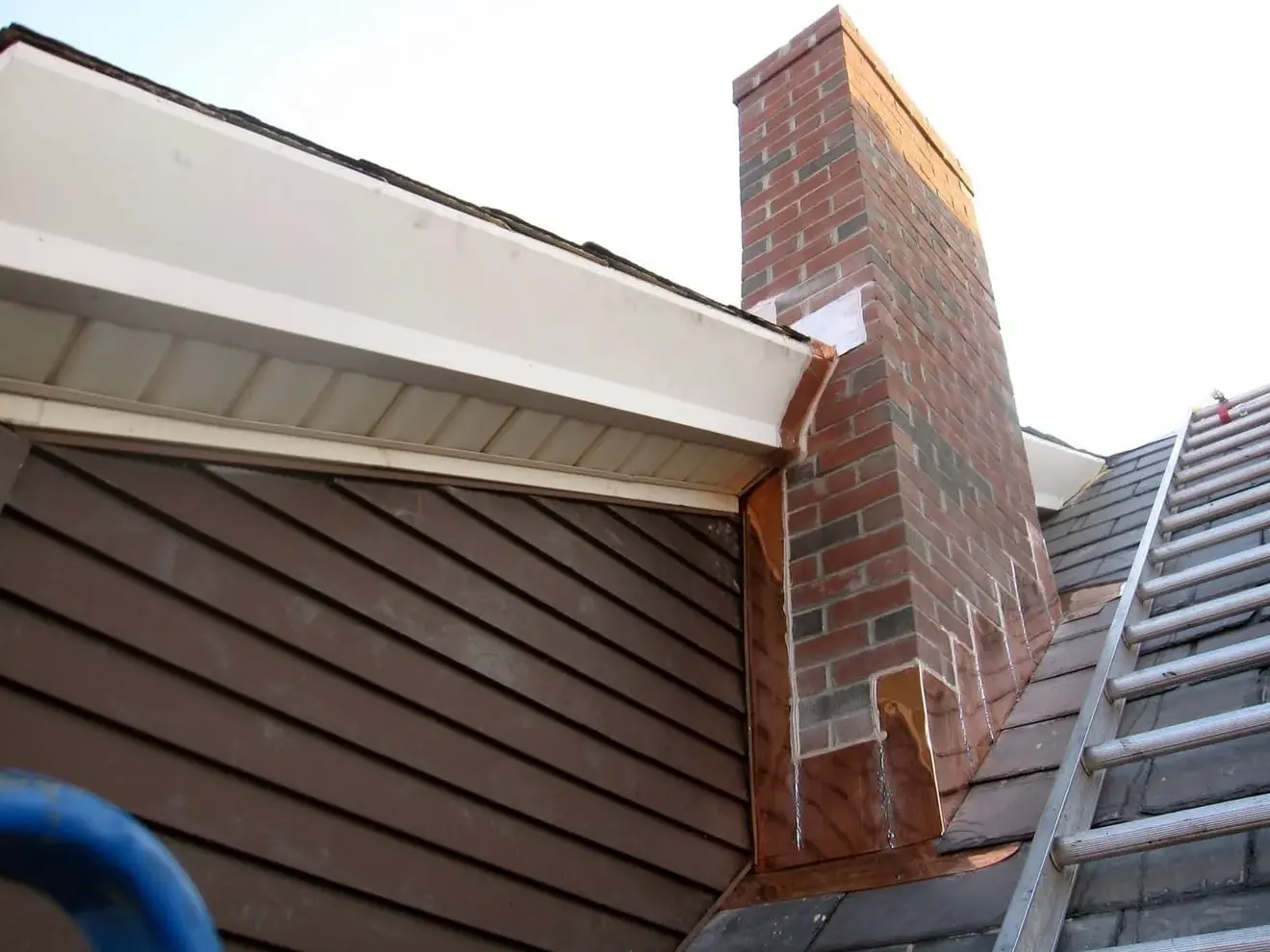
Plenty of older houses around Boston were built long before anyone put metal at the roof edge. Gutters got replaced over the decades without anybody adding an apron. From the ground, these are the signs I’d look for.
- Water dripping or running behind the gutter in a storm. This is the big one, and it points straight at the apron.
- Paint peeling or blistering on the fascia
- A fascia board that feels soft when you push on it
- Stains or rot on the soffit under the gutter line
- A dirty stain or streaks on the siding right below the gutter
- A gap you can see between the bottom of the roofing and the back of the gutter
Ice dams are a related problem with a different fix. An apron won’t stop an ice dam from forming. But when one forms, a missing apron gives the meltwater an easy path behind the gutter and into the fascia. Our ice dam prevention post covers that, and so does our page on ice melt systems.
If the fascia is still solid, adding an apron is a small job, and it’s the cheapest way I know to prevent water from getting into that wood. If that description sounds like your house, start there. If it’s soft, the rotted wood has to come out first. Our gutter leaking into house post goes into how to tell where water is getting out.
Getting a Gutter Apron Installed Correctly
The steps are simple. Doing them on an old roof is the hard part. The effectiveness of an apron depends almost entirely on how it goes in, and it only works if it’s installed correctly.
- Lift the first course of roofing at the eave. On asphalt that means breaking the seal on the starter strip. On slate it means working slates loose without cracking them.
- Check the roof deck and fascia. Replace any rotted wood before installing metal over it.
- Slide the apron’s upper edge up under the roofing and the underlayment where you can. Fine Homebuilding notes that when self-adhering underlayment is already down, the apron usually has to sit on top of it.
- Let the lower edge hang into the gutter, over the back lip.
- Fasten it to the deck with nails that match the metal. Copper nails go with copper. Don’t nail through the part that hangs into the gutter.
Mistakes happen at every one of those steps. Lap the apron behind the gutter instead of into it and water will bypass the trough and run straight down the fascia. Bend the metal wrong and it can warp or slip. Get the order wrong at the eave and you send water under the underlayment. Incorrect installation can lead to water damage in fascia boards, the exact thing the apron is supposed to stop.
Slate is its own animal.
It’s brittle, and on an old roof the nails holding it may be rusted through. Sliding metal up under it takes slate tools and some patience. I wouldn’t send a homeowner up there with a pry bar. If you have a slate roof, have roofers who do slate roof repair handle the eave.
Gutter Apron Materials Compared
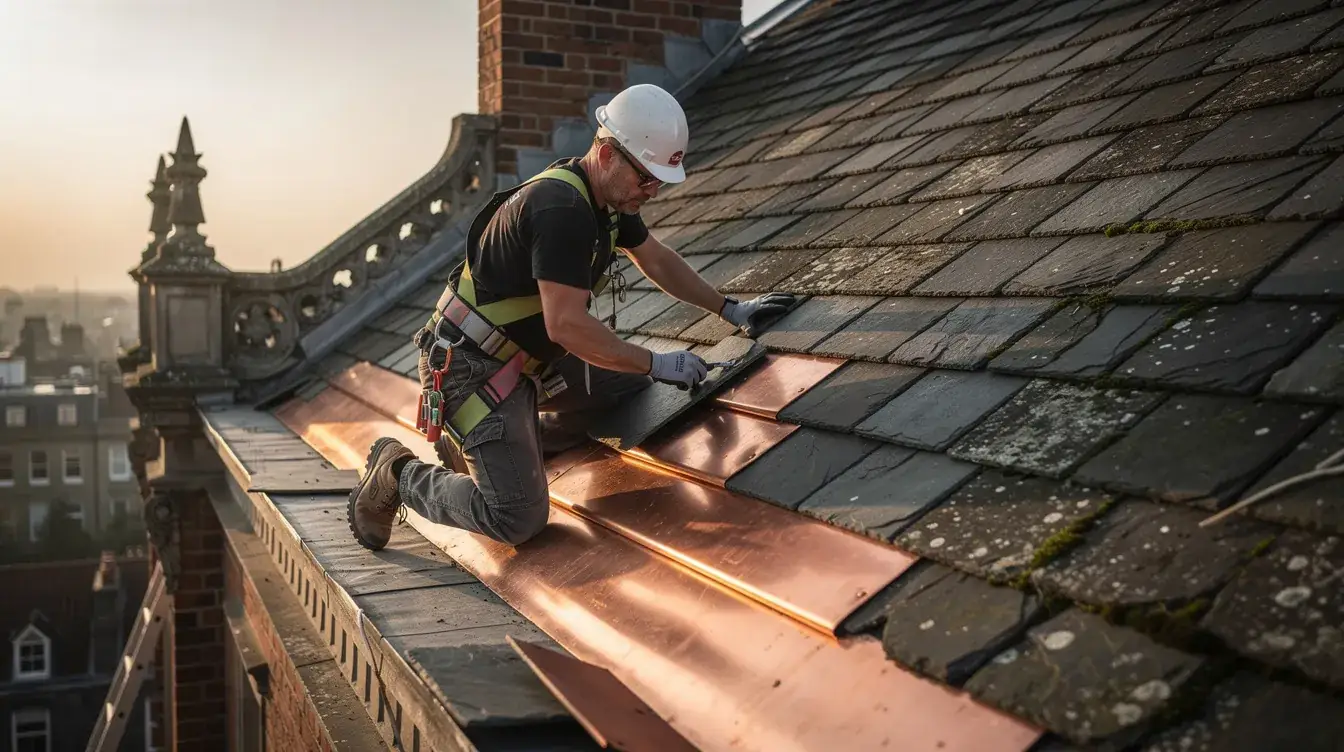
Aprons are typically aluminum or galvanized steel. Copper is the usual choice on slate roofs and copper gutters. The table below lines them up. The lifespans are for gutters in the same metal, since that’s what the apron lives next to, and they match the figures we use elsewhere on the site.
| Material | Typical life | Where it fits | Watch out for |
|---|---|---|---|
| Aluminum | About 20 years and up | Most K style gutters | Light, won’t rust, can dent under ice |
| Galvanized steel | About 20 years | Painted trim, steel gutters | Will rust once the zinc coating wears through |
| Copper | 50 to 100 years | Slate roofs, copper gutters, historic work | Costs more, weathers to brown and then green |
Match the metal to the gutter. Copper against aluminum or galvanized steel sets up galvanic corrosion, and the other metal is what gets eaten. A copper apron on a copper gutter under a slate roof is how it should be done. Aluminum is fine on an aluminum gutter.
Flashing usually goes before the roofing does on old houses. The National Park Service says it plainly in Preservation Brief 29 on slate roofs: because slate is so durable, metal flashings often wear out before the slate does. That’s why the metal at the eave deserves as much thought as the roofing above it. Our roof flashing repair post goes further into flashing.
Gutter System Maintenance That Keeps Water Damage Away
An apron doesn’t need much. Gutter aprons are about as low maintenance as anything on a house, and what they need more than anything is a clean gutter, because when a gutter fills with leaves and needles the water backs up over the apron, spills behind it anyway and soaks the fascia the apron was put there to protect, and then the apron gets the blame for a problem that started with a clogged downspout three feet away. I see that mix-up a lot. Clean first, then judge.
Look at the eaves a couple of times a year. Spring and fall work. From the ground, check the fascia for staining or peeling paint. In a rain, watch for water running behind the gutter. Clean the gutters at the same time. Our gutter page recommends twice a year. Most aprons last decades if the gutters stay clean.
Whoever cleans your gutters is in a good spot to see apron trouble. If they mention water marks on the fascia or a gap behind the gutter, take it seriously. Landscaping and the ground near the foundation get the overflow when the roof edge fails, so washed-out mulch under one eave is worth a look too.
Frequently Asked Questions
What Is a Gutter Apron?
A bent strip of metal flashing along the eave. Its top leg goes up under the first course of roofing and its bottom leg hangs down into the gutter. Water that reaches the roof edge runs down the metal and into the trough.
Do I Need a Gutter Apron If I Have Drip Edge?
Maybe not. Fine Homebuilding’s tech editor, who ran a gutter company for years, says that when drip edge is already on the eave he’d use it as the apron and tuck the back of the gutter under it. What matters is that something metal reaches from under the roofing into the gutter. If your drip edge stops short and water drips down the fascia behind the gutter, you need an apron there, whatever you call it.
Does a Gutter Apron Go Over or Under the Gutter?
Over. The apron laps down into the gutter, and the back of the gutter sits under it.
What Metal Is a Gutter Apron Made From?
Usually aluminum or galvanized steel. On a slate roof with copper gutters I’d use copper, because copper next to aluminum or galvanized steel corrodes the other metal.
How Long Does a Gutter Apron Last?
Decades if the gutter is kept clean. Figure about as long as a gutter in the same metal. Our posts use about 20 years for aluminum and galvanized gutters and 50 to 100 for copper.
Can I Install a Gutter Apron Myself?
On a one story asphalt roof, a careful homeowner can. You lift the first course of shingles, slide the apron under them, and lap it into the gutter, and Fine Homebuilding notes it often takes longer than hanging the gutter does. On slate, don’t. Slate cracks when you lift it wrong, and on an old roof the nails holding it may already be rusted through. That’s a job for roofers who work on slate every week.
Talk to the Owner
If water is running behind your gutters, or the fascia is peeling along one eave, call us at 617-913-1130 or use the contact page. The roof assessment is free, and the owner walks every roof himself. We’ll look at the gutters and the drip edge along with the apron. If it only needs repair, we’ll say so. More on what we do is on our gutter repair page and our historic roof restoration page.