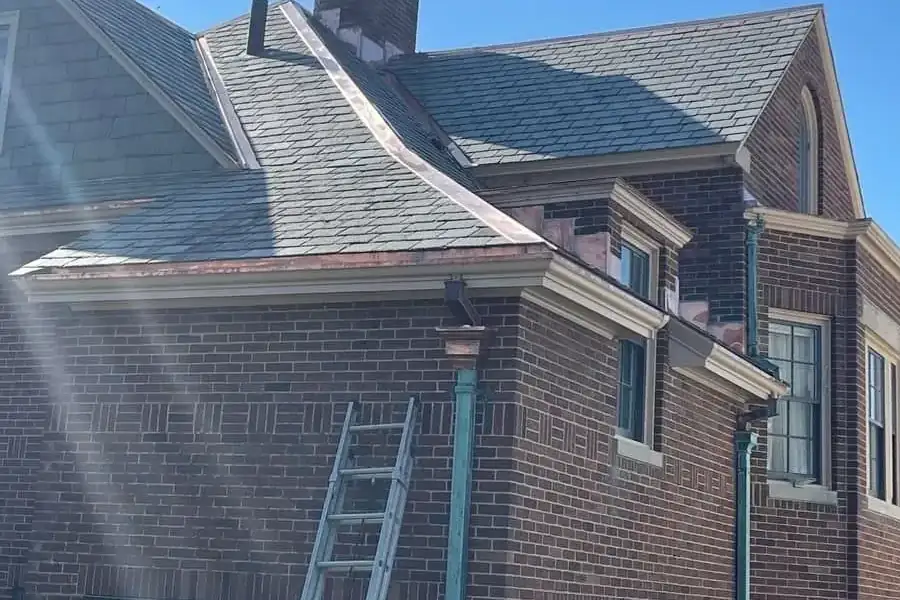
Gutter Splash Guards: Where They Help and How to Install Them
Gutter splash guards keep valley runoff in the gutter instead of on your siding and foundation. Where they go, what they cost, materials, and how to put them up.
TL;DR: A gutter splash guard is a short metal or vinyl plate fastened to the front lip of a gutter where a roof valley or inside corner dumps water. It knocks fast water back into the trough so it doesn't fly over the front. You add them to the gutters you already have. Retail aluminum guards run a few dollars each and go on with a few screws or rivets. Check your gutter warranty before you drill. If the gutter still overflows with a guard on it, the real problem is a clog, a flat run or a gutter that's too small.
Gutters · 8 min read
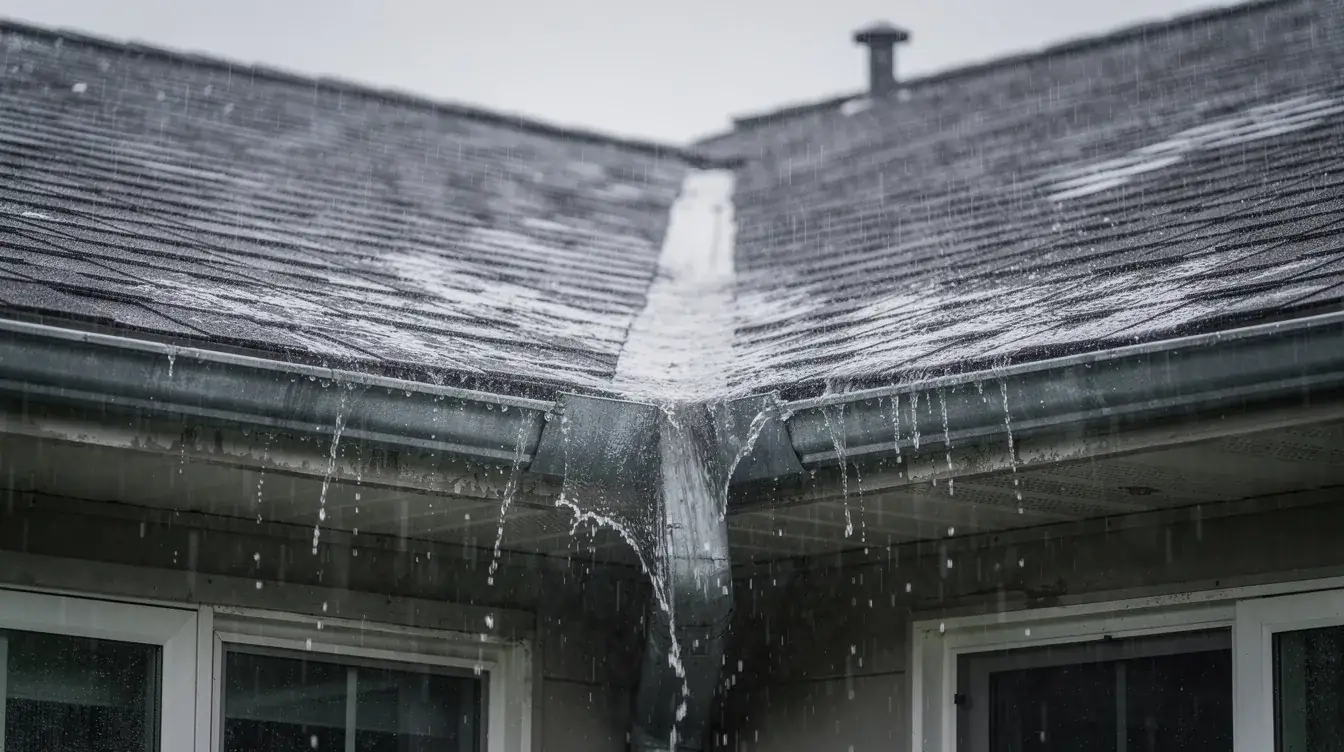
Most gutters overflow in one place. It is almost never the middle of a long straight run. It is the spot under a valley, where two roof slopes meet and all the rain from both of them comes down one channel and hits a single foot of gutter. On a steep roof that water is moving fast. It jumps right over the front lip.
A gutter splash guard fixes that one spot.
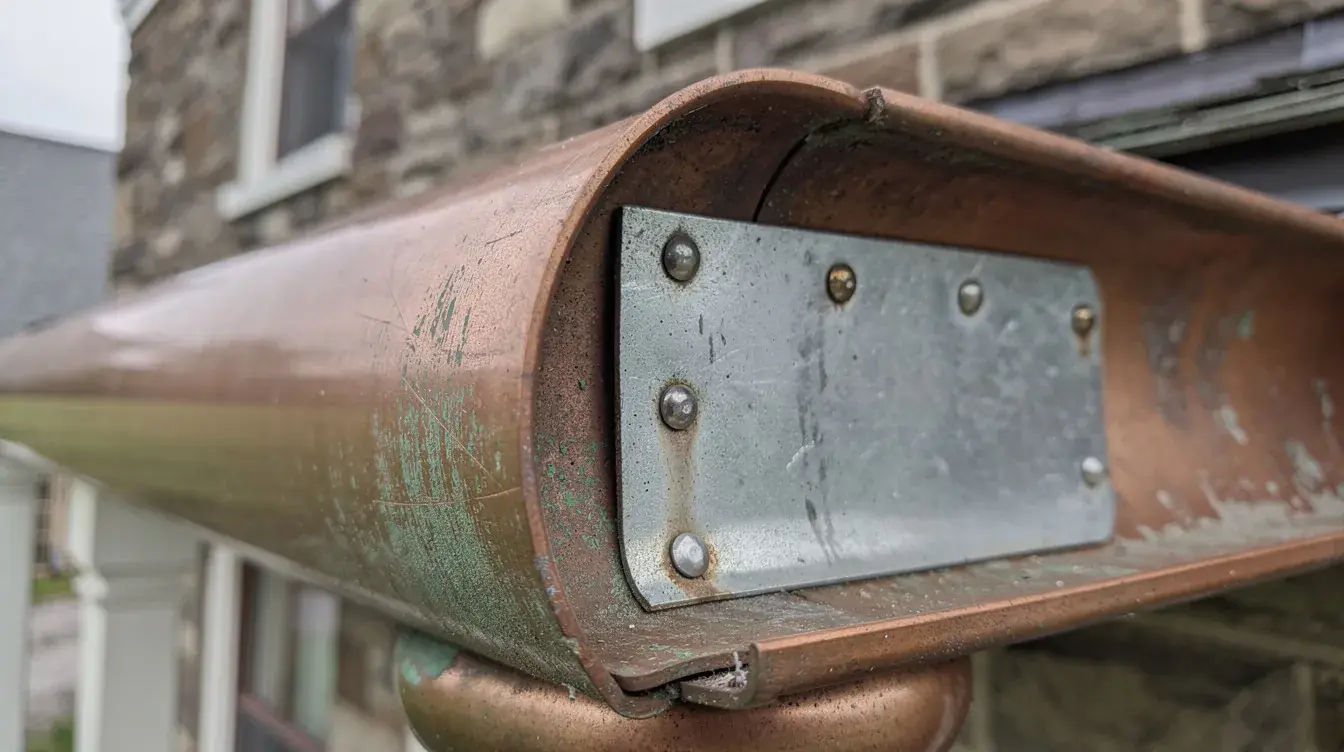
It’s a small plate, usually aluminum, that screws to the front of the gutter and stands up a few inches above the lip. Water that would have sailed over hits the plate and falls back into the trough. That’s all it does.
Really. Below I cover where they go and what they’re made of. Then cost, and how to put one up. Prices and the material notes come from Today’s Homeowner and from product listings at Home Depot. The screw advice is from Forbes Home. Where a figure is our own, like hanger spacing, it matches what’s on our gutter repair page and the gutter hangers guide.
What a Gutter Splash Guard Does
Think about how much roof drains into a valley. Every square foot on both sides of it sheds water toward the crease, and by the time that water reaches the eave it’s a stream, not a sheet. A gutter is sized for water arriving evenly along its length. The valley hands it a fire hose in one spot.
So the water overshoots. Sometimes it clears the gutter completely and lands in the mulch three feet out. Sometimes it hits the front edge and sprays. Either way it ends up where the gutter was supposed to keep it from going. That means the siding and the foundation and the plants.
The guard is a backstop. It doesn’t add capacity. It slows the water down and drops it into the trough, and from there the gutter carries it to the downspout like any other rain. Today’s Homeowner describes the same thing: the guard sticks up over the top of the gutter and pushes water back in instead of letting it fall to the ground.
Gutter Valley Splash Guards and Inside Corners
Gutter valley splash guards go on the gutter right below a valley. That’s the main job. The second place is an inside corner, where the gutter turns around a bump-out or an ell and the roof above it forms a valley anyway. Amerimax sells its Gusher Guard for an inside miter. You can buy guards bent to fit a corner or straight for a plain run.
In my experience you learn more from one rainstorm than from a week of looking at a dry gutter, so I look at a house in the rain before I recommend anything. Where the water shoots past the gutter, a guard can help. If the overflow is along a whole run, or at the far end away from the downspout, a guard won’t fix it. That points at a clog or bad pitch. Gutters should fall about 1/4 inch per 10 feet toward the outlet, which is the figure This Old House gives, and a run that sags or holds water will spill no matter what’s bolted to the front.
Steep roofs are the ones that need guards most. Water picks up speed on a steep slope, and a lot of older Boston houses have steep main roofs with dormers and ells cutting valleys into them. A low ranch with one long eave may never need a guard at all.
Why a Small Guard Plays a Big Role
It’s easy to wave off a three dollar piece of aluminum. But think about where that valley water goes without it. It lands in the same spot every storm, right against the house.
Water that keeps hitting the ground next to a foundation soaks the soil there, and over time that can mean a damp basement wall. It digs a channel in the dirt. Mulch washes away and roots get exposed, and a flower bed under a valley can get beaten flat in one summer storm. The splashing also throws dirt and water up onto the siding and the bottom of the trim. Look for dirty streaks or peeling paint at that spot. Wood that stays wet rots.
None of that is fast. It builds over years of rain, and the guard costs less than a bag of mulch. That’s the whole case for them, and it’s why they play a bigger part than their size suggests in protecting the outside of a house. When a basement has one damp corner, it’s worth going outside and looking straight up, because a lot of the time that corner sits right under a valley that has been overshooting its gutter for years, and the fix outside can be as plain as a guard plus some regrading so the soil slopes away from the wall again. People don’t tend to connect the wet wall with water flying off the roof two stories up. On a dry day there’s nothing to see.
Signs Your Gutter System Needs Splash Guards
Overflowing water during heavy rain is the main one. If you see water coming over the front at the same spot every storm, and that spot sits under a valley or a corner, that’s your guard. Today’s Homeowner lists a few more signs worth checking when you clean gutters in spring and fall:
- A trench or bare patch in the soil right under one part of the gutter
- Plants beaten down or rotting in one spot along the house
- Dirty streaks or mildew on the siding below a corner
- Foundation dampness or staining that lines up with that overflow
- Gutter damage at that corner, like sagging or mold
A roof leak is a different animal. Today’s Homeowner lists leaks as a sign too, but a guard on the gutter won’t stop water getting under the roofing. If you’ve got a stain on the ceiling, have the roof looked at first. Our post on why a gutter leaks into the house goes through how to tell a gutter problem from a roof problem.
Sagging is its own fix as well. A gutter pulling off the fascia needs its hangers tightened or replaced. On our jobs that means a hanger every 36 inches at most, and every 18 inches where snow and ice sit on the eave.
Splash Guard Materials and Multiple Colors
Aluminum and vinyl are the two most popular, according to Today’s Homeowner, since they’re cheap and light. Vinyl can get brittle and crack over time. I’d skip it in New England, where it spends the winter frozen.
Aluminum is what most hardware store products are made of. It’s light and doesn’t rust, and it’s made in multiple colors, usually white and brown and sometimes more, so you can come close to the gutter. GutterWorks sells guards in a range of colors and, per Today’s Homeowner, makes them three inches tall. Most retail guards are shaped for K style gutters, which is what most houses have.
Copper and stainless last longer. They cost more. On a copper gutter I’d only use copper. Putting aluminum against copper sets up galvanic corrosion, and the aluminum loses. Half round copper on hidden hangers is the standard on a lot of older Boston homes, and a guard on one of those should be cut from the same metal. Our copper vs. aluminum gutters post goes into how the two metals age.

How to Install a Gutter Splash Guard
On a one story eave you can do this yourself. Today’s Homeowner calls it an easy DIY job, and I’d go about it like this.
- Watch the gutter in a heavy rain and mark where the water overshoots.
- Clean that section so the guard sits flat against the lip.
- Hold the guard against the inside of the front lip, centered on the stream, standing up above the edge.
- Fasten it. Most guards come with pre-drilled holes, and Today’s Homeowner says three or four is typical. Forbes Home says to use aluminum or stainless sheet metal screws, and aluminum screws on an aluminum gutter. Some packs include fasteners. The Amerimax three pack doesn’t, so buy screws or rivets that match.
- Run a little caulk along the edge so water can’t sneak under the guard.
- Wait for the next storm and look again.
Before you drill anything, check your warranty. Today’s Homeowner suggests finding out whether your gutter warranty could be voided by installing a splash guard yourself. If the gutters are new and already overflowing at a valley, call the installer first. They may owe you the fix.
Two stories is a different job. I don’t like homeowners on a tall ladder reaching out over a valley in the wet, and a slate roof is easy to crack if a ladder leans on it wrong. If the gutter is up high, find a roofing company with the right staging to do it. A guard is rarely the only thing needed up there anyway.
Splash Guards at a Gutter Valley With Leaf Screens
Screens and splash guards do different things. A screen keeps leaves out. It doesn’t make the gutter taller, so a gutter valley can still overshoot with a screen on it. Our page on whether gutter guards are worth it covers screens in more detail. We don’t put guards on by default. We recommend cleaning twice a year instead, and I’d rather see a clean open gutter at a valley than a screen.
You can run both if you want. One Home Depot reviewer found that a splash guard over a screen at a valley trapped pine needles, so check that corner after the trees drop. Downspouts matter here too. A guard keeps water in the gutter, but if the downspout can’t take it away fast enough, the gutter backs up and spills anyway. A downspout diverter can send that water somewhere useful once it’s down.
Frequently Asked Questions
Are Gutter Splash Guards Worth It?
At a valley that overshoots, yes. They’re cheap, and the water they keep in the gutter is water that isn’t digging a trench in your flower bed or soaking the foundation wall. On a straight run with no valley above it they do nothing, so I wouldn’t put them everywhere.
How Much Do Gutter Splash Guards Cost?
A few dollars each in aluminum. When I checked, Home Depot had a three pack of Amerimax Gusher Guards for $10.98, and Today’s Homeowner puts a typical guard at around $7. Copper costs more.
Can I Put Splash Guards on My Existing Gutters?
Yes.
Where Do Splash Guards Go on a Gutter?
On the front lip, right under the spot where the water comes off the roof hardest. That is almost always below a valley, where two roof slopes meet and pour into one short piece of gutter, or at an inside corner where the gutter turns. Stand outside in a real downpour and look for the place where the water shoots past the gutter and hits the ground or the siding, then put the guard there, centered on that stream, and fasten it to the inside face of the lip so the rain hits the guard and drops back into the trough instead of going over the top. One guard per valley usually does it.
Will a Splash Guard Void My Gutter Warranty?
It might. Drilling into a gutter changes it, and Today’s Homeowner suggests checking whether a DIY install could void your gutter warranty before you start. Read the paperwork or call whoever put the gutters up.
Do Splash Guards Work With Gutter Guards?
They can share a gutter. Leaf screens keep debris out but don’t make the gutter any taller, so a valley can still overshoot with screens on. One Home Depot reviewer did warn that a splash guard over a screen at a valley caught pine needles, so keep an eye on that spot.
Talk to the Owner
If one corner of your house gets soaked every storm and you want somebody to look at it, call us at 617-913-1130 or use the contact page. The estimate is free, and the owner walks every roof himself. A lot of the time a valley that overshoots needs a guard and a cleaning and nothing else. If it only needs repair, we’ll say so.