Copper Gutter Guards: A Guide for Historic Boston Homes
Copper gutter guards: 2026 cost per linear foot, screens vs micro-mesh, fitting half round and box gutters, and how to avoid galvanic corrosion.
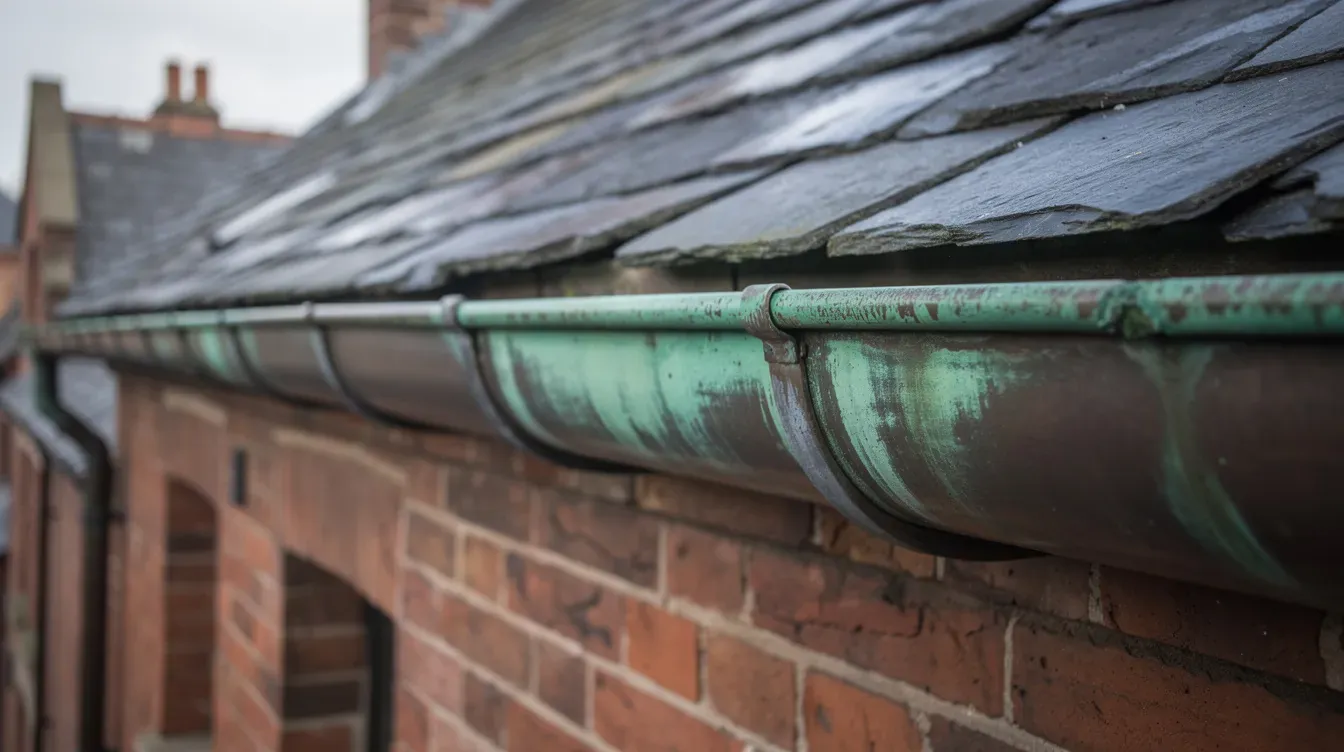
TL;DR: Copper gutter guards make the most sense on a house that already has copper gutters. HomeGuide puts them at $19 to $27 per linear foot installed, or $2,800 to $5,400 for an average home. Copper gutters last 50 to 100 years by HomeGuide and Angi's figures, depending on installation, climate, and upkeep, and the copper in a guard can last about as long. Never put copper guards on aluminum or galvanized steel gutters, use copper, brass, bronze, or stainless fasteners, and expect to keep cleaning, just less often.
Gutters · 15 min read
A copper gutter on a slate roof is built to outlast the people who hung it. The leaves don’t care. Every October the maples drop into it, the oaks follow in November, and by spring the outlet at the corner is packed with a brown mat of leaves, seed pods, and grit.
Copper gutter guards promise to fix that with a metal that matches the gutter and ages the same way. Sometimes they do. This guide covers the types, what they cost, how they have to fit your gutter profile, and the one mistake that can wreck a gutter system in a few seasons. Cost figures come from published guides (HomeGuide, Angi, Bob Vila, This Old House) and material guidance from the Copper Development Association (CDA). They are industry ballparks, not an Art Slate Roofing price.
Are copper gutter guards worth it?
Copper gutter guards are worth considering when three things line up:
- The house already has copper gutters. A copper guard keeps the whole copper gutter system in one metal along the roof line, and it weathers to the same color.
- You plan to stay a long time. HomeGuide’s installed range of $19 to $27 per linear foot is several times what basic guards cost, and the payback comes from years of fewer ladder trips.
- Trees drop a lot on the roof. Broad leaves, pine needles, and seed pods are what fill gutters in the first place.
They are a poor fit on aluminum or galvanized steel gutters. Copper corrodes both metals on contact when water is present, which we cover in detail below. And no guard is a perfect solution. Even the finest mesh leaves debris sitting on top.
What a copper gutter guard is (and what it isn’t)
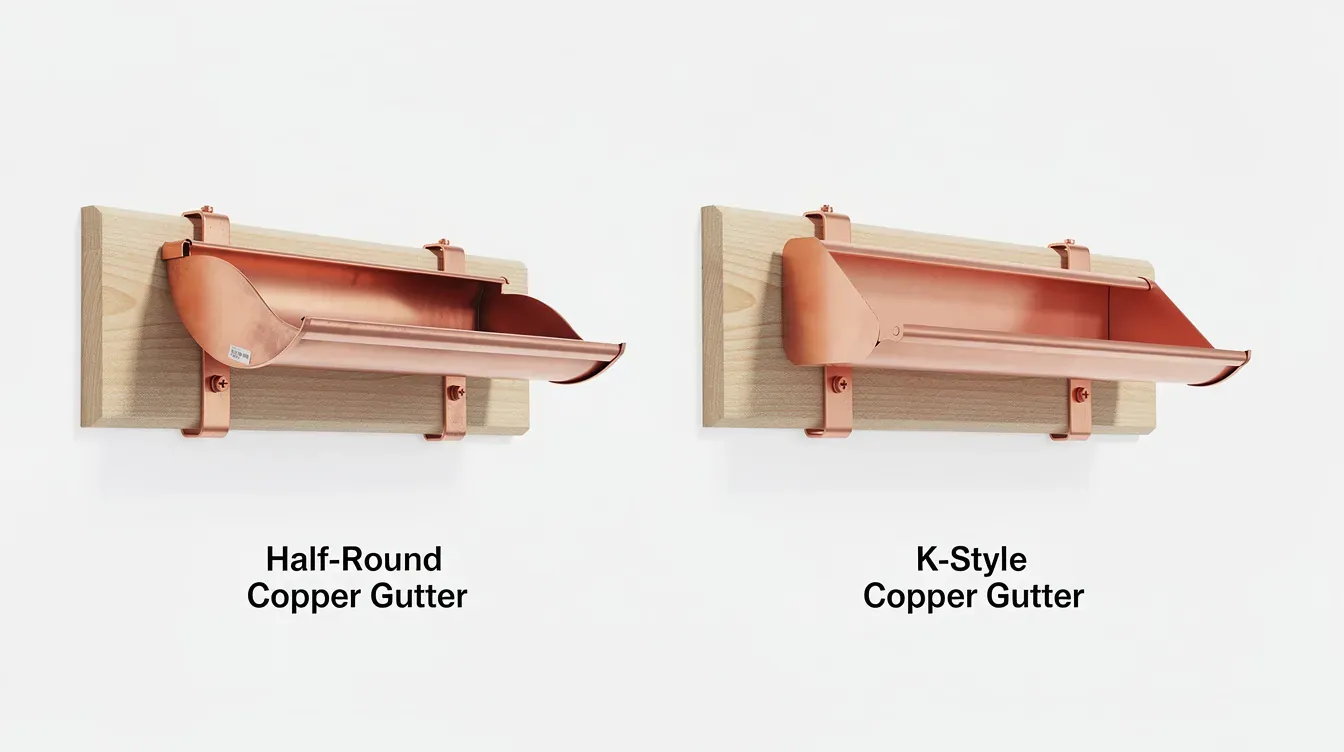
A copper gutter guard is a cover that sits over or in the gutter, lets water through, and keeps debris out. It comes as a perforated screen, a woven mesh, or a very fine micro-mesh held in a frame. Copper versions are made for K style and half round gutters, and custom pieces can be bent for built-in box troughs.
Check what the product is actually made of. Real copper guards are solid metal: a 16 oz copper frame is common, sometimes carrying a brass mesh, which is also a copper alloy. Copper-colored aluminum guards also exist, and Today’s Homeowner points to them as a cheaper option if you only want the look. They won’t weather the way copper does, and on a copper gutter they bring aluminum right back into contact with copper.
Copper screens, mesh, and micro-mesh: the main types
Three things decide which style fits: your gutter profile, the debris around the house, and how the roof edge is built. Here is how the main types compare.
Copper gutter screen: coarse openings for broad leaves
A copper gutter screen is a perforated or expanded sheet with fairly large holes. It will stop leaves from maples and oaks, and water passes through quickly. Smaller debris, seeds, and dirt fall straight through the holes, and Bob Vila notes that metal mesh screens of this kind need to come off now and then so the gutter underneath can be rinsed. Copper screens are the cheapest copper option and the easiest to lift for cleaning.
Copper mesh and micro-mesh for pine needles and grit
Fine mesh is where the filtering happens. This Old House says micro-mesh with 30 or 50 holes per linear inch can filter out pine needles and roof granules, and in its testing micro-mesh kept out everything except small dirt particles. The tradeoff is installation. This Old House found micro-mesh the hardest type to install, usually needing trimming with tin snips, bending, or folding to fit. Cut mesh also leaves sharp edges, so it’s not a job to rush.
If the house sits under white pines or hemlocks, or the roof material is an aging asphalt shingle that sheds grit, fine mesh is the type that keeps up. Our gutter repair page puts it bluntly: needles slip past most guards. Coarse screens are the ones they slip past.
Copper frames with brass or stainless mesh
Some products pair a copper frame with a brass or stainless steel mesh. That is not a compatibility problem. The CDA’s design handbook says copper doesn’t need to be isolated from stainless steel under most circumstances, and brass is a copper alloy. Aluminum and zinc are the metals to keep away from copper.
Matching the guard to your gutter profile
The gutter profile matters as much as the metal. A guard made for the wrong shape sits crooked, leaves gaps for debris, and can cause overflow in heavy rain. Standard residential gutters are usually 5 or 6 inches wide, Bob Vila notes, and guard makers size products to match. Copper guards are generally sold by gutter width and profile, and one half round product we looked at says outright that it isn’t compatible with other gutter types. Proper fit starts with knowing exactly what you have.
K style copper gutters
A K style gutter has a flat back and bottom and a decorative face that ends in a rolled lip. Many copper guards are designed for this shape. The front edge of the guard rests on or clips to the lip, often with a screw or two through it, and the back either tucks under the first course of shingles or fastens to the fascia. The flat back and defined lip give a K style guard a steady place to sit.
Half round gutters: front bead or reverse bead
Half round gutters are a semicircle, so a flat panel has nothing to rest on in the middle. A half round guard spans the opening and depends on the bead, the rolled top edge, for support. On a traditional front bead, that roll curls outward. On a reverse bead, it rolls toward the building, as our half round gutters guide explains. The two need different guards and different hangers. A guard built for a front bead should not be forced onto a reverse bead run.
On older Boston homes, half round copper on hidden hangers is the standard, as our gutter repair page says. Those hangers cross the top of the trough, so any guard has to sit over or between them without prying them loose.
Box gutters and built-in troughs
Box gutters are built into the cornice or the roof edge, common on pre 1930 houses around Boston, and no two are quite the same width. Off the shelf lengths rarely fit. They usually need a custom copper screen or cover bent to the trough, and it should lift out, because a box gutter hides rot until it shows up on a ceiling. Our box gutters guide covers how these systems fail and why access matters.
Mixed metals are also more likely here. Box gutter liners have been made from galvanized steel and aluminum as well as copper, and old troughs often carry patches and flashing from different decades. Know what metal is in the trough before a copper guard goes in.
What copper gutter guards cost in 2026
Copper is the most expensive guard material on the market, and the pricing shows it.
| Cost item | Range | Source |
|---|---|---|
| Copper gutter guards, installed | $19 to $27 per linear foot | HomeGuide |
| 100 feet of gutter | $1,900 to $2,700 | HomeGuide |
| 150 feet | $2,800 to $4,000 | HomeGuide |
| 200 feet | $3,800 to $5,400 | HomeGuide |
| Any guard type, installed | about $4 to $12 per linear foot | Bob Vila |
| Guard labor alone | about $2 to $6 per linear foot | Bob Vila |
HomeGuide’s copper gutters cost page gives $19 to $27 per linear foot installed and $2,800 to $5,400 for an average size home. You may see $12 per foot quoted online as the low end for copper. We couldn’t confirm that figure in a major cost guide. Angi’s copper gutter guide lists guard installation in general at $650 to $2,400 and says copper owners should expect the high end, because copper-compatible guards and fittings cost more than standard ones.
Material-only prices swing more. One maker of copper micro-mesh listed its product at a regular price of $22.80 per linear foot when we checked in September 2026. That is before labor, and it sits near the top of HomeGuide’s installed range, so a micro-mesh job will tend to land at the high end. Coarse copper screens cost less.
Labor goes up with height and pitch. Bob Vila’s gutter guard cost guide says steep roof lines add at least $250 in materials and labor, and a house over one story can add $250 to $300 a day for a basket lift. On a tall rowhouse, staging becomes its own line item. Copper or stainless fasteners add a little too, since they cost more than plain steel screws. On a 150 foot house like the one in our copper vs aluminum gutter breakdown, HomeGuide’s table puts copper guards at $2,800 to $4,000 on top of the gutter work itself.
If you order custom copper guards yourself, read the return policy before you pay. Sellers often ask for quantity in linear feet, not pieces, and panels usually ship in 5 foot lengths. At least one maker we checked says all sales are final on copper products, so a wrong measurement can be non refundable. Measure every run, note the profile and bead, and count corners and outlets.
What a copper guard does well
A copper guard has real advantages over aluminum or plastic, and a few that get oversold.
Long life and durability. The most widely sourced figure for copper gutters is 50 to 100 years. HomeGuide and Angi both use that range. This Old House is more cautious and says 50 years or more, noting that some gutter companies claim 80 to 100. HomeGuide ties the spread to installation quality, climate, coatings, and how often the system is maintained. The CDA doesn’t put a number on gutters, though its handbook points to copper roofs that have been in service for decades and even centuries.
The conditions matter on a slate roof in particular. The CDA explains that rain running off slate, tile, wood, or asphalt stays acidic, and when a big roof drains onto a small copper gutter, the copper can wear before its protective patina forms. Shingles resting right on the copper hold moisture along the edge and cause what the CDA calls line corrosion. That’s why detailing at the roof edge matters as much as the metal.
A guard made from the same 16 oz copper can last as long as the gutter it sits on, but we’d treat that as the ceiling, not a promise. The copper guards we looked at carried 35 year warranties, and the mesh, the fasteners, and the installation method usually set the real limit. Bob Vila gives perforated aluminum guards 10 to 20 years and vinyl screens 3 to 6.
Patina that matches. Copper changes color as it weathers. It goes from bright to brown in the first year or so, then slowly turns green. HomeGuide says green takes 5 to 20 years depending on climate, and the CDA notes it forms faster in marine and urban air, which describes a lot of Boston. The CDA calls the patina a protective layer. A copper guard ages alongside copper gutters under the same weather conditions, so the roof line reads as one piece.
No paint, minimal maintenance on the metal. Copper doesn’t rust. It needs no paint or coating, and as our copper roofing page puts it, beyond the occasional look-over copper handles itself. That’s the metal. The guard still collects debris and still needs checking, which we get to below.
Moss and algae. Copper ions in runoff hold back moss and algae. This Old House says copper strips on a roof release ions that inhibit moss, and Bob Vila notes that roof areas below copper flashing tend to stay free of algae. On a shaded street, that keeps green film from building up on the guard. Copper is often said to resist lichen too. We didn’t find a major source that tests lichen directly, so treat that part as likely rather than settled.
Pests. Bob Vila points out that packed gutter debris makes a nesting spot for birds, chipmunks, and squirrels. A well fastened guard takes that spot away. It won’t stop a determined squirrel from chewing at a loose corner.
These points matter most on historic homes with slate or copper roofs, where the owner wants materials that last as long as the roof and look like they belong there. For those houses, copper is long lasting protection in the literal sense.

Galvanic corrosion: why copper gutters need copper guards
Galvanic corrosion happens when two different metals touch and water connects them. The less noble metal corrodes. The CDA’s handbook ranks common building metals by nobility, and aluminum sits at the bottom, followed by zinc, which is the coating on galvanized steel. Copper sits near the top. It isn’t harmed by those metals, but it makes them corrode wherever they meet.
So a copper guard on an aluminum gutter is a slow failure built into the roof. The same goes for aluminum screws in a copper gutter, or galvanized steel straps holding a copper guard. The CDA also warns that water washing off copper can speed corrosion of aluminum below it, even with no direct contact. It tends to show up first where the metals touch, at fasteners and straps, and ends in pinholes and leaks.
The rules are simple:
- Pair copper gutters with copper guards to avoid galvanic corrosion.
- Use copper, brass, bronze, or stainless steel fasteners. The CDA lists those as compatible, and HomeGuide says the same about hangers and brackets on copper gutters. Our copper roofing page says it more simply: every fastener, drip edge, and adjoining metal should be copper or copper compatible.
- If your existing gutters are aluminum, use aluminum guards. Or replace the gutters with copper first and add copper guards later.
- On old box gutters, find out what metal is in the trough before anything copper goes in.
Installation on slate, copper, and shingle roofs
How a guard goes on matters as much as which one you pick. There are three common ways to attach it, and each installation method suits some roofs better than others. Ask any installer which fastening method they plan to use before work starts.
- Under the first course of shingles. Many gutter screens and micro-mesh guards slide their back edge under the first row of shingles, This Old House notes, with the front fastened to the gutter lip. Reverse curve covers start under the shingles too.
- To the gutter only. Some guards snap onto the lip or screw to the front and back of the gutter, never touching the roof.
- To the fascia. A fascia clip or bracket holds the back edge, so nothing lifts the shingles. This Old House recommends fascia clips for exactly that reason.
On slate, the first option is usually off the table. Slate doesn’t flex like asphalt, and prying at the bottom course cracks it. One copper guard maker warns that even asphalt shingles older than about five years are hard to lift without tearing. On a copper roof, sliding metal under pans can disturb soldered seams. The rule is that installation should not damage the roof or shingles, so on slate and copper, favor guards that attach to the gutter or the fascia. Bob Vila also warns that a bad guard install can void the warranty on the gutters and the roof.
Hangers are the other constraint. Hidden hangers on copper gutters, strap hangers on half round, and custom brackets on box gutters all have to keep carrying the gutter after the guard goes on. Forcing a guard over a hanger, or removing hangers to make room, weakens the gutter.
Then there is snow and ice. A guard isn’t structural. It has to shed snow without trapping ice against the eave, and it shouldn’t block an ice melt cable if you have one. As our half round guide notes, a guard that looks tidy in summer can hold frozen material at the roof edge in winter. Our ice dam guide covers how a clogged gutter feeds the problem.
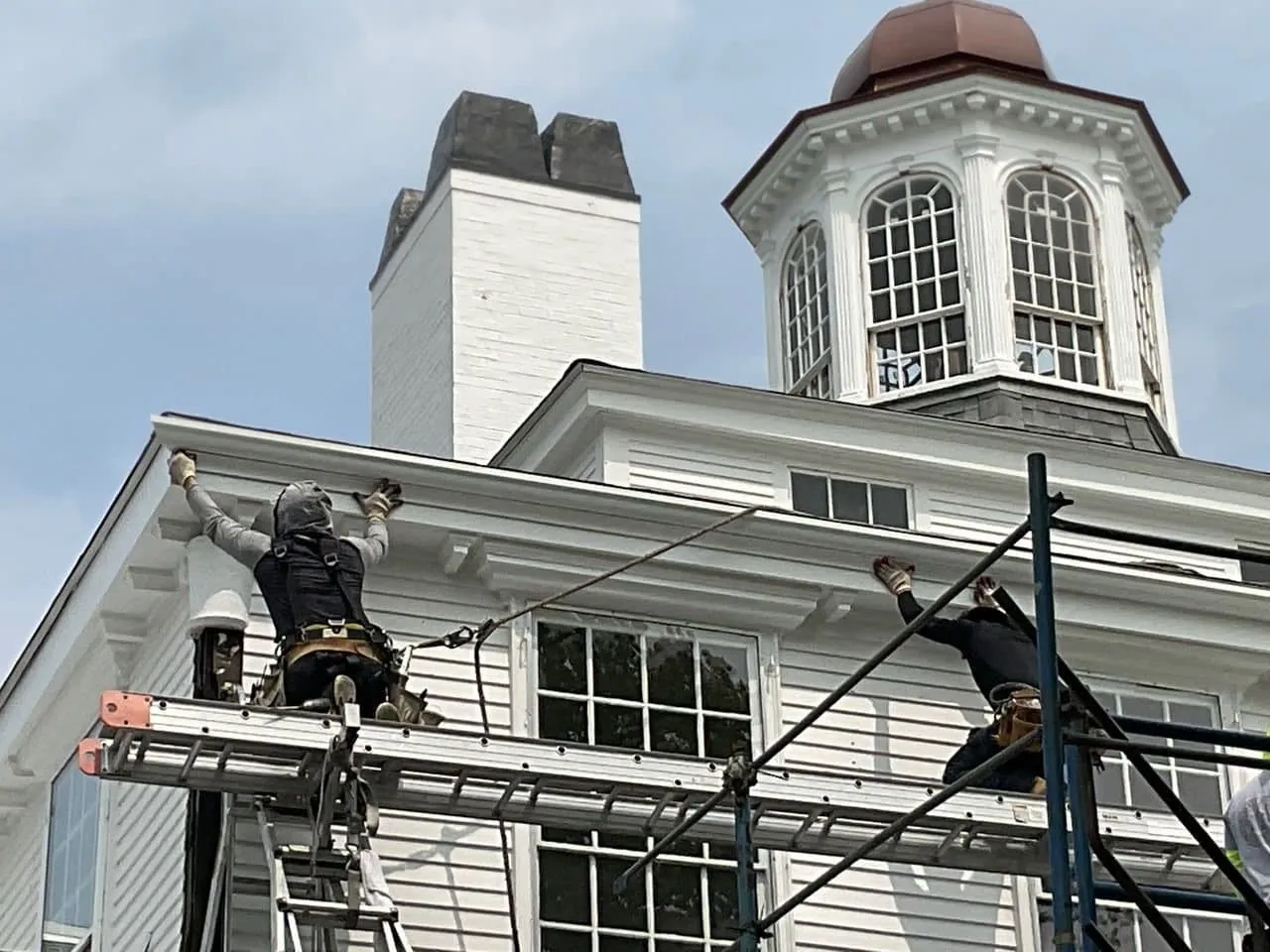
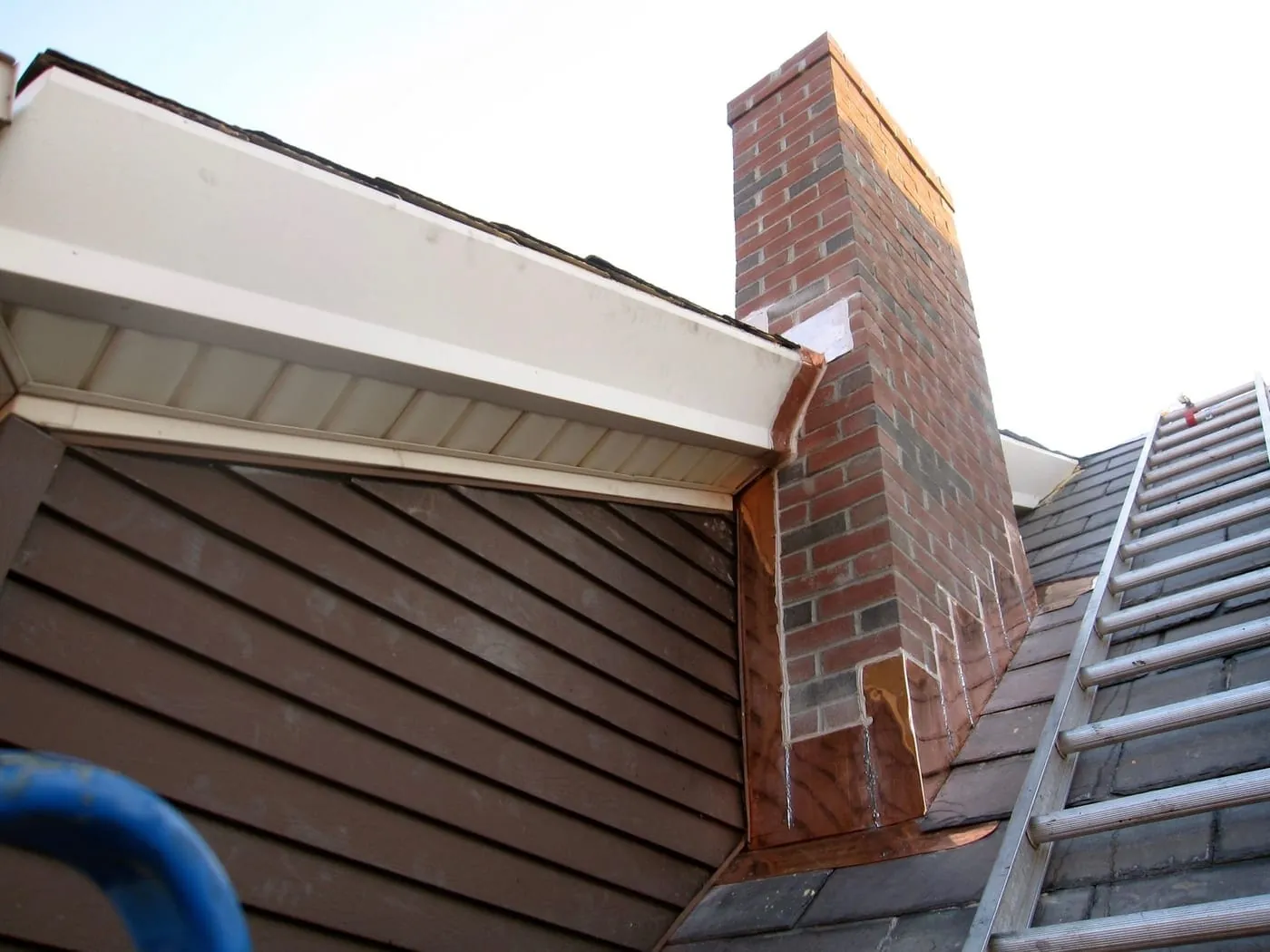
Last, the drip edge and flashing at the roof edge. A guard that interferes with the drip edge or pulls at the roof flashing creates a leak point that didn’t exist before. Professional installation by someone who knows slate and copper roof edges costs more than a generic gutter crew, and on an older house it’s worth it.

Maintenance: less cleaning, not zero
Copper gutter guards cut cleaning. They don’t end it.
Even fine mesh collects debris on top: pollen, roof grit, small twigs, needles. This Old House recommends clearing that surface debris with a leaf blower or garden hose, checking from the ground regularly, and having a pro inspect and clean the system once a year, especially under overhanging trees. In its survey of 1,000 guard owners, about 30% said they never clean their gutters anymore, and about 41% still clean once a year.
How often depends on the trees. A house with little canopy may need one check a year. A house under mature street trees needs spring and fall, the same schedule we recommend for gutters without guards. Inspect after major storms too. Wind shifts guard sections, and branches dent them.
Clean copper gently. A hose wash and a soft brush handle most of it. Skip steel wool and wire brushes. The CDA advises against steel wool on any copper because it can leave stains, and abrasive tools scratch the metal and the patina. Removable copper screens on half round and box gutters have one practical advantage: you can lift them out to clean outlets and downspouts properly. Plan on less frequent cleaning, not none.
Where we stand on gutter guards
We don’t install gutter guards as a default. As our gutter repair page puts it, they are a solution to a problem that proper copper gutter installation often prevents. We quote them when a homeowner asks, but on most houses we recommend cleaning twice a year instead: once in fall after the leaves are down, once in spring after the thaw.
If you do want guards on copper gutters, the advice above holds no matter who installs them. Match the metal. Match the profile and bead. Keep the fasteners compatible. Leave the slate alone.
Frequently asked questions
How much do copper gutter guards cost?
HomeGuide’s 2026 figures put copper gutter guards at $19 to $27 per linear foot installed. That works out to $1,900 to $2,700 for 100 feet, $2,800 to $4,000 for 150 feet, and $3,800 to $5,400 for 200 feet. Steep roofs, a second or third story, and custom work on box gutters push the number up.
How long do copper gutter guards last?
HomeGuide and Angi put copper gutters at 50 to 100 years, and This Old House, more cautious, says 50 years or more. Installation quality, climate, and maintenance decide where a house lands in that range, and the copper in a guard can last about as long. The guard as a product is another matter. Warranties on the copper guards we looked at ran 35 years, and the mesh, the fasteners, and the install usually decide how long it really works.
Can I put copper gutter guards on aluminum gutters?
No. The Copper Development Association ranks aluminum as the least noble common building metal, and copper corrodes it on contact when water is present. Runoff that washes over copper and onto aluminum does the same thing more slowly. Match copper with copper, or pick an aluminum or stainless guard for an aluminum gutter.
Do copper gutter guards stop pine needles?
Coarse copper screens don’t. Fine micro-mesh does a much better job. This Old House notes micro-mesh with 30 or 50 holes per inch filters out pine needles and roof granules. Needles still pile up on top of the mesh and have to be brushed or rinsed off.
Do copper gutter guards mean I never clean my gutters?
No. In a This Old House survey of 1,000 guard owners, about 30% said they never clean their gutters now, while about 41% still clean once a year. Plan on at least a yearly check, more with heavy tree cover, plus a look after big storms.
Will copper gutter guards turn green?
Yes, eventually. Bright copper goes brown within the first year or two, then slowly turns green. HomeGuide says green takes 5 to 20 years depending on climate, and Angi notes some copper kept clean may not start turning green for 20 to 30 years. Guards and gutters exposed to the same weather age at roughly the same pace.
Talk to the owner
Whether a guard makes sense depends on the gutter under it: the metal, the bead, the hangers, the roof edge, and the trees overhead. That’s hard to judge from the ground.
Every gutter project Art Slate quotes gets walked by Arturo before a number goes on paper, and that walk is free. See what we install and repair on our gutter repair page, schedule a free assessment, or call 617-913-1130. You get an honest answer on whether the work is needed now, in a few years, or not at all.