Getting Rid of Ice Dams on Roof Edges: Safe Removal and Prevention
Getting rid of ice dams on roof edges without damaging the roof: roof rakes, calcium chloride, what not to do, and the air sealing and insulation that stop them.
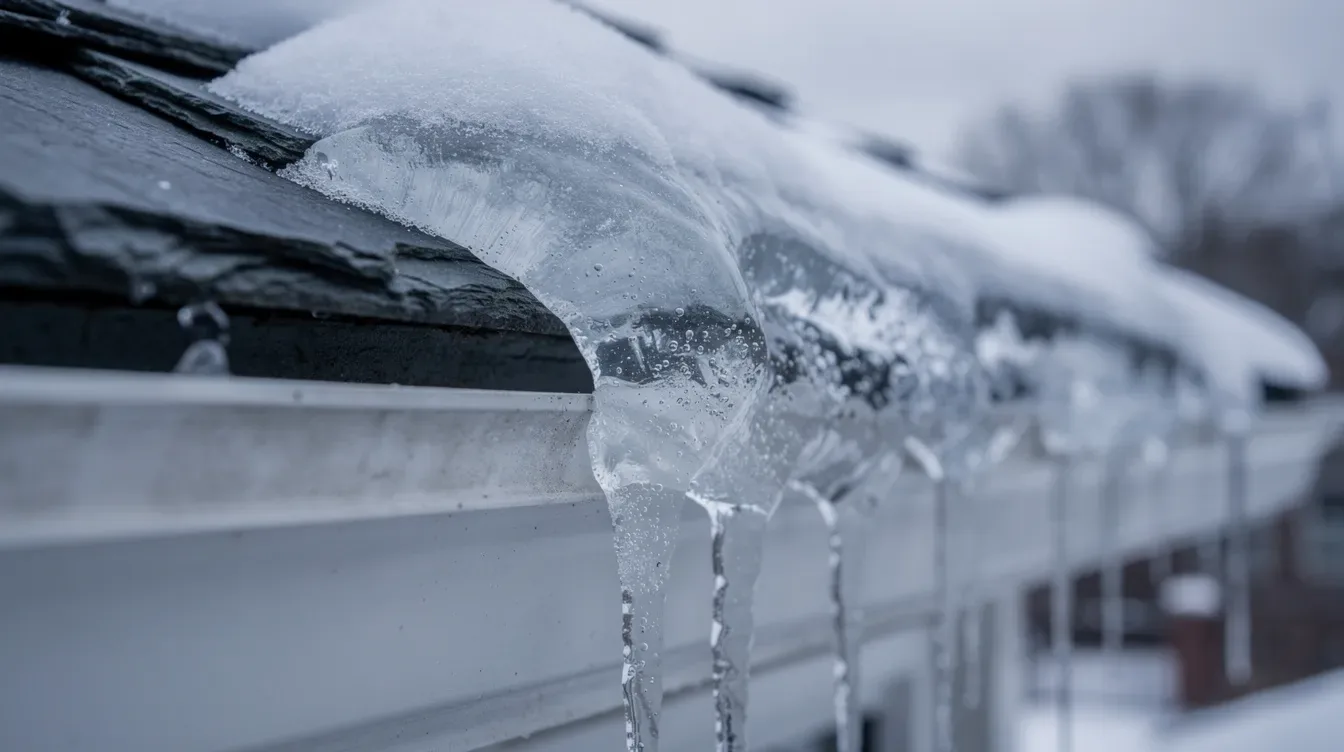
TL;DR: Heat leaking out of the house melts snow up high on the roof, and the water freezes again at the cold eave. That's an ice dam. If you have one now, stay on the ground. Rake the bottom three or four feet of snow off and lay nylon stockings of calcium chloride across the ice to open drain slots. No rock salt, no hammer, no hot water, it just freezes again. Call a pro if water is inside or the house is tall. Same for slate. Long term, seal the attic air leaks, insulate to R-49 to R-60 and vent the attic, and clean the gutters in the fall. Heat cable helps on trouble spots. Ice and water shield cuts leaks but the ice still forms.
Ice Dams · 10 min read
January, about a week after a big storm. Somebody calls me because there’s a brown ring spreading across the bedroom ceiling. I pull up out front and there’s a lump of ice the size of a curbstone sitting in their gutter, icicles hanging off it like teeth. That’s an ice dam, and by the time it shows up on the ceiling it has usually been working on the roof for days.
Below is how I’d go about getting rid of ice dams on roof edges without breaking anything, and then what actually keeps them from coming back. Where I quote an R value, it’s the ENERGY STAR number. I’ll also flag a few popular fixes that do more harm than the ice.
What an Ice Dam Is and Why It Forms
Picture a ridge of ice along the roof’s edge. Snow higher up melts and the water runs down until it hits that ridge and stops. It can’t get off the roof. So it pools.
It can be 20 degrees out and the roof still makes water. Almost always, the heat comes from your own house. Warm air inside the living space rises and leaks through gaps in the top floor ceiling into the attic space. More heat creeps up through whatever thin insulation is lying on the attic floor. Between the two, the roof boards get warm, and the snow melts on them from the bottom up, usually up near the ridge where the attic is warmest. That melting water trickles down the roof surface toward the eave. Now the eave hangs out past the exterior walls with no heated room under it, so it’s as cold as the street out front, and that’s where the water refreezes. Overnight it adds a layer. Then another. After a week you’ve got a real wall of ice with a pond behind it.
That’s the whole mechanism. Heat escaping from the house is the primary cause and the underlying cause in nearly every case I look at; the gutters and the weather just set the stage. It runs on temperature differences between the deck up high and the cold overhang. Keep the deck cold from top to bottom and you can have two feet of snow on your roof without a dam.
Ice dam formation gets bad in northern climates when heavy snowfall is followed by a stretch of cold weather, nights well below freezing, with a bit of sun in the afternoon. That’s a normal Massachusetts February. An old house has it worse. Little or no insulation, plaster ceilings full of cracks and bypasses, attics nobody ever thought to vent.
Ice Dam Damage Inside and Out
Slate and shingles are lapped to shed water running downhill. Hold a puddle against them and water works its way up and under the courses, across the deck, into the attic. It may run along a rafter for six feet before it finds a place to drip. That’s why the water damage often shows up far from the ice, and why people miss it until the plaster is soft.
What I usually find on these calls: water stains on ceilings near the outside walls. Insulation in the attic that’s soaked and flattened, which means it’s not insulating anymore. Paint blistering under the eave. If it happens winter after winter, mold in the wall cavities and rot in the sheathing and fascia, and eventually framing that needs real repair. Gutters get it too. A long dam can weigh several hundred pounds, enough to bend a gutter or rip the hangers right out.
So if there’s a wet spot on the ceiling, check the eave right over it and a few feet uphill of that.
Signs You Have an Ice Dam Right Now
Stand in the street and look at your eaves. A thick band of ice sitting in or over the gutter is the tell. A gutter packed solid is another. A few thin icicles, I wouldn’t lose sleep over. But when icicles form a heavy curtain along the whole run of the eave, there’s almost certainly water sitting behind them. North slopes are the worst for this because the snow there hangs around for weeks.
Then head up to the top floor. Where the ceiling meets an outside wall is where I’d look first, and over the window trim. A fresh stain there or a drip on a sill and the water’s already in.
Grab your phone and take dated pictures of the ice outside and the stain inside. Your adjuster will ask. Whoever comes to fix it will use them too.
Getting Rid of Ice Dams on Roof Edges Safely
Everything here buys you time. You’re trying to get water draining so you prevent damage inside and stop further damage to the roof until it warms up. The reason the dam formed is still there afterward.
First rule, stay on the ground. An iced up roof is about as slick as it gets, and a ladder footed on packed snow can slide out with you on it. Slate cracks under boots even in July.
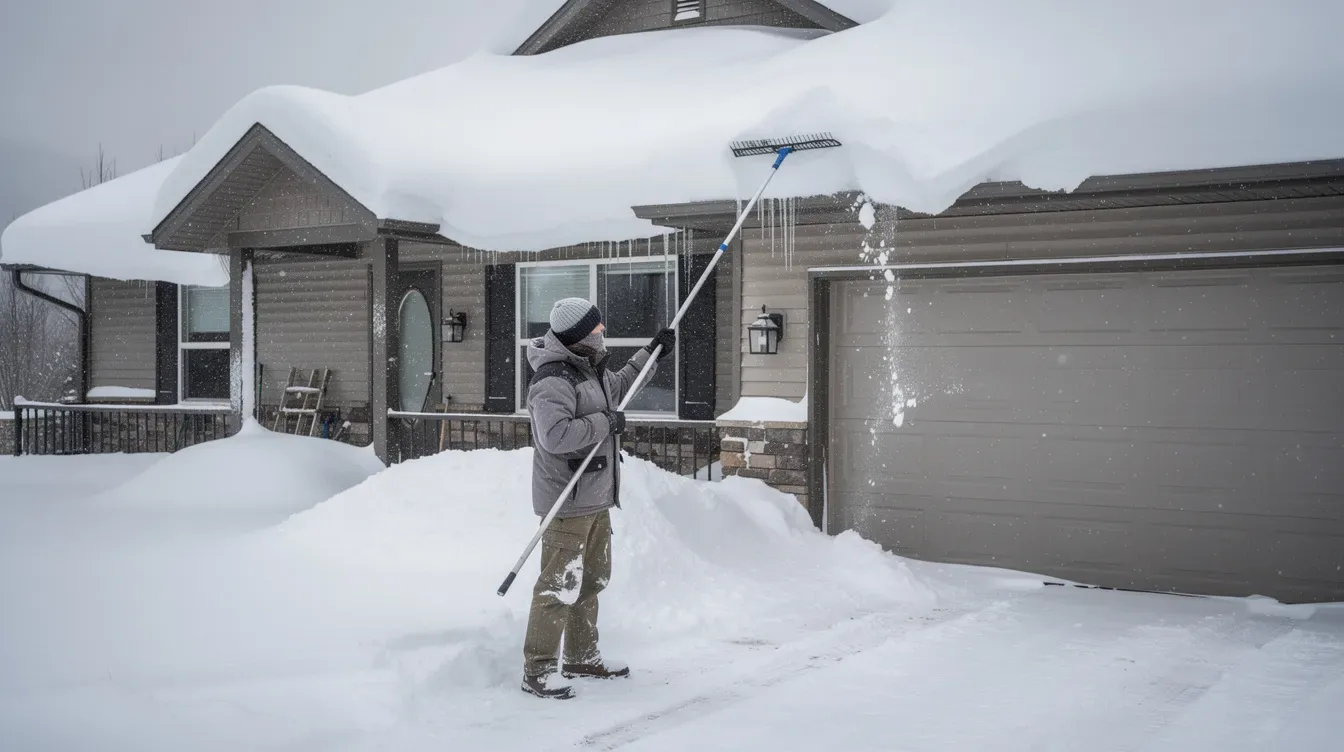
Use a Roof Rake After Heavy Snowfall
A roof rake is a wide blade on a long telescoping pole. You stand in the yard and pull the snow down to you. Do it after every storm and you remove snow that would have melted and fed the dam, which means less ice forming at the gutter.
I’d clear the bottom three or four feet up from the edge, more after a big one if your pole reaches. Get a rake with a plastic blade or little rollers on it so it rides over the roofing. Leave an inch or so of snow on; scraping down to the shingles is how you tear them. Look up before you start. Electrical cables come into a lot of houses right at the eave, and an aluminum pole touching the service drop can kill you. Stand back, too. A slab of wet snow off a roof is heavier than it looks.
Any local hardware store sells them, for a lot less than a service call.
Calcium Chloride Ice Melt in a Stocking
On a roof I’d only use calcium chloride. It keeps eating ice at temperatures where rock salt has quit, it’s easier on the roofing, and that’s the stuff extension services and roofers tell people to buy. Hardware stores carry it in bags labeled calcium chloride ice melt. Read the label though, because some blends are mostly rock salt with a little calcium chloride thrown in.
The old trick to melt ice dams with it goes like this. Pour it into a nylon stocking, or a leg cut off some pantyhose, and knot the end. Lay it on the roof so it crosses the dam top to bottom and hangs an inch or two over the gutter. If you can’t reach, nudge it up there with the roof rake. It slowly sinks through the ice and leaves a slot, and the pond behind the dam drains out through the slot. On a bad run of eave, set one every two feet or so.
It’s slow. At ten degrees I’d give it most of a day. Calcium chloride burns plants too, so lay a tarp on the shrubs under the drip line, or hose them down come spring.
When to Call for Ice Dam Removal
Call someone if water is already coming in, or the dam is up on the second or third floor, or the roof is slate or copper. Nobody should be walking a slate roof in January. Proper ice dam removal is done with low pressure steam, which cuts through the ice and doesn’t hurt what’s under it. When you call around, ask what equipment they bring. If the answer involves hammers or a pressure washer, keep calling.
Ways Not to Remove Ice Dams
Plenty of the homemade ways people try to remove ice dams end with a repair bill bigger than anything the ice would have done.
Going at it with a hammer or ice pick is the big one. Slate snaps and shingles tear. A missed swing puts a hole in the flashing or the gutter. Pouring hot water from a bucket opens a groove for maybe ten minutes, then the water refreezes and you’ve just added to the ice buildup. Torches and heat guns are how roof sheathing catches fire. A pressure washer drives water straight up under the roofing, the exact thing you’re trying to stop. And climbing up there yourself. Every winter somebody comes off an icy eave.
Why Rock Salt and Chipping to Remove Ice Do More Harm
Rock salt is sodium chloride. Down in the teens it hardly does anything. Meanwhile it’s chewing on metal flashing and gutters, and it can damage shingles and leave stains on the roofing on the way down. The runoff lands in the foundation plantings and kills them. Driveway only.
Chipping is no better. You can be careful and still crack a slate or damage shingles under the ice where you can’t see, and you won’t know until it leaks in April. Stockings and a rake are slow. The roof survives them.
How to Prevent Ice Dams for Good
Dams every winter mean heat is getting to the roof. To prevent ice dams the deck has to stay close to the outdoor temperature, and that comes from sealing and insulating the ceiling under it. Do that well and you can eliminate ice dams, or close to it. Order matters: air sealing first, then insulation, then ventilation, then gutters. Our ice dam prevention guide walks through that order in more depth.
Seal Attic Air Leaks First
In most attics I go into, air leaks put more heat up there than anything else. Warm air rises through every opening it can find in the top floor ceiling. The attic hatch. Recessed lights. Plumbing vents where the pipe goes through. The chase beside a chimney, and the holes drilled in wall top plates for wiring.
Start with the attic access points, because an unsealed hatch is basically a hole in the ceiling. Weatherstrip it and put insulation on the back of the panel. Then caulk or foam the gaps at pipes and wires. Around chimneys and flues use sheet metal and fire rated sealant, never foam. If you want to find the ones you can’t see, an energy auditor with a blower door and an infrared camera will light them up. Mass Save offers home energy assessments and incentives for air sealing and insulation; check what they’re offering now before you sign with anyone.
Exhaust ducts are another one. Bath fans and kitchen hoods have to vent all the way outdoors through the roof or exterior walls. So do dryer vents. I find plenty that just end in the attic, blowing warm wet air at the underside of the roof. That’s heat and frost right where you don’t want it.
Cut Heat Loss With Attic Insulation
After the sealing, add insulation. Attic insulation slows the heat loss through the ceiling that warms the deck. ENERGY STAR recommends R-49 to R-60 on attic floors in Massachusetts, which works out to well over a foot of loose fill. Plenty of older homes I see have three or four inches.
Blown cellulose is the usual way to go on an open attic floor, and blown fiberglass works fine too. Spray foam makes more sense against roof slopes and in tight spots where loose fill won’t fit. Either way, keep it from plugging the vents at the eaves. Baffles hold it back.
Ventilation That Keeps the Deck Cold
Vents let outdoor air wash through the attic and carry off what heat gets up there, so the boards under the roofing stay about as cold as the air outside, top to bottom. That cold deck prevents melting snow up high in the first place. Nothing melts, nothing runs down to freeze. On most houses that means soffit vents low and ridge vents at the peak, with a clear air path up under the roof boards between them.
Vents won’t save a leaky ceiling. An attic can have ridge vent and soffit vent both and still grow a foot of ice at the gutter when the hatch and the light cans are pushing heat up faster than the vents can move it out. Seal first. And some houses have no attic to vent, like a flat roofed rowhouse in the South End or a third floor finished right up into the rafters. Those I have to open up and look at before I can tell you where the heat is going.
Clear Gutters Before Winter
Clean the gutters in the fall once the trees are bare. Leaves and other debris hold water. It freezes in there and gives the ice a head start right at the eave. Check that the downspouts are draining properly and that the water flows away from the foundation. Dirty gutters don’t cause ice dams on their own. They do make them bigger and a lot heavier. If yours are sagging or pulling away, our gutter repair page covers that.
Heat Cable and Ice and Water Shield
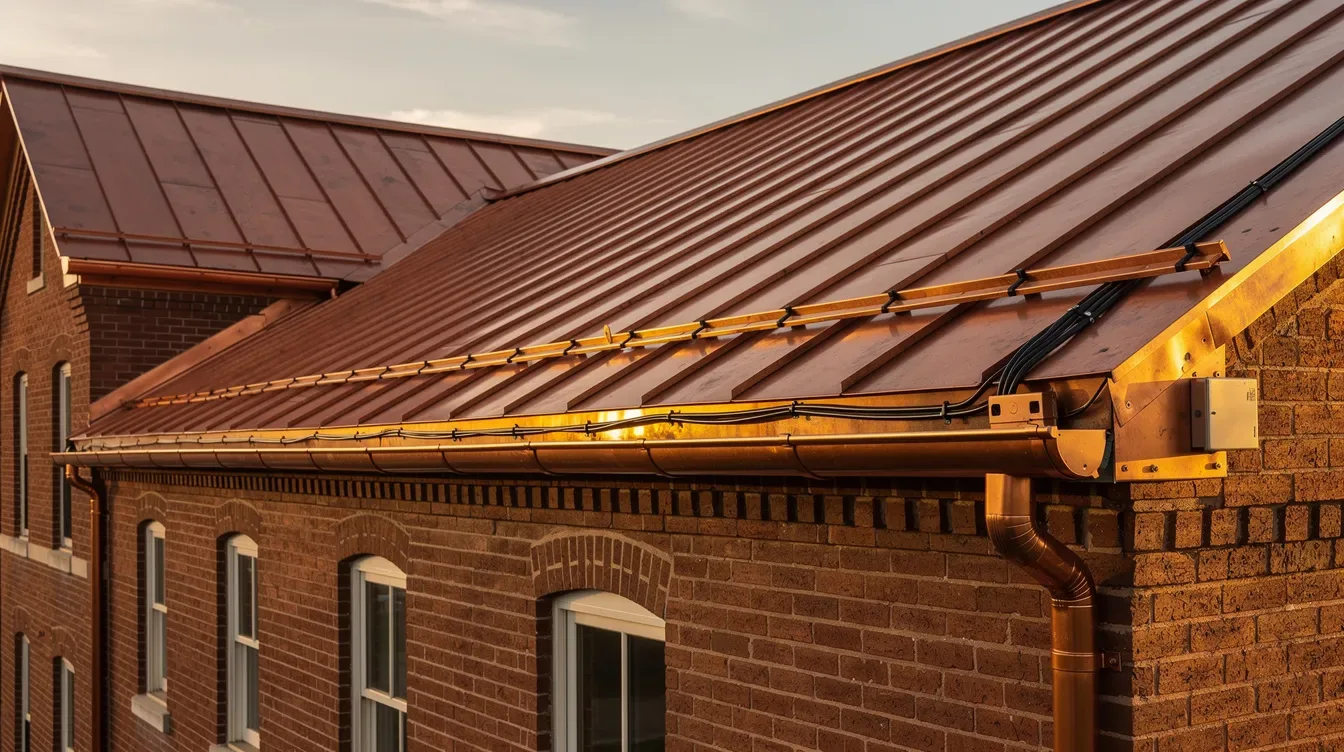
Heating cable goes by a few names, de-icing cable, heat tape. It’s laid in a zigzag along the eave and run through the gutters and down the downspouts. It won’t clear a roof. What it does is keep channels open in the ice so the melt has somewhere to go. It does the most good when it goes in before winter, on the spots that always give trouble, a low porch eave or a valley that backs up every year, places air sealing can’t really fix. Have someone who knows the product install it, on its own circuit with ground fault protection, and turn it on when it snows. Our ice melt systems page explains how these go on slate and copper.
Ice and water shield is a sticky rubberized membrane that goes on the deck along the eaves before the roofing. It seals around the nails, so water that backs up behind a dam has a much harder time getting through. The ice still forms right on top of it. All it does is cut down the leaking. It goes on when a roof is replaced, and our ice and water shield post gets into where it belongs and what code calls for.
Talk to the Owner
If you get ice dams or winter leaks every year and you’d like to know why, call me directly. I’m Arturo Nieto and the number is 617-913-1130, and you can also reach us through the contact page. We’ll look at the eaves and the attic and show you where the heat’s getting out. For a leak happening right now, our emergency roof repair page is the faster route.
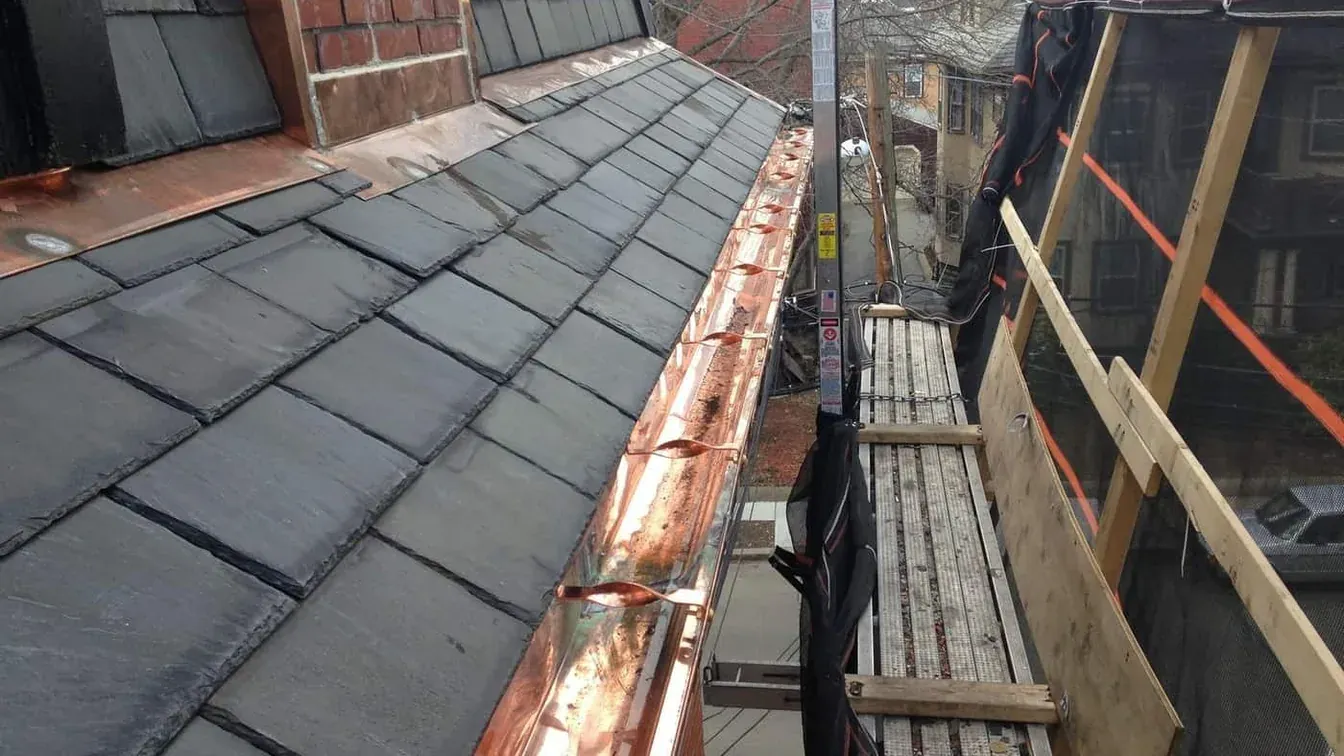
We’re Art Slate Roofing, LLC, out of 22 Clarendon St #2, Malden, MA 02148. Licensed and insured, MHIC #176393, and rated 4.8 across 24 Google reviews. If yours is an older slate or copper roof, have a look at our historic roof restoration page too.
Frequently Asked Questions
What Is the Fastest Safe Way to Get Rid of an Ice Dam?
Rake the bottom three or four feet of snow off while you stand on the ground, then lay a few nylon stockings packed with calcium chloride across the dam and leave them to melt drain slots down through the ice. If water is already inside, call a roofer who uses steam. Same if the roof is high or slate.
Can I Use Rock Salt on an Ice Dam?
No. It eats flashing and gutters and can damage shingles. Buy calcium chloride, and read the bag first.
Does Heat Cable Stop Ice Dams?
On trouble spots it helps. The cable keeps a path open through the ice so melt can drain. Put it in before the snow. A leaky attic will still build dams around it.
Will More Insulation Fix Ice Dams?
Seal the air leaks first. Heat riding up through gaps goes right past insulation. Then bring the attic floor to R-49 to R-60, which is the ENERGY STAR number for Massachusetts.
Do I Still Need Ice and Water Shield If I Fix the Attic?
Yes, on a reroof I’d put it at the eaves anyway. Ice still forms on it. It just keeps the backed up water out of your ceiling.
Are Icicles a Sign of an Ice Dam?
Sometimes. A couple of skinny ones I’d ignore. A fat row along the whole eave with the gutter full of ice usually has water pooled behind it, so check the top floor ceiling by the outside walls.