Slate vs. asphalt shingles: the honest comparison for Boston homes
Slate vs asphalt shingles for Boston homes: real cost, lifespan, and resale math, why slate wins the long game, and when asphalt is the right call.
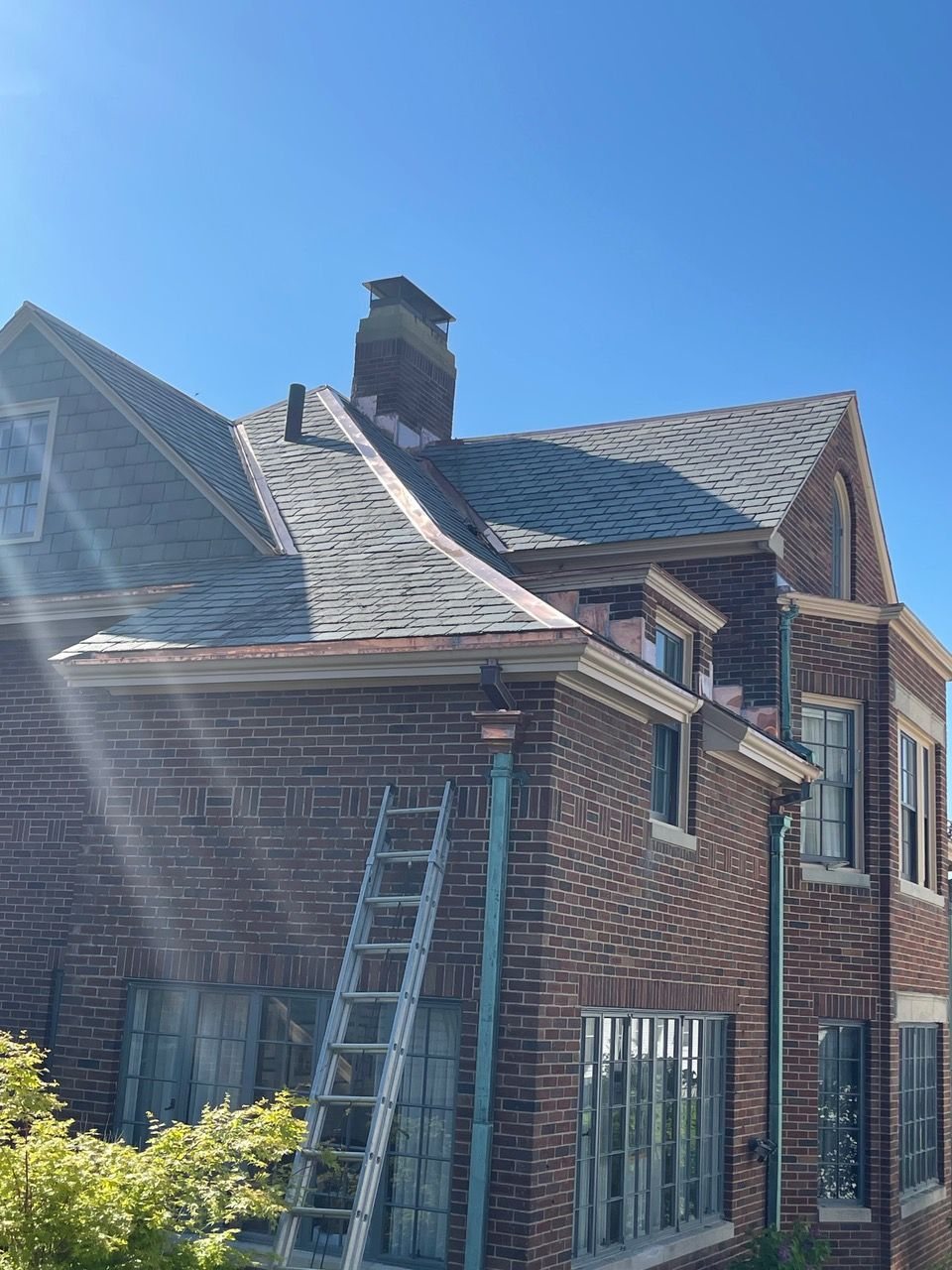
TL;DR: On a pre-1940 Boston home you plan to keep, slate is usually the cheaper roof in the end. Asphalt costs $9,000 to $18,000 and lasts 18 to 25 years here; slate runs $40,000 to $80,000 but lasts 75 to 150 years and is installed once. Around the second asphalt replacement, roughly year 35 to 45, the cumulative cost passes slate. On newer homes, short holds, or a tight budget, asphalt is the honest call.
Roofing materials · 6 min read
Most Boston homeowners pricing a roof start from the asphalt number and work up. Asphalt is cheaper to buy, faster to install, and offered by nearly every contractor in the metro. Slate is none of those things on day one. But “cheaper to buy” and “cheaper to own” are different questions, and on a house that’s going to outlive several roofs either way, the second question is the one that decides the money.
Here’s the comparison without the sales gloss, including the cases where asphalt is the correct answer.
Slate vs asphalt lifespan: the number that drives everything else
This is the axis everything else hangs on, so start here.
- Architectural asphalt shingles: 18 to 25 years here. Freeze-thaw cycling (water gets under a shingle, freezes, lifts it, repeats) plus ice dams and wind-driven snow keep Boston roofs in that range in practice, whatever the wrapper promises. The asphalt mat doesn’t rot; the granules shed, the mat goes brittle in UV, and the sealant strips let go.
- Natural slate: 75-150+ years. Hard Vermont and Buckingham slate routinely passes a century; the 1890s slate roofs still in service across Beacon Hill and the South End are not museum pieces, they’re working roofs. Slate is fireproof, doesn’t absorb water, won’t rot or grow mold, and is chemically inert. What fails on an old slate roof is almost never the slate. It’s the flashing, the fasteners, or the underlayment, all of which are repairable without touching the tile.
So one roof is an 18 to 25 year consumable and the other is closer to a permanent part of the house. Hold that thought through the cost section, because it’s what flips the math.
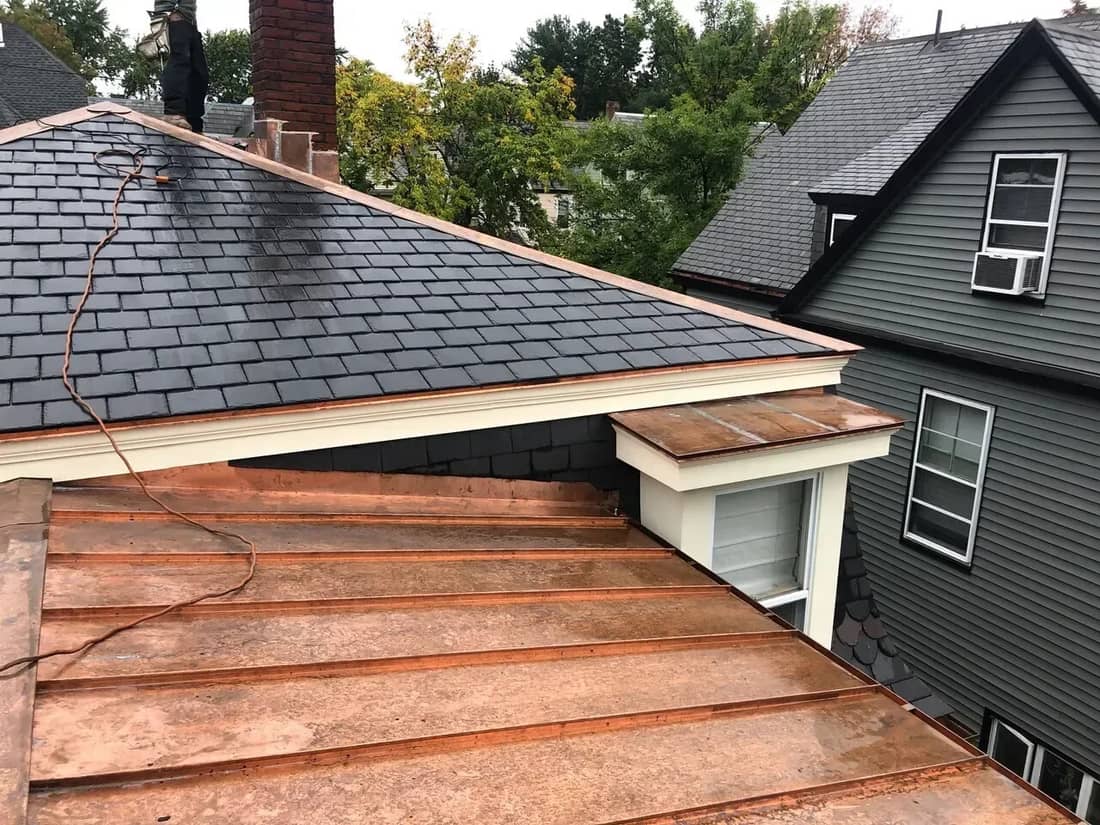
Upfront cost vs. lifetime cost
Asphalt wins the upfront number, and it isn’t close.
- Architectural asphalt, installed on an average Boston 2,000-2,500 sq ft home: roughly $9,000-$18,000 depending on pitch, layers to tear off, and complexity.
- Natural slate, same house, installed by a slate-trained crew: roughly $40,000-$80,000. The spread is wide because slate cost is driven by the structure underneath (slate is heavy, 800-1,500 lbs per square versus ~250 for asphalt, so some frames need reinforcing) and by roof complexity.
Now run it over a 100-year window, which is fair because the house is there for it:
- Asphalt at an 18 to 25 year service life needs replacing four or five times in a century. Five tear-offs and re-roofs, each one rising with labor and disposal costs, plus the fascia and decking repair that comes with every roof that’s quietly leaked in its last few years. The running total clears six figures and keeps climbing.
- Slate is installed once. Budget periodic flashing work and the occasional slipped-tile repair, real but minor line items against a single install that never needs a tear-off.
The crossover isn’t at year 100, either. Somewhere around the second asphalt replacement, call it year 35-45, the cumulative asphalt spend passes what the slate roof cost once. Past that point slate is simply cheaper to have owned.
Resale stacks on top of the longevity. In Boston’s historic neighborhoods, a buyer touring a brownstone in the South End or a center-entrance Colonial in Newton reads a slate roof as “this won’t be my problem,” and an asphalt roof as a clock already ticking. Appraisers and buyers in these districts price that difference in.
Environmental footprint
- Asphalt is a petroleum product. Each re-roof sends the old shingles to a landfill. By EPA estimates, roughly 11 to 13 million tons of asphalt shingle waste reaches U.S. landfills every year, and each replacement is a fresh oil-based product. Five times a century, per roof.
- Slate is quarried stone. No manufacturing chemistry, no petroleum, and at end of life it isn’t waste. Sound slate is routinely salvaged off a deck and reinstalled on another roof. When a Boston slate roof finally gets “replaced,” a good portion of the tile often goes back up. The greenest roof is the one you install once.
Why slate needs a specialist (and asphalt mostly doesn’t)
Asphalt is forgiving. The shingles are light, flexible, and nailed in a straightforward pattern; a competent general roofing crew installs a sound asphalt roof routinely. That broad availability is part of why it’s cheap.
Slate is the opposite. The tile is heavy, brittle, and unforgiving. Overdrive a nail and the slate cracks; underdrive it and the slate hangs on the nail head and shears in the first hard freeze. Headlap, fastener choice, and the flashing details at valleys, chimneys, and sidewalls are where slate roofs live or die, and those are craft decisions, not instructions on a bundle wrapper. A slate roof installed by a crew that learned on asphalt will leak and fail decades early, which is exactly how a 100-year material gets a bad reputation. The material isn’t the variable; the hands are. In a metro with this much pre-1940 housing stock, the supply of crews who actually do this work daily is thin, and it’s worth confirming before signing.
When asphalt is the right call
Slate isn’t the answer for every house, and pretending otherwise is how homeowners overspend.
- Newer homes (post-1960) whose architecture isn’t asking for slate. A ranch or a vinyl-sided Colonial doesn’t gain the curb-appeal or resale lift that justifies the premium. Asphalt is the honest match.
- Short holds. Selling within 5-8 years, in a neighborhood where the market won’t pay back the slate premium? The lifetime math never gets the chance to work for you. Buy the roof that protects the house and move on.
- Budget reality. A failing roof that has to be replaced now, where the slate number simply isn’t reachable, is an easy decision. A sound asphalt roof installed correctly is a genuinely good roof for 18 to 25 years. There’s no shame in it, and a leaking roof you can’t afford to fix is worse than any material trade-off.
- Structures that can’t carry the load without reinforcement the budget won’t cover. Slate’s weight is real engineering, not a detail to wave off.
The deciding question isn’t “which material is better.” Slate is more durable and that’s not in dispute. It’s “how long will this house be mine, what is it asking for architecturally, and does the lifetime math have room to run.” On a pre-1940 Boston home you intend to keep, slate is usually the cheaper roof in the end and the one the house was built for. On a newer home, a short hold, or a tight budget, asphalt is the answer that respects your money. Run your own numbers against your own timeline before anyone runs them for you.