Why Boston copper roofing survives our winters
Why Boston copper roofing lasts: how it handles freeze-thaw, salt air, and 80 to 100 year service, plus the material science behind the durability.
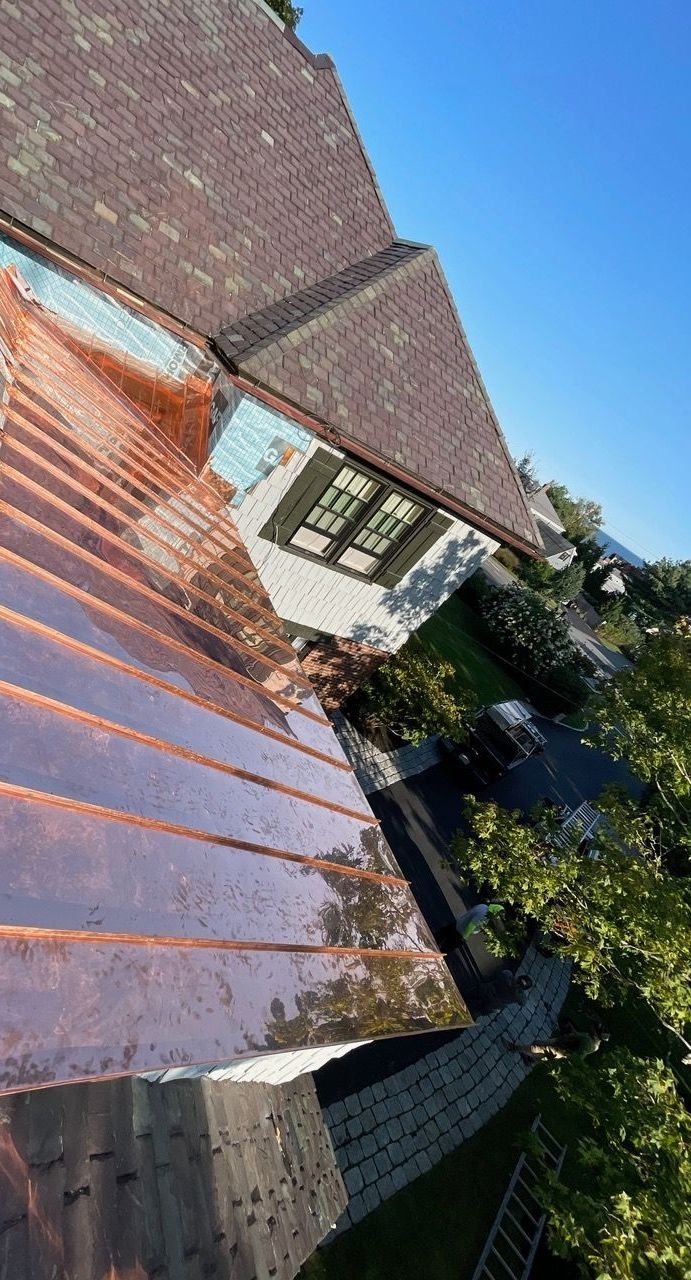
TL;DR: Copper lasts 80 to 100-plus years on Boston roofs because it stays ductile through the 60-plus freeze-thaw cycles we see each winter, so it flexes instead of cracking. Its blue-green patina is corrosion that seals the surface and slows further reaction, and it shrugs off North Shore salt air that eats steel. The catch is installation: copper must be cleated and hand-soldered so it can float, never screwed down tight.
Copper · 6 min read
Walk through Beacon Hill, the older blocks of Cambridge, or the mansards of Somerville’s Davis Square and you’ll find copper roofs that were installed before anyone alive today was born. That isn’t nostalgia. It’s a material that genuinely outlasts the building cycle. The reasons copper holds up through New England winters are specific and physical, not marketing. Here’s what’s actually happening on those roofs.
Freeze-thaw is a fatigue problem, and copper has the ductility for it
Boston crosses the freezing line more than 60 times in an average winter. Every crossing makes the roof material expand on warm afternoons and contract on cold nights. Over decades that’s tens of thousands of expansion-contraction cycles, and the failure mode for most roofing metals is fatigue. The metal work-hardens, gets brittle, and cracks.
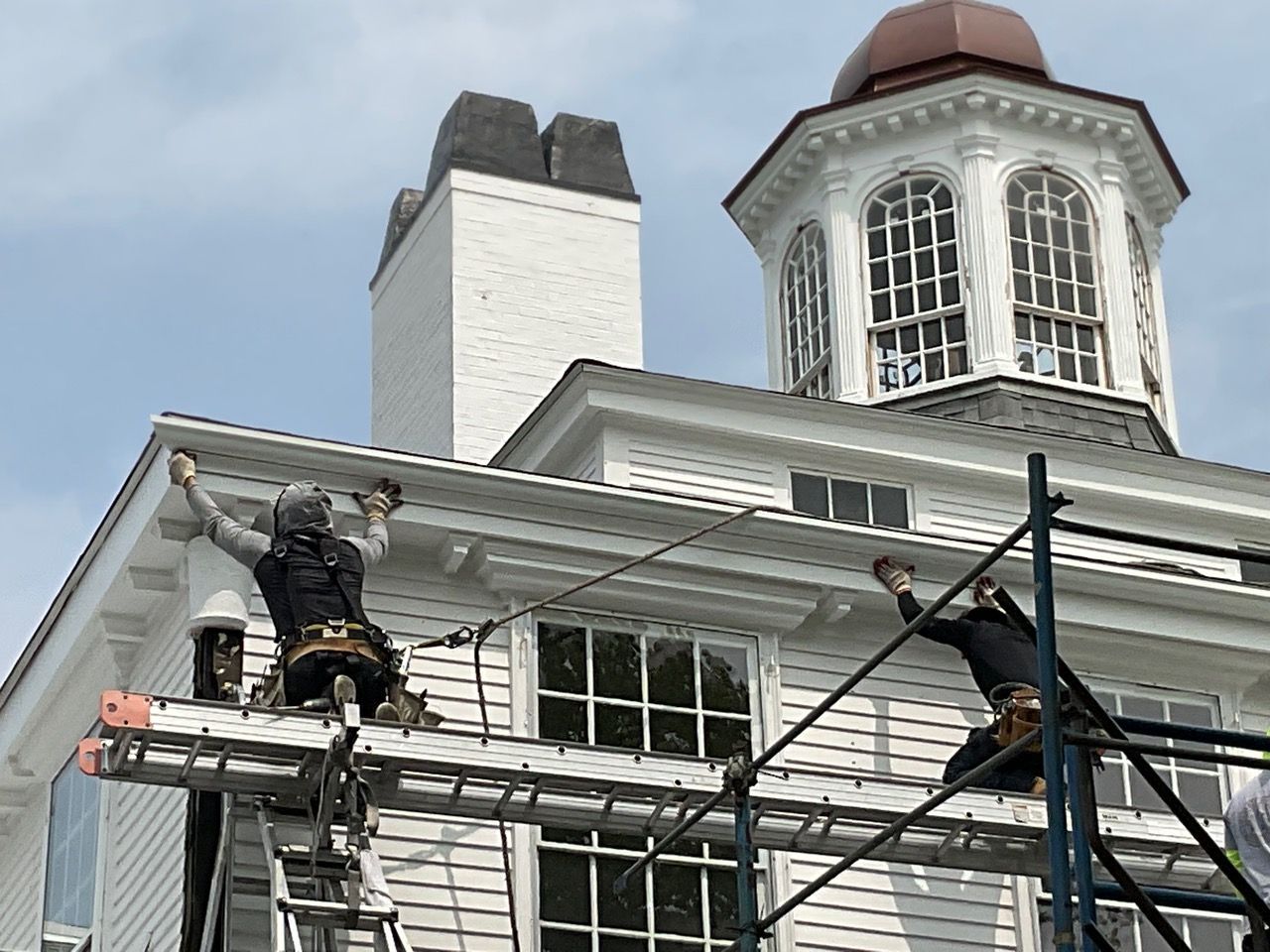
Copper resists this because it stays ductile across the full temperature range a Boston roof sees, roughly -10°F to 140°F at the surface in direct summer sun. It moves about 0.0000094 inches per inch per degree Fahrenheit, meaningful over a 20-foot run, which is exactly why how it’s fastened matters more than the metal itself.
Why it’s cleated and soldered, never screwed down
A 20-foot copper pan can grow and shrink by close to a quarter inch between a January night and a July afternoon. If you screw that pan down tight, it can’t move, so the stress concentrates at the fasteners and the metal tears around them. This is the single most common way a copper roof fails early, and it’s an installation error, not a material flaw.
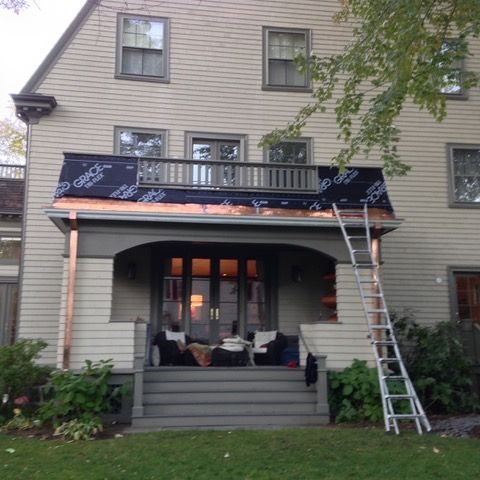
Done correctly, copper roofing floats. Standing-seam and flat-lock copper is held by cleats, small copper clips that lock into the seam and are nailed to the deck on one side only, letting the panel slide as it expands. The seams themselves are folded and hand-soldered with a 50/50 or lead-free solder, creating a watertight joint that flexes with the panel instead of resisting it. A roof built this way moves a little every single day and never feels it. A roof built with rigid fasteners telegraphs every cold snap into a crack. Getting the cleating and hand-soldering right is exactly what our Boston copper roofing service is built around.
Patina is corrosion that protects against more corrosion
New copper is bright pink-orange. Within months it dulls to bronze, and over roughly 10 to 15 years in a coastal-influenced climate like Boston’s it develops the familiar blue-green patina. That patina is copper sulfate and copper carbonate, technically the metal corroding, but it forms a tight, adherent layer that seals the surface and dramatically slows any further reaction underneath.
This is the opposite of how steel rusts. Rust flakes off and exposes fresh metal to keep rusting. Copper patina bonds to the metal and stops the process. The practical result is that a copper roof’s corrosion rate is highest in its first decade and then drops to nearly nothing for the rest of its life. The green roof you see on an old Boston church isn’t worn out. It’s at its most protected.
Salt air on the North Shore doesn’t bother it
Homes from Lynn up through Marblehead, Gloucester, and the rest of the North Shore deal with salt-laden air that destroys ordinary fasteners and chews through galvanized and painted steel. Road salt does the same to street-facing roofs and gutters across the metro.
Copper is effectively immune to this. Chloride from sea spray and de-icing salt doesn’t drive the kind of pitting corrosion in copper that it forces in steel and many aluminum alloys. The same patina chemistry that protects against rain protects against salt. For a coastal home, that corrosion resistance is often the entire argument. It’s the one material that doesn’t treat ocean air as an enemy.
What 80 to 100 years actually buys
A properly installed bare copper roof carries a documented service life of 80 to 100-plus years (Insurance Institute for Business & Home Safety), with many European and older American examples well past that. That number assumes the cleating and soldering were done right; it does not assume any coating, because there’s nothing to repaint or reseal. The metal and its patina are the finish.
Put that against the building it sits on. A copper roof installed on a Boston home in 1950 is, in many cases, still the original roof. Over that span an asphalt roof would have been replaced three or four times, and each tear-off is its own cost, mess, and chance for water to get into the deck. Copper’s premium upfront is real, but it’s the last roof a structure is likely to need.
Winter maintenance: light, but not zero
Copper asks very little, and most of what it does ask is about the roof system around it, not the copper itself:
- After a hard cold snap, look at soldered seams and the joints around chimneys and dormers. These are where thermal stress shows up first, and the connections at masonry are the most common winter leak point.
- Keep valleys and gutters clear before snowfall. Copper sheds water well, but trapped ice forces meltwater to back up under flashing regardless of the metal’s quality.
- Clear leaves and debris off the surface before winter. Organic matter holding moisture against copper can accelerate localized patina and leave staining, and it traps the snow that feeds ice dams.
- Watch for any dripping or interior staining after a thaw. On a copper roof that almost always points to a seam or a flashing detail, not the field metal, and caught early it’s a small repair.
Why Boston copper roofing fits the local housing stock
Copper isn’t just durable here, it’s correct here. Much of Boston’s pre-1940 stock (slate-roofed townhouses, Victorians in Newton and Cambridge, mansards across Somerville) was designed with copper flashing, gutters, and detailing as original equipment. When those roofs are restored, copper is the historically accurate material, and on many blocks it’s what local historic district commissions expect.
The deeper point is that copper and the freeze-thaw, salt-air, century-old-building reality of New England were made for each other long before anyone marketed it that way. The roofs prove it: the ones installed by careful hands generations ago are still on the houses, still shedding water, and only now reaching the middle of their service life.