Copper Roof Cost in Boston (2026): Real Per-Square Numbers for Brownstones and Mansards
What a copper roof costs in Boston, by the square: standing-seam and flat-lock ranges, the soldering labor reality, and the long-run cost-per-year math.
TL;DR: Installed copper roofing around Boston runs roughly $20 to $35 per square foot for standing seam, and $30 to $46 for hand-soldered flat-lock, about $2,000 to $4,600 per roofing square. Two things drive the price: copper is a premium metal, and the soldering labor is skilled and scarce here. Spread across an 80 to 100 year service life, that upfront cost becomes one of the lowest annual costs in roofing.
Copper · 8 min read
Almost every copper conversation we have starts the same way. A homeowner in the South End, or on a Newton side street, priced a copper roof once and got a single number that felt enormous. They can’t tell whether it was fair. Usually it is. What’s missing is the breakdown: why the number runs that high, what actually drives it, and how it pencils out over the life of the building.
This is the money side of copper. The material science, meaning why copper survives our freeze-thaw winters and salt air, lives in a separate piece: why copper roofing survives Boston winters. Here we talk price. What a copper roof costs in Boston in 2026, why roofers quote it the way we do, and how the number shifts on a brownstone versus a mansard.
What a Copper Roof Costs in Boston in 2026
National cost guides put installed copper roofing at roughly $15 to $35 per square foot, with a typical project landing between $30,000 and $80,000 depending on size and complexity (This Old House). Those are national averages on a simple gable roof. Read them as a floor for Boston, not a target.
Broken out by system, the ranges reported across industry sources look like this:
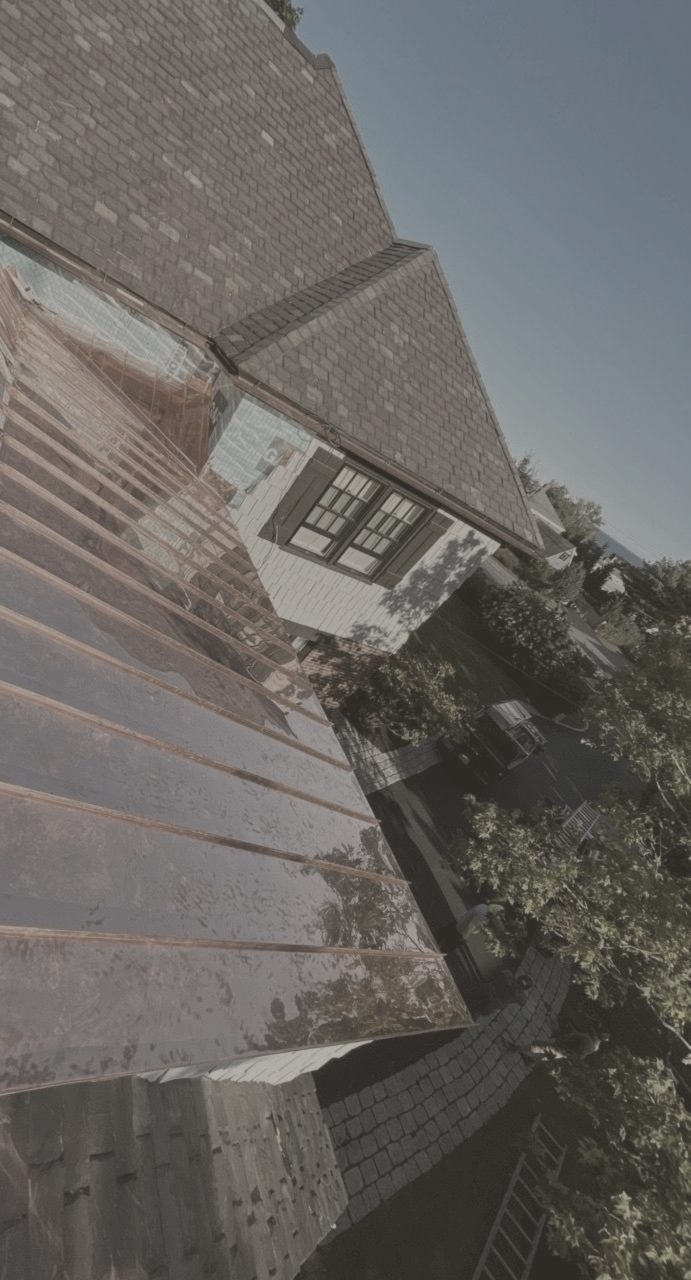
- Standing-seam copper: about $20 to $35 per square foot installed (This Old House).
- Flat-lock / flat-seam copper: the most labor-intensive, running up to roughly $46 per square foot because every seam is hand-soldered.
- Copper shingles or panels: roughly $10 to $25 per square foot, the lighter end of the range.
- Labor alone: commonly $6 to $12 per square foot, before the metal.
For Boston specifically, copper sits well above the other roofing metals. Coated steel and aluminum run a fraction of its price. Copper installs routinely start around $30 per square foot and climb from there. Our labor rates, plus the detailing older homes demand, push real quotes toward the upper half of every range above.
Why We Price Copper by the Square, Not the Sheet
We bid by the roofing square, which is 100 square feet of finished roof. It’s the unit that captures both the material and the labor to install it. Translate the per-square-foot ranges and you get the numbers you’ll actually see on a Boston estimate: standing-seam copper at roughly $2,000 to $3,500 per square, flat-lock at roughly $3,000 to $4,600.
The reason the per-square number swings so much isn’t the copper price moving day to day. It’s how much cutting, seaming, and soldering a given roof forces. A long, clean run of standing seam covers ground fast. A roof full of dormers, valleys, and short offset panels eats labor by the hour and wastes more sheet at every cut. Two roofs with identical square footage can quote 30% apart on geometry alone, which is exactly why a real assessment beats a per-foot rule of thumb.
What Actually Drives the Copper Number
Two inputs do most of the work in any copper estimate. Neither is negotiable.
The first is the metal. Copper is a commodity, priced at a multiple of steel or aluminum. Through 2026 raw copper has traded above $6 per pound, near the record highs it set in mid-2026 (Trading Economics, copper). That price flows straight into every sheet and coil. Construction material costs broadly have run well above pre-2020 levels too. When copper moves on the commodity market, quotes move with it.
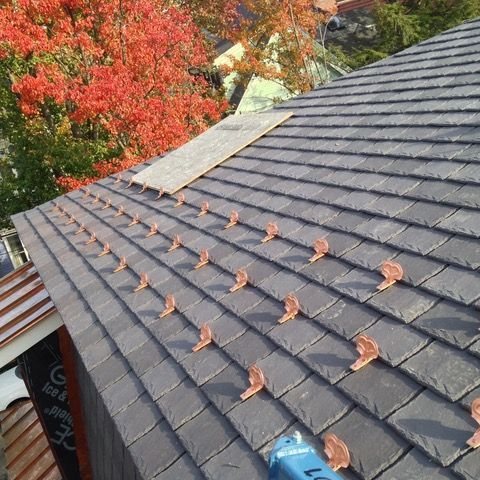
The second is soldering labor. This is the part homeowners rarely price in. Copper isn’t fastened and forgotten like asphalt. It gets cleated to the deck, with small copper clips nailed on one edge so the metal can expand and contract through the seasons. Then the seams are folded and hand-soldered into a watertight joint. That’s slow, skilled work, and the pool of roofers who do it correctly in Greater Boston is small. Skilled-trade scarcity is a documented pressure on 2026 construction costs. The industry needs to attract an estimated 349,000 net new workers in 2026 just to meet demand (Associated Builders and Contractors). That squeeze shows up most on the materials that demand the most craft.
Brownstones: Flat-Lock Copper on a Low-Slope Deck
Boston’s brownstones and rowhouses usually carry a low-slope or nearly flat main roof behind the parapet. The copper answer there is typically flat-lock: flat sheets locked and soldered edge to edge into a continuous watertight membrane. It’s the right system for water that sits and drains slowly instead of shedding fast.
It’s also the labor-heavy end of copper. Flat-lock means more linear feet of seam per square than standing seam. Every one of those seams is soldered by hand. That’s why the flat-seam ranges above run highest. Here’s the upside for a brownstone owner. A properly soldered flat-lock deck, tied into the parapet and scupper details correctly, outlives everyone who argued about its price. If your interest is copper at the gutter line rather than the field, the copper versus aluminum gutter math covers that trade separately.
Mansards: Steep Faces, Dormers, and Where the Labor Hides
You see mansards across the South End, Back Bay, and older Somerville blocks. Those near-vertical roof faces are a different cost animal. The steep faces themselves aren’t hard to sheet. The trouble is that mansards are almost never plain. They’re studded with dormers, window surrounds, and decorative crestings, plus a change of pitch at the curb where the steep face meets the low deck above.
Every one of those features is a set of custom-cut, hand-soldered copper details. Detail work is where mansard labor hides. A steep or complex roof can add up to 50% to a copper job over a simple gable of the same size. It’s also why mansards and copper have gone together historically. The material takes the ornamental detailing these roofs were designed around, and on many blocks it’s what the architecture and the historic commission expect.
What Historic-District Approval Adds to the Timeline and Cost
Say your home sits in a Boston Landmarks district: Beacon Hill, Back Bay, the South End, Bay Village, and others, plus local commissions in Cambridge and Newton. Exterior roof work visible from a public way generally needs a certificate from the historic commission before it starts. Copper is usually welcomed in these districts, and sometimes it’s the required material. The approval step is still real, so budget for it.
The cost here is mostly time and process, not a single line item: a submission, sometimes a hearing, occasionally a required change to a detail or finish. Built into a project timeline, it’s manageable. Discovered after you’ve scheduled a crew, it’s a delay. We walk through what triggers review, and where the district lines actually fall, in our historic roof permit primer for Greater Boston. Most national copper guides skip this driver entirely. In Boston it’s unavoidable.
The Number That Actually Matters: Cost Per Year of Service
A copper roof’s sticker price only makes sense next to how long it lasts. A properly installed copper roof carries a documented service life of 80 to 100-plus years (Insurance Institute for Business & Home Safety). Boston has church and townhouse roofs well past that mark, still doing their job. Divide the cost across that span, and copper turns into one of the lowest annual costs in roofing.
Run it against asphalt, the honest comparison. Take a copper roof at the higher end, say $60,000, over 90 years. That’s roughly $670 a year. An asphalt roof on the same house costs a fraction upfront, but it lasts 18 to 25 years. Over that same 90 years you replace it three or four times. Each tear-off carries its own cost, its own mess, and another chance for water to reach the deck. Copper’s premium is real on day one and mostly gone by year thirty. The same cost-per-year logic is what makes slate worth its number, which we break down in slate versus asphalt for Boston homes.
None of this makes copper the right call for every house. It’s the right call for a building you intend to keep, on a roof where the detailing and the climate reward a material that doesn’t quit. If that’s your situation, and you want a real per-square number for your specific roof, our copper roofing and flashing service page explains how we work. From there you can schedule an assessment and get an actual figure instead of a range.
Frequently Asked Questions
How Much Does a Copper Roof Cost in Boston?
Installed copper roofing around Boston generally runs $20 to $35 per square foot for standing seam. Hand-soldered flat-lock runs $30 to $46. That works out to roughly $2,000 to $4,600 per roofing square. A whole-roof project commonly lands between $30,000 and $80,000, depending on size, pitch, and detailing.
What’s a Roofing Square, and Why Do You Price Copper That Way?
A roofing square is 100 square feet of finished roof. We price by the square because it captures both the copper and the labor to install it. It also makes quotes easy to compare. One estimator’s price per square lines up directly against another’s, where a single lump sum hides how the roof was measured.
Why Is Copper So Much More Expensive Than Asphalt or Steel?
Two reasons. Copper is a premium commodity metal, trading above $6 per pound in 2026, so the raw material alone costs multiples of steel or asphalt. Then there’s the install. Copper is cleated and hand-soldered rather than nailed down. That’s slow, skilled work, done by a small pool of qualified installers in Greater Boston.
Does Copper Cost More on a Mansard Than on a Regular Roof?
Usually, yes. Mansards carry dormers, window surrounds, and a change of pitch at the curb. Each of those is custom-cut, hand-soldered detail work. A steep or ornamental roof can run up to 50% more than a plain gable of the same square footage, because the added cost sits in the detailing, not the field.
Do I Need Historic-District Approval for a Copper Roof in Boston?
If your home is in a Landmarks district such as Beacon Hill, Back Bay, or the South End, exterior roof work visible from a public way generally needs a certificate from the historic commission before it begins. Copper is often welcomed, sometimes even required, in these districts. The approval step is still real, so build it into your project timeline.
Is a Copper Roof Worth the Cost?
Over a long horizon, the math favors it. A copper roof lasts 80 to 100-plus years. Spread a $60,000 roof across 90 years and it comes to around $670 a year, with no repainting or resealing. Asphalt costs less upfront, but it gets replaced three or four times over the same span. For a building you intend to keep, copper is often the lower lifetime cost.